12 Night Japan Cherry Blossoms
Cruise only — prices from Solo cruise only — from

Ports of Call & Itinerary
12-night voyage departing Yokohama.
Printable Itinerary (PDF)Route Map
12 Night Japan Cherry Blossoms
9 ports plotted · click a marker for details
Day 1
Yokohama , Japan
Tuesday, 28/03/2028
In 1853, a fleet of four American warships under Commodore Matthew Perry sailed into the bay of Tokyo (then Edo) and presented the reluctant Japanese with the demands of the U.S. government for the opening of diplomatic and commercial relations. The following year Perry returned and first set foot on Japanese soil at Yokohama—then a small fishing village on the mudflats of Tokyo bay. Two years later New York businessman Townsend Harris became America's first diplomatic representative to Japan. In 1858 he was finally able to negotiate a commercial treaty between the two countries; part of the deal designated four locations—one of them Yokohama—as treaty ports. In 1859 the shogunate created a special settlement in Yokohama for the growing community of merchants, traders, missionaries, and other assorted adventurers drawn to this exotic new land of opportunity. The foreigners (predominantly Chinese and British, plus a few French, Americans, and Dutch) were confined here to a guarded compound about 5 square km (2 square miles)—placed, in effect, in isolation—but not for long. Within a few short years the shogunal government collapsed, and Japan began to modernize. Western ideas were welcomed, as were Western goods, and the little treaty port became Japan's principal gateway to the outside world. In 1872 Japan's first railway was built, linking Yokohama and Tokyo. In 1889 Yokohama became a city; by then the population had grown to some 120,000. As the city prospered, so did the international community and by the early 1900s Yokohama was the busiest and most modern center of international trade in all of East Asia. Then Yokohama came tumbling down. On September 1, 1923, the Great Kanto Earthquake devastated the city. The ensuing fires destroyed some 60,000 homes and took more than 40,000 lives. During the six years it took to rebuild the city, many foreign businesses took up quarters elsewhere, primarily in Kobe and Osaka, and did not return. Over the next 20 years Yokohama continued to grow as an industrial center—until May 29, 1945, when in a span of four hours, some 500 American B-29 bombers leveled nearly half the city and left more than half a million people homeless. When the war ended, what remained became—in effect—the center of the Allied occupation. General Douglas MacArthur set up headquarters here, briefly, before moving to Tokyo; the entire port facility and about a quarter of the city remained in the hands of the U.S. military throughout the 1950s. By the 1970s Yokohama was once more rising from the debris; in 1978 it surpassed Osaka as the nation's second-largest city, and the population is now inching up to the 3.5 million mark. Boosted by Japan's postwar economic miracle, Yokohama has extended its urban sprawl north to Tokyo and south to Kamakura—in the process creating a whole new subcenter around the Shinkansen Station at Shin-Yokohama. The development of air travel and the competition from other ports have changed the city's role in Japan's economy. The great liners that once docked at Yokohama's piers are now but a memory, kept alive by a museum ship and the occasional visit of a luxury vessel on a Pacific cruise. Modern Large as Yokohama is, the central area is very negotiable. As with any other port city, much of what it has to offer centers on the waterfront—in this case, on the west side of Tokyo Bay. The downtown area is called Kannai (literally, "within the checkpoint"); this is where the international community was originally confined by the shogunate. Though the center of interest has expanded to include the waterfront and Ishikawa-cho, to the south, Kannai remains the heart of town. Think of that heart as two adjacent areas. One is the old district of Kannai, bounded by Basha-michi on the northwest and Nippon-odori on the southeast, the Keihin Tohoku Line tracks on the southwest, and the waterfront on the northeast. This area contains the business offices of modern Yokohama. The other area extends southeast from Nippon-odori to the Moto-machi shopping street and the International Cemetery, bordered by Yamashita Koen and the waterfront to the northeast; in the center is Chinatown, with Ishikawa-cho Station to the southwest. This is the most interesting part of town for tourists. Whether you're coming from Tokyo, Nagoya, or Kamakura, make Ishikawa-cho Station your starting point. Take the South Exit from the station and head in the direction of the waterfront.
Day 2
Shimizu , Japan
Wednesday, 29/03/2028
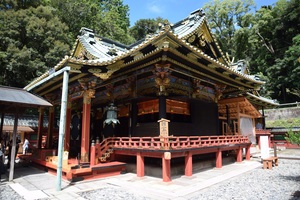
The salt and pepper cone of Japan's most famous natural landmark won’t fail to take your breath away, as it soars into the sky in a vision of spectacular symmetry. Make sure your camera is fully prepared before you dock in Shimizu’s port, where unparalleled views of the extraordinary Mount Fuji’s dramatic peak await. Take your time to soak up one of Japan's most iconic views, before dipping your toes into the rest of what this destination of tranquil temples has to offer. While there’s a bustling fish market, and a charming amusement park waiting close to the port, most new arrivals immediately set off in pursuit of the best views of Mount Fuji, or to see the stunning panorama on offer from the heights of the Kunozan Toshogu Shrine. Take the cable car up to the top, to experience the tranquillity around the forested shrine, and to enjoy its stunning architecture of deep scarlets and gleaming golds. You can also enjoy heart-stopping views out over the Bay of Suruga, and the tea plantations below.
Day 4
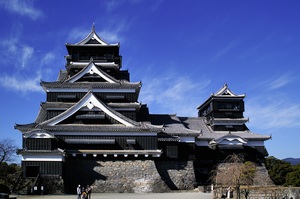
Kumamoto , Japan
Friday, 31/03/2028
Day 5
Busan , South Korea
Saturday, 01/04/2028
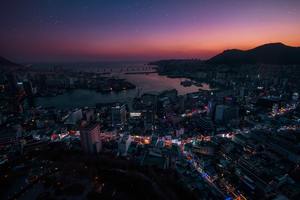
White-sand city beaches and hot-spring resorts may not be everyone's first image of Korea, but these are what Koreans flock to Busan for all year. And there are plenty of opportunities for rest, relaxation, retail therapy, and even a touch of glamour every October with the Busan International Film Festival. Busan's beaches are the big summertime draw but there is plenty to be seen year round. Quintessential experiences include taking some rest and relaxation at a local spa and exploring the Beomeosa temple complex.
Day 6
Fukuoka , Japan
Sunday, 02/04/2028
Day 8
Okinawa , Japan
Tuesday, 04/04/2028
Day 10
Kobe , Japan
Thursday, 06/04/2028
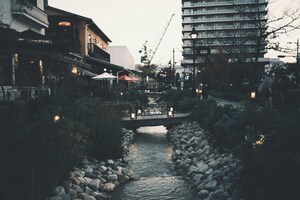
Located on the calm waters of the Inland Sea, Kobe has served as an important port town for hundreds of years. It was one of the first harbours to accept foreign traders in 1868 when Japan was just emerging from its centuries of isolation. What followed was a surge of Western trade and exports. Today, Kobe is quite multicultural, with expatriates from 98 different nations in residence, providing a cultural diversity most easily visible in restaurants serving every kind of cuisine, including the now world famous Kobe beef. The Great Hanshin Earthquake of 1995 set back Kobe’s development, but not for long. Kobe emerged more vibrant than before - with additional attractions, hotels and urban redevelopment, and only a few remnants of the extensive damage. It is a cosmopolitan place with lively shopping arcades, interesting museums, great restaurants, and a port that is still at the heart of things. Kobe is well known for its nightlife, in an intimate quarter of neon lights, cosy bars and sophisticated nightclubs. It also serves as the gateway to the ancient Japanese capitals of Kyoto and Nara.
Day 11
Kobe , Japan
Friday, 07/04/2028
Located on the calm waters of the Inland Sea, Kobe has served as an important port town for hundreds of years. It was one of the first harbours to accept foreign traders in 1868 when Japan was just emerging from its centuries of isolation. What followed was a surge of Western trade and exports. Today, Kobe is quite multicultural, with expatriates from 98 different nations in residence, providing a cultural diversity most easily visible in restaurants serving every kind of cuisine, including the now world famous Kobe beef. The Great Hanshin Earthquake of 1995 set back Kobe’s development, but not for long. Kobe emerged more vibrant than before - with additional attractions, hotels and urban redevelopment, and only a few remnants of the extensive damage. It is a cosmopolitan place with lively shopping arcades, interesting museums, great restaurants, and a port that is still at the heart of things. Kobe is well known for its nightlife, in an intimate quarter of neon lights, cosy bars and sophisticated nightclubs. It also serves as the gateway to the ancient Japanese capitals of Kyoto and Nara.
Day 13
Yokohama , Japan
Sunday, 09/04/2028
In 1853, a fleet of four American warships under Commodore Matthew Perry sailed into the bay of Tokyo (then Edo) and presented the reluctant Japanese with the demands of the U.S. government for the opening of diplomatic and commercial relations. The following year Perry returned and first set foot on Japanese soil at Yokohama—then a small fishing village on the mudflats of Tokyo bay. Two years later New York businessman Townsend Harris became America's first diplomatic representative to Japan. In 1858 he was finally able to negotiate a commercial treaty between the two countries; part of the deal designated four locations—one of them Yokohama—as treaty ports. In 1859 the shogunate created a special settlement in Yokohama for the growing community of merchants, traders, missionaries, and other assorted adventurers drawn to this exotic new land of opportunity. The foreigners (predominantly Chinese and British, plus a few French, Americans, and Dutch) were confined here to a guarded compound about 5 square km (2 square miles)—placed, in effect, in isolation—but not for long. Within a few short years the shogunal government collapsed, and Japan began to modernize. Western ideas were welcomed, as were Western goods, and the little treaty port became Japan's principal gateway to the outside world. In 1872 Japan's first railway was built, linking Yokohama and Tokyo. In 1889 Yokohama became a city; by then the population had grown to some 120,000. As the city prospered, so did the international community and by the early 1900s Yokohama was the busiest and most modern center of international trade in all of East Asia. Then Yokohama came tumbling down. On September 1, 1923, the Great Kanto Earthquake devastated the city. The ensuing fires destroyed some 60,000 homes and took more than 40,000 lives. During the six years it took to rebuild the city, many foreign businesses took up quarters elsewhere, primarily in Kobe and Osaka, and did not return. Over the next 20 years Yokohama continued to grow as an industrial center—until May 29, 1945, when in a span of four hours, some 500 American B-29 bombers leveled nearly half the city and left more than half a million people homeless. When the war ended, what remained became—in effect—the center of the Allied occupation. General Douglas MacArthur set up headquarters here, briefly, before moving to Tokyo; the entire port facility and about a quarter of the city remained in the hands of the U.S. military throughout the 1950s. By the 1970s Yokohama was once more rising from the debris; in 1978 it surpassed Osaka as the nation's second-largest city, and the population is now inching up to the 3.5 million mark. Boosted by Japan's postwar economic miracle, Yokohama has extended its urban sprawl north to Tokyo and south to Kamakura—in the process creating a whole new subcenter around the Shinkansen Station at Shin-Yokohama. The development of air travel and the competition from other ports have changed the city's role in Japan's economy. The great liners that once docked at Yokohama's piers are now but a memory, kept alive by a museum ship and the occasional visit of a luxury vessel on a Pacific cruise. Modern Large as Yokohama is, the central area is very negotiable. As with any other port city, much of what it has to offer centers on the waterfront—in this case, on the west side of Tokyo Bay. The downtown area is called Kannai (literally, "within the checkpoint"); this is where the international community was originally confined by the shogunate. Though the center of interest has expanded to include the waterfront and Ishikawa-cho, to the south, Kannai remains the heart of town. Think of that heart as two adjacent areas. One is the old district of Kannai, bounded by Basha-michi on the northwest and Nippon-odori on the southeast, the Keihin Tohoku Line tracks on the southwest, and the waterfront on the northeast. This area contains the business offices of modern Yokohama. The other area extends southeast from Nippon-odori to the Moto-machi shopping street and the International Cemetery, bordered by Yamashita Koen and the waterfront to the northeast; in the center is Chinatown, with Ishikawa-cho Station to the southwest. This is the most interesting part of town for tourists. Whether you're coming from Tokyo, Nagoya, or Kamakura, make Ishikawa-cho Station your starting point. Take the South Exit from the station and head in the direction of the waterfront.
Room Type & Prices
All prices per person based on double occupancy. Solo traveller prices — single occupancy. Contact our cruise experts for the latest availability and best fares.
Prices include return flights from your chosen departure airport.
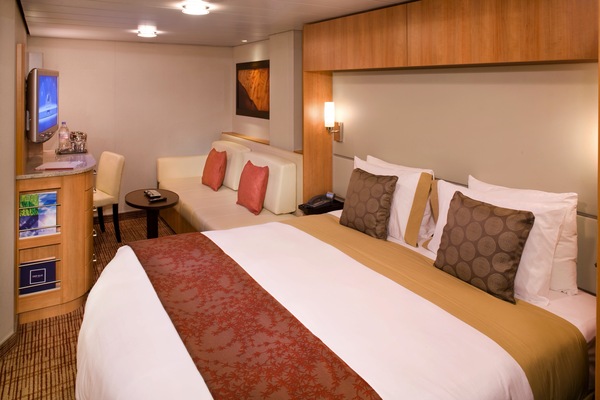
Inside Stateroom Guarantee
183–245 sqft · Up to 4 guests
Inside Stateroom
183–245 sqft · Up to 4 guests
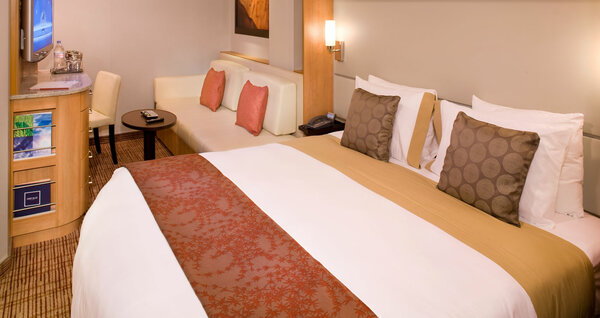
Prime Inside Stateroom
183–245 sqft · Up to 2 guests
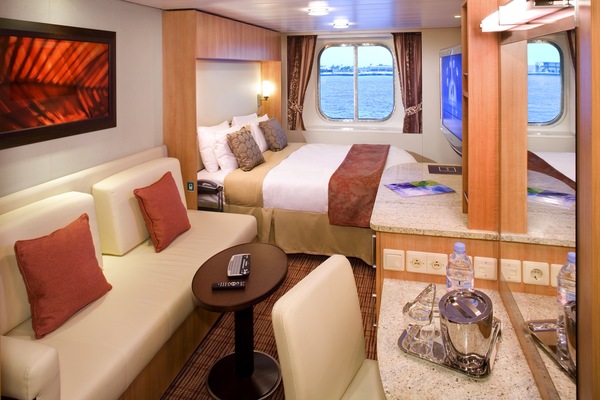
Ocean View Stateroom Guarantee
176 sqft · Up to 4 guests
Ocean View Stateroom
176–289 sqft · Up to 4 guests
Prime Ocean View Stateroom
176 sqft · Up to 4 guests
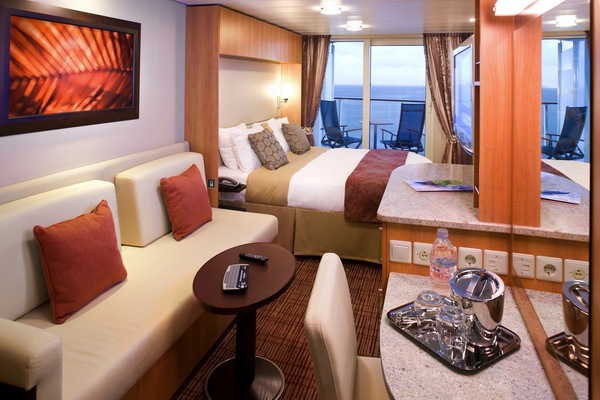
Deluxe Veranda Stateroom Guarantee
246 sqft · Up to 4 guests
Veranda Stateroom
246–379 sqft · Up to 4 guests
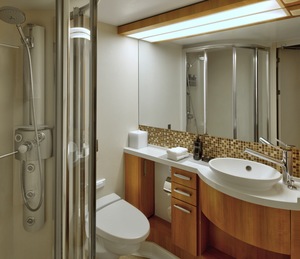
Concierge Class Stateroom Guarantee
246 sqft · Up to 4 guests
Concierge Class Stateroom
246–379 sqft · Up to 4 guests
AquaClass Guarantee
246 sqft · Up to 2 guests
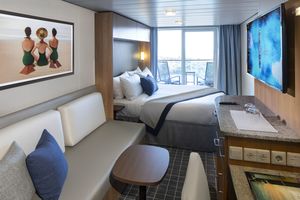
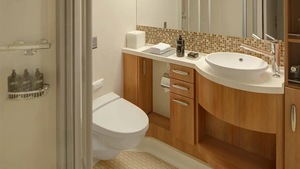
Prime Concierge Class Stateroom
246 sqft · Up to 4 guests
Aquaclass® Stateroom
246 sqft · Up to 2 guests
Prime AquaClass® Staterooms
246 sqft · Up to 2 guests
Sunset Concierge Class Stateroom
246 sqft · Up to 4 guests
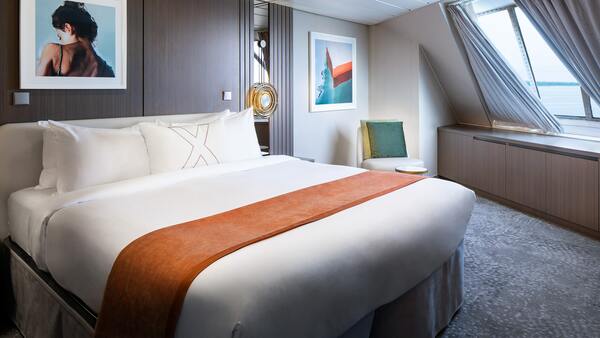
Horizon Suite
628–680 sqft · Up to 4 guests
Inside
Oceanview
Balcony
| Cabin | Grade | Per Person | Avail. | |
|---|---|---|---|---|
| Deluxe Veranda Stateroom Guarantee · 246 sqft | X Deluxe Balcony Stateroom Guarantee | Enquire → | ||
| Veranda Stateroom · 246–379 sqft | V5 Veranda Stateroom (Partial View) | Enquire → | ||
| V3 Veranda (Partial View) | Enquire → | |||
| Concierge Class Stateroom Guarantee · 246 sqft | XC Concierge Class Balcony Stateroom Guarantee | Enquire → | ||
| Concierge Class Stateroom · 246–379 sqft | C4 Concierge Class | Enquire → | ||
| C3 Concierge Class Stateroom 3 | Enquire → | |||
| C2 Concierge Class Stateroom 2 | Enquire → | |||
| AquaClass Guarantee · 246 sqft | XA | Enquire → | ||
| Prime Concierge Class Stateroom · 246 sqft | C1 Concierge Class Stateroom 1 | Enquire → | ||
| Aquaclass® Stateroom · 246 sqft | A2 AquaClass Stateroom 2 | Enquire → | ||
| Prime AquaClass® Staterooms · 246 sqft | A1 AquaClass Stateroom 1 | Enquire → | ||
| Sunset Concierge Class Stateroom · 246 sqft | SC Sunset Concierge Class | Enquire → |
Deluxe Veranda Stateroom Guarantee · 246 sqft
X Deluxe Balcony Stateroom Guarantee
Veranda Stateroom · 246–379 sqft
V5 Veranda Stateroom (Partial View)
Veranda Stateroom · 246–379 sqft
V3 Veranda (Partial View)
Concierge Class Stateroom Guarantee · 246 sqft
XC Concierge Class Balcony Stateroom Guarantee
Concierge Class Stateroom · 246–379 sqft
C4 Concierge Class
Concierge Class Stateroom · 246–379 sqft
C3 Concierge Class Stateroom 3
Concierge Class Stateroom · 246–379 sqft
C2 Concierge Class Stateroom 2
AquaClass Guarantee · 246 sqft
XA
Prime Concierge Class Stateroom · 246 sqft
C1 Concierge Class Stateroom 1
Aquaclass® Stateroom · 246 sqft
A2 AquaClass Stateroom 2
Prime AquaClass® Staterooms · 246 sqft
A1 AquaClass Stateroom 1
Sunset Concierge Class Stateroom · 246 sqft
SC Sunset Concierge Class
More Departures
12 nights
12 Night Best Of Japan Cruise
17/10/2026
Solo From
£9,460
From
£1,786
13 nights
13 Nt Portugal & Bermuda Transatlantic - Halloween at Sea
18/10/2026
Solo From
£1,703
From
£945
7 nights
7 Nt Grand Cayman, Mexico & Perfect Day
18/10/2026
Solo From
£1,103
From
£401
6 nights
6 Night Grand Cayman, Bahamas & Mexico
18/10/2026
Solo From
£898
From
£526
13 nights
13 Night Best Of New Zealand Cruise - Halloween at Sea
18/10/2026
Solo From
£2,242
From
£1,264
7 nights
7 Night Key West & Bahamas Cruise
18/10/2026
Solo From
£975
From
£413
Your Ship
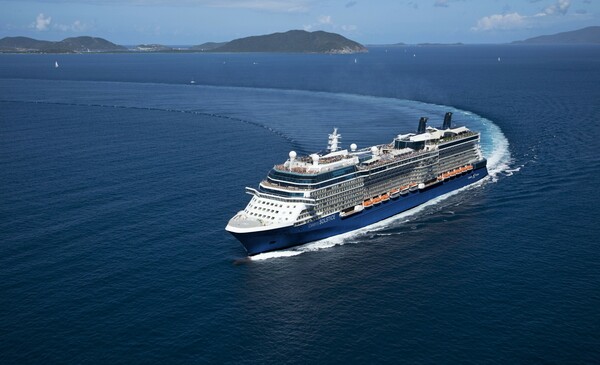
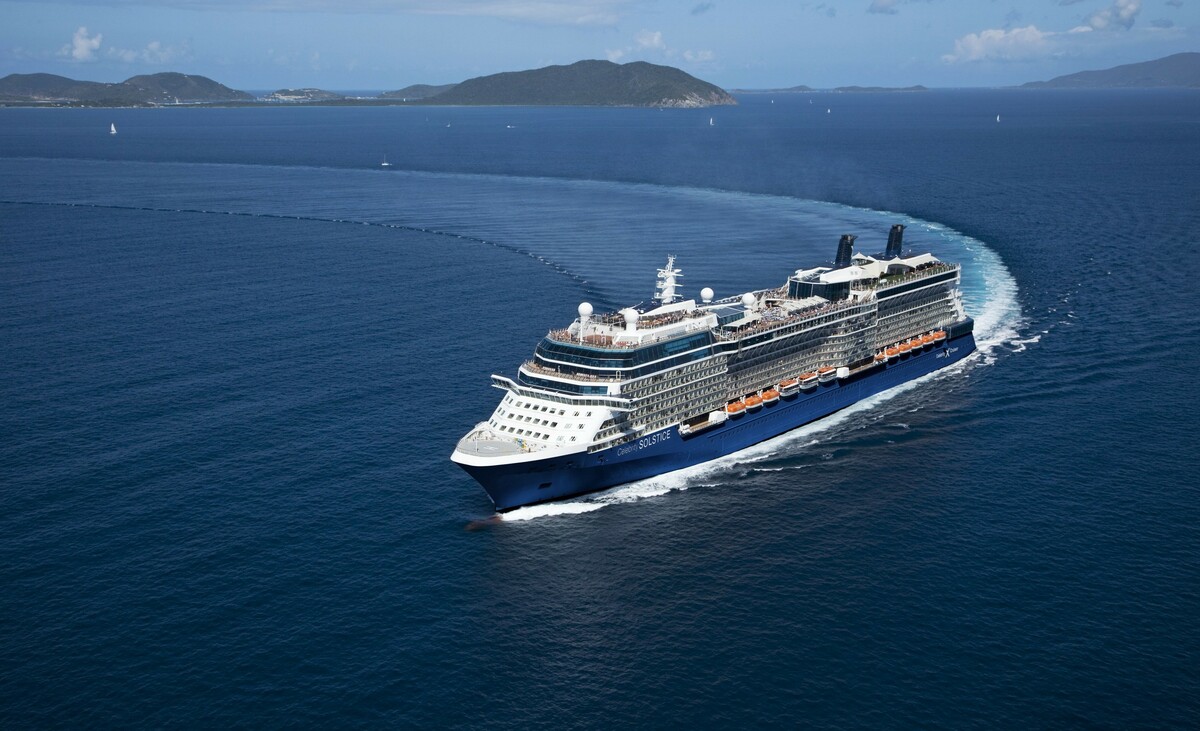
Celebrity Solstice
THE RENEWED CELEBRITY SOLSTICE IS HERE
New Outdoor Escapes. New Entertainment. New Dining. New Rooms. New Everything.
Welcome to the Renewed Celebrity Solstice. Your happy place is about to make you even happier, because we’ve introduced all-new experiences you’ve never seen before that make the classic ship you love completely new again. Renew your views with reinvented outdoor escapes that give you a whole new perspective on the world. Reignite date night with new restaurants and experiences that will bring you closer together than ever. Remix your routine with so many new things to do from day to night you’ll wish it took longer to get there. And reimagine your stay with newly updated rooms and more ways to make yourself at home miles at sea. Celebrity Solstice is the first of many classics to be made new again, so Nothing Comes Close to Celebrity Cruises. Ever.