21-Day Around The Iberian Peninsula: Greece, Malta & England
Cruise only — prices from Solo cruise only — from

Ports of Call & Itinerary
21-night voyage departing Piraeus, arriving Rotterdam.
Printable Itinerary (PDF)Route Map
21-Day Around The Iberian Peninsula: Greece, Malta & England
18 ports plotted · click a marker for details
Day 1
Piraeus , Greece
Saturday, 11/03/2028
It's no wonder that all roads lead to the fascinating and maddening metropolis of Athens. Lift your eyes 200 feet above the city to the Parthenon, its honey-color marble columns rising from a massive limestone base, and you behold architectural perfection that has not been surpassed in 2,500 years. But, today, this shrine of classical form dominates a 21st-century boomtown. To experience Athens—Athína in Greek—fully is to understand the essence of Greece: ancient monuments surviving in a sea of cement, startling beauty amid the squalor, tradition juxtaposed with modernity. Locals depend on humor and flexibility to deal with the chaos; you should do the same. The rewards are immense. Although Athens covers a huge area, the major landmarks of the ancient Greek, Roman, and Byzantine periods are close to the modern city center. You can easily walk from the Acropolis to many other key sites, taking time to browse in shops and relax in cafés and tavernas along the way. From many quarters of the city you can glimpse "the glory that was Greece" in the form of the Acropolis looming above the horizon, but only by actually climbing that rocky precipice can you feel the impact of the ancient settlement. The Acropolis and Filopappou, two craggy hills sitting side by side; the ancient Agora (marketplace); and Kerameikos, the first cemetery, form the core of ancient and Roman Athens. Along the Unification of Archaeological Sites promenade, you can follow stone-paved, tree-lined walkways from site to site, undisturbed by traffic. Cars have also been banned or reduced in other streets in the historical center. In the National Archaeological Museum, vast numbers of artifacts illustrate the many millennia of Greek civilization; smaller museums such as the Goulandris Museum of Cycladic Art Museum and the Byzantine and Christian Museum illuminate the history of particular regions or periods. Athens may seem like one huge city, but it is really a conglomeration of neighborhoods with distinctive characters. The Eastern influences that prevailed during the 400-year rule of the Ottoman Empire are still evident in Monastiraki, the bazaar area near the foot of the Acropolis. On the northern slope of the Acropolis, stroll through Plaka (if possible by moonlight), an area of tranquil streets lined with renovated mansions, to get the flavor of the 19th-century's gracious lifestyle. The narrow lanes of Anafiotika, a section of Plaka, thread past tiny churches and small, color-washed houses with wooden upper stories, recalling a Cycladic island village. In this maze of winding streets, vestiges of the older city are everywhere: crumbling stairways lined with festive tavernas; dank cellars filled with wine vats; occasionally a court or diminutive garden, enclosed within high walls and filled with magnolia trees and the flaming trumpet-shaped flowers of hibiscus bushes. Formerly run-down old quarters, such as Thission, Gazi and Psirri, popular nightlife areas filled with bars and mezedopoleia (similar to tapas bars), are now in the process of gentrification, although they still retain much of their original charm, as does the colorful produce and meat market on Athinas. The area around Syntagma Square, the tourist hub, and Omonia Square, the commercial heart of the city about 1 km (½ mi) northwest, is distinctly European, having been designed by the court architects of King Otho, a Bavarian, in the 19th century. The chic shops and bistros of ritzy Kolonaki nestle at the foot of Mt. Lycabettus, Athens's highest hill (909 feet). Each of Athens's outlying suburbs has a distinctive character: in the north is wealthy, tree-lined Kifissia, once a summer resort for aristocratic Athenians, and in the south and southeast lie Glyfada, Voula, and Vouliagmeni, with their sandy beaches, seaside bars, and lively summer nightlife. Just beyond the city's southern fringes is Piraeus, a bustling port city of waterside fish tavernas and Saronic Gulf views.

Day 2
Mykonos , Greece
Sunday, 12/03/2028
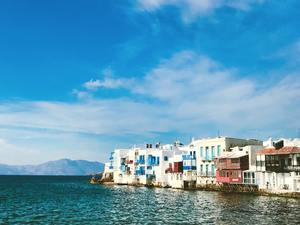
Although the fishing boats still go out in good weather, Mykonos largely makes its living from tourism these days. The summer crowds have turned one of the poorest islands in Greece into one of the richest. Old Mykonians complain that their young, who have inherited stores where their grandfathers once sold eggs or wine, get so much rent that they have lost ambition, and in summer sit around pool bars at night with their friends, and hang out in Athens in winter when island life is less scintillating. Put firmly on the map by Jackie O in the 1960s, Mykonos town—called Hora by the locals—remains the Saint-Tropez of the Greek islands. The scenery is memorable, with its whitewashed streets, Little Venice, the Kato Myli ridge of windmills, and Kastro, the town's medieval quarter. Its cubical two- or three-story houses and churches, with their red or blue doors and domes and wooden balconies, have been long celebrated as some of the best examples of classic Cycladic architecture. Luckily, the Greek Archaeological Service decided to preserve the town, even when the Mykonians would have preferred to rebuild, and so the Old Town has been impressively preserved. Pink oleander, scarlet hibiscus, and trailing green pepper trees form a contrast amid the dazzling whiteness, whose frequent renewal with whitewash is required by law. Any visitor who has the pleasure of getting lost in its narrow streets (made all the narrower by the many outdoor stone staircases, which maximize housing space in the crowded village) will appreciate how its confusing layout was designed to foil pirates—if it was designed at all. After Mykonos fell under Turkish rule in 1537, the Ottomans allowed the islanders to arm their vessels against pirates, which had a contradictory effect: many of them found that raiding other islands was more profitable than tilling arid land. At the height of Aegean piracy, Mykonos was the principal headquarters of the corsair fleets—the place where pirates met their fellows, found willing women, and filled out their crews. Eventually the illicit activity evolved into a legitimate and thriving trade network. Morning on Mykonos town's main quay is busy with deliveries, visitors for the Delos boats, lazy breakfasters, and street cleaners dealing with the previous night's mess. In late morning the cruise-boat people arrive, and the shops are all open. In early afternoon, shaded outdoor tavernas are full of diners eating salads (Mykonos's produce is mostly imported); music is absent or kept low. In mid- and late afternoon, the town feels sleepy, since so many people are at the beach, on excursions, or sleeping in their air-conditioned rooms; even some tourist shops close for siesta. By sunset, people have come back from the beach, having taken their showers and rested. At night, the atmosphere in Mykonos ramps up. The cruise-boat people are mostly gone, coughing three-wheelers make no deliveries in the narrow streets, and everyone is dressed sexy for summer and starting to shimmy with the scene. Many shops stay open past midnight, the restaurants fill up, and the bars and discos make ice cubes as fast as they can. Ready to dive in? Begin your tour of Mykonos town (Hora) by starting out at its heart: Mando Mavrogenous Square.
Day 4
Valletta , Malta
Tuesday, 14/03/2028
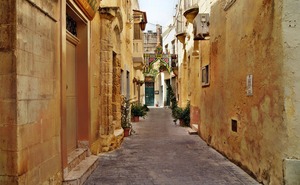
Malta's capital, the minicity of Valletta, has ornate palaces and museums protected by massive fortifications of honey-color limestone. Houses along the narrow streets have overhanging wooden balconies for people-watching from indoors. Generations ago they gave housebound women a window on the world of the street. The main entrance to town is through the City Gate (where all bus routes end), which leads onto Triq Repubblika (Republic Street), the spine of the grid-pattern city and the main shopping street. Triq Mercante (Merchant Street) parallels Repubblika to the east and is also good for strolling. From these two streets, cross streets descend toward the water; some are stepped. Valletta's compactness makes it ideal to explore on foot. City Gate and the upper part of Valletta are experiencing vast redevelopment that includes a new Parliament Building and open-air performance venue. The complex, completed mid-2013, has numerous pedestrian detours in place along with building noise and dust. Before setting out along Republic Street, stop at the tourist information office on Merchant Street for maps and brochures.
Day 6
Palma de Mallorca , Spain
Thursday, 16/03/2028
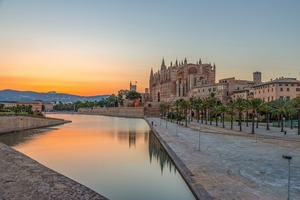
If you look north of the cathedral (La Seu, or the seat of the bishopric, to Mallorcans) on a map of the city of Palma, you can see around the Plaça Santa Eulàlia a jumble of tiny streets that made up the earliest settlement. Farther out, a ring of wide boulevards traces the fortifications built by the Moors to defend the larger city that emerged by the 12th century. The zigzags mark the bastions that jutted out at regular intervals. By the end of the 19th century, most of the walls had been demolished; the only place where you can still see the massive defenses is at Ses Voltes, along the seafront west of the cathedral.A torrent (streambed) used to run through the middle of the old city, dry for most of the year but often a raging flood in the rainy season. In the 17th century it was diverted to the east, along the moat that ran outside the city walls. Two of Palma's main arteries, La Rambla and the Passeig d'es Born, now follow the stream's natural course. The traditional evening paseo (promenade) takes place on the Born.If you come to Palma by car, park in the garage beneath the Parc de la Mar (the ramp is just off the highway from the airport, as you reach the cathedral) and stroll along the park. Beside it run the huge bastions guarding the Almudaina Palace; the cathedral, golden and massive, rises beyond. Where you exit the garage, there's a ceramic mural by the late Catalan artist and Mallorca resident Joan Miró, facing the cathedral across the pool that runs the length of the park.If you begin early enough, a walk along the ramparts at Ses Voltes from the mirador beside the cathedral is spectacular. The first rays of the sun turn the upper pinnacles of La Seu bright gold and then begin to work their way down the sandstone walls. From the Parc de la Mar, follow Avinguda Antoni Maura past the steps to the palace. Just below the Plaça de la Reina, where the Passeig d'es Born begins, turn left on Carrer de la Boteria into the Plaça de la Llotja (if the Llotja itself is open, don't miss a chance to visit—it's the Mediterranean's finest Gothic-style civic building). From there stroll through the Plaça Drassana to the Museu d'Es Baluard, at the end of Carrer Sant Pere. Retrace your steps to Avinguda Antoni Maura. Walk up the Passeig d'es Born to Plaça Joan Carles I, then right on Avenida de La Unió.
Day 7
Alicante , Spain
Friday, 17/03/2028
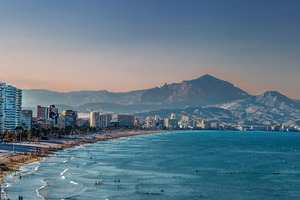
The provincial capital of the Valencian Community serves as a gateway to the huge influx of tourists that flock to the Costa Blanca resorts every year. Alicante is popular with holidaymakers who arrive for the warm, Mediterranean climate and seemingly endless golden beaches. However, there is much more to this city than sand and sun. With a picturesque waterfront, a hugely impressive castle, buzzing nightlife and a rich, complex history, Alicante is a fascinating destination all year round.
Day 8
Cartagena , Spain
Saturday, 18/03/2028
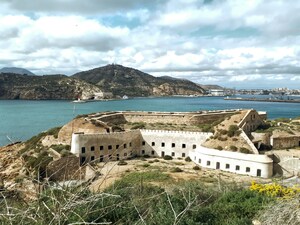
A Mediterranean city and naval station located in the Region of Murcia, southeastern Spain, Cartagena’s sheltered bay has attracted sailors for centuries. The Carthaginians founded the city in 223BC and named it Cartago Nova; it later became a prosperous Roman colony, and a Byzantine trading centre. The city has been the main Spanish Mediterranean naval base since the reign of King Philip II, and is still surrounded by walls built during this period. Cartagena’s importance grew with the arrival of the Spanish Bourbons in the 18th century, when the Navidad Fortress was constructed to protect the harbour. In recent years, traces of the city’s fascinating past have been brought to light: a well-preserved Roman Theatre was discovered in 1988, and this has now been restored and opened to the public. During your free time, you may like to take a mini-cruise around Cartagena's historic harbour: these operate several times a day, take approximately 40 minutes and do not need to be booked in advance. Full details will be available at the port.
Day 9
Tangier , Morocco
Sunday, 19/03/2028
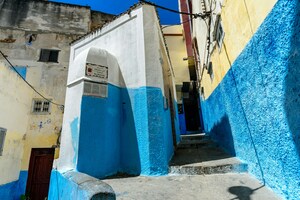
Tangier can trace its origins back to the Phoenicians and ancient Greeks. It was named after Tinge, the mother of Hercules’ son, and its beginnings are embedded in mythology. It was subsequently a Roman province, and after Vandal and Byzantine influences, was occupied by the Arabs with Spain, Portugal, France and England also playing a part in the city’s history. With such a diverse past it is perhaps not surprising that Tangier is such an individual city. Overlooking the Straits of Gibraltar, the city lies on a bay between two promontories. With its old Kasbah, panoramic views, elegant buildings, squares and places of interest, there is much to discover in both the new and old parts of the city.
Day 10
Cádiz , Spain
Monday, 20/03/2028
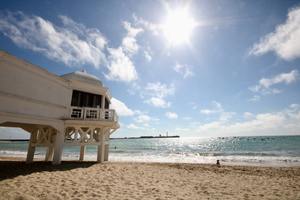
Believed to be the oldest town on the Iberian Peninsula, the Andalusian port of Cádiz enjoys a stunning location at the edge of a six-mile promontory. The town itself, with 3,000 years of history, is characterised by pretty white houses with balconies often adorned with colourful flowers. As you wander around be sure to take a stroll through the sizeable Plaza de Espãna, with its large monument dedicated to the first Spanish constitution, which was signed here in 1812. Cádiz has two pleasant seafront promenades which boast fine views of the Atlantic Ocean, and has a lovely park, the Parque Genoves, located close to the sea with an open-air theatre and attractive palm garden. Also notable is the neo-Classical cathedral, capped by a golden dome.
Day 11
Lisbon , Portugal
Tuesday, 21/03/2028
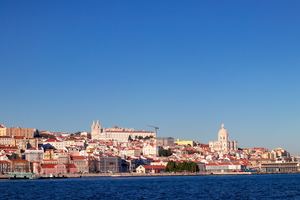
Set on seven hills on the banks of the River Tagus, Lisbon has been the capital of Portugal since the 13th century. It is a city famous for its majestic architecture, old wooden trams, Moorish features and more than twenty centuries of history. Following disastrous earthquakes in the 18th century, Lisbon was rebuilt by the Marques de Pombal who created an elegant city with wide boulevards and a great riverfront and square, Praça do Comércio. Today there are distinct modern and ancient sections, combining great shopping with culture and sightseeing in the Old Town, built on the city's terraced hillsides. The distance between the ship and your tour vehicle may vary. This distance is not included in the excursion grades.
Day 12
Porto , Portugal
Wednesday, 22/03/2028
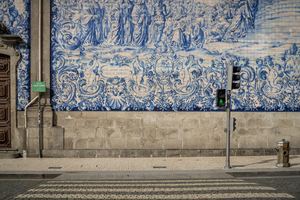
Lively, commercial Oporto is the second largest city in Portugal after Lisbon. Also called Porto for short, the word easily brings to mind the city's most famous product - port wine. Oporto's strategic location on the north bank of the Douro River has accounted for the town's importance since ancient times. The Romans built a fort here where their trading route crossed the Douro, and the Moors brought their own culture to the area. Oporto profited from provisioning crusaders en route to the Holy Land and enjoyed the riches from Portuguese maritime discoveries during the 15th and 16th centuries. Later, port wine trade with Britain compensated for the loss of the spice trade and the end of gold and gem shipments from Brazil. In the 19th century, the city went through a period of new prosperity with the rise of industries. In its wake followed the building of workers' quarters and opulent residences. Since the declaration of Oporto as a World Heritage Site by UNESCO, the city aims to build up a cultural reference that will provide it with a new image, based on deep historical roots. Among the attractions that make Oporto such an interesting place are its graceful bridges spanning the Douro River, a picturesque riverfront quarter and, most notable, its world-famous port wine lodges. Although Oporto is a bustling centre and home to many different businesses, the source of its greatest fame is the rich, sweet fortified red wine we know as port.
Day 13
La Coruña , Spain
Thursday, 23/03/2028
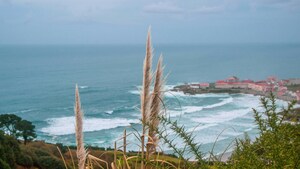
La Coruña, the largest city in Spain's Galicia region, is among the country's busiest ports. The remote Galicia area is tucked into the northwest corner of the Iberian Peninsula, surprising visitors with its green and misty countryside that is so much unlike other parts of Spain. The name "Galicia" is Celtic in origin, for it was the Celts who occupied the region around the 6th-century BC and erected fortifications. La Coruña was already considered an important port under the Romans. They were followed by an invasion of Suevians, Visigoths and, much later in 730, the Moors. It was after Galicia was incorporated into the Kingdom of Asturias that the epic saga of the Pilgrimage to Santiago (St. James) began. From the 15th century, overseas trade developed rapidly; in 1720, La Coruña was granted the privilege of trading with America - a right previously only held by Cadiz and Seville. This was the great era when adventurous men voyaged to the colonies and returned with vast riches. Today, the city's significant expansion is evident in three distinct quarters: the town centre located along the isthmus; the business and commercial centre with wide avenues and shopping streets; and the "Ensanche" to the south, occupied by warehouses and factories. Many of the buildings in the old section feature the characteristic glazed façades that have earned La Coruña the name "City of Crystal." Plaza Maria Pita, the beautiful main square, is named after the local heroine who saved the town in 1589 when she seized the English standard from the beacon and gave the alarm, warning her fellow townsmen of the English attack.
Day 14
Bilbao , Spain
Friday, 24/03/2028
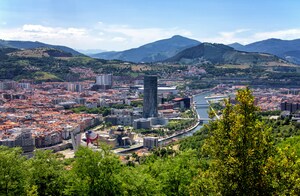
Time in Bilbao (Bilbo, in Euskera) may be recorded as BG or AG (Before Guggenheim or After Guggenheim). Never has a single monument of art and architecture so radically changed a city. Frank Gehry's stunning museum, Norman Foster's sleek subway system, the Santiago Calatrava glass footbridge and airport, the leafy César Pelli Abandoibarra park and commercial complex next to the Guggenheim, and the Philippe Starck AlhóndigaBilbao cultural center have contributed to an unprecedented cultural revolution in what was once the industry capital of the Basque Country.Greater Bilbao contains almost 1 million inhabitants, nearly half the total population of the Basque Country. Founded in 1300 by Vizcayan noble Diego López de Haro, Bilbao became an industrial center in the mid-19th century, largely because of the abundance of minerals in the surrounding hills. An affluent industrial class grew up here, as did the working class in suburbs that line the Margen Izquierda (Left Bank) of the Nervión estuary.Bilbao's new attractions get more press, but the city's old treasures still quietly line the banks of the rust-color Nervión River. The Casco Viejo (Old Quarter)—also known as Siete Calles (Seven Streets)—is a charming jumble of shops, bars, and restaurants on the river's Right Bank, near the Puente del Arenal bridge. This elegant proto-Bilbao nucleus was carefully restored after devastating floods in 1983. Throughout the Casco Viejo are ancient mansions emblazoned with family coats of arms, wooden doors, and fine ironwork balconies. The most interesting square is the 64-arch Plaza Nueva, where an outdoor market is pitched every Sunday morning.Walking the banks of the Nervión is a satisfying jaunt. After all, this was how—while out on a morning jog—Guggenheim director Thomas Krens first discovered the perfect spot for his project, nearly opposite the right bank's Deusto University. From the Palacio de Euskalduna upstream to the colossal Mercado de la Ribera, parks and green zones line the river. César Pelli's Abandoibarra project fills in the half mile between the Guggenheim and the Euskalduna bridge with a series of parks, the Deusto University library, the Meliá Bilbao Hotel, and a major shopping center.On the left bank, the wide, late-19th-century boulevards of the Ensanche neighborhood, such as Gran Vía (the main shopping artery) and Alameda de Mazarredo, are the city's more formal face. Bilbao's cultural institutions include, along with the Guggenheim, a major museum of fine arts (the Museo de Bellas Artes) and an opera society (Asociación Bilbaína de Amigos de la Ópera, or ABAO) with 7,000 members from Spain and southern France. In addition, epicureans have long ranked Bilbao's culinary offerings among the best in Spain. Don't miss a chance to ride the trolley line, the Euskotram, for a trip along the river from Atxuri Station to Basurto's San Mamés soccer stadium, reverently dubbed "la Catedral del Fútbol" (the Cathedral of Football).
Day 15
Le Verdon-sur-Mer , France
Saturday, 25/03/2028
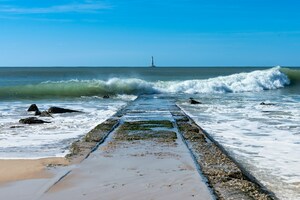
Situated on the Garonne River, 70 miles (113 km) inland from the Atlantic, Bordeaux's origin can be traced back to the 3rd century when it was Aquitaine's Roman capital called Burdigala. From 1154 to 1453, the town prospered under the rule of the English, whose fondness for the region's red wines gave impetus to the local wine industry. At various times, Bordeaux even served as the nation's capital: in 1870, at the beginning of World War I, and for two weeks in 1940 before the Vichy government was proclaimed. Bordeaux's neo-classical architecture, wide avenues and well-tended public squares and parks lend the city a certain grandeur. Excellent museums, an imposing cathedral and a much-praised theatre add to the city's attractions. The principal highlights, clustered around the town centre, can easily be explored on foot.
Day 17
Cork , Ireland
Monday, 27/03/2028
Cork City received its first charter in 1185 from Prince John of Norman England, and it takes its name from the Irish word corcaigh, meaning "marshy place." The original 6th-century settlement was spread over 13 small islands in the River Lee. Major development occurred during the 17th and 18th centuries with the expansion of the butter trade, and many attractive Georgian-design buildings with wide bowfront windows were constructed during this time. As late as 1770 Cork's present-day main streets—Grand Parade, Patrick Street, and the South Mall—were submerged under the Lee. Around 1800, when the Lee was partially dammed, the river divided into two streams that now flow through the city, leaving the main business and commercial center on an island, not unlike Paris's Île de la Cité. As a result, the city has a number of bridges and quays, which, although initially confusing, add greatly to the port's unique character. Cork can be very "Irish" (hurling, Gaelic football, televised plowing contests, music pubs, and peat smoke). But depending on what part of town you're in, Cork can also be distinctly un-Irish—the sort of place where hippies, gays, and farmers drink at the same pub.

Day 18
Liverpool , England
Tuesday, 28/03/2028
From world-class attractions and sports to legendary music, Liverpool offers old-world charm with modern sophistication, underpinned by a rich cultural history.

Day 20
Isle of Portland , England
Thursday, 30/03/2028
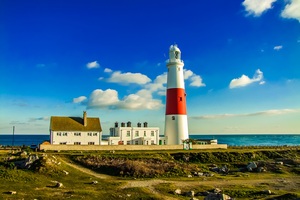
The Isle of Portland is a tied island, 6 kilometres long by 2.7 kilometres wide, in the English Channel. The southern tip, Portland Bill lies 8 kilometres south of the resort of Weymouth, forming the southernmost point of the county of Dorset, England. A barrier beach called Chesil Beach joins it to the mainland.
Day 21
Dover , England
Friday, 31/03/2028
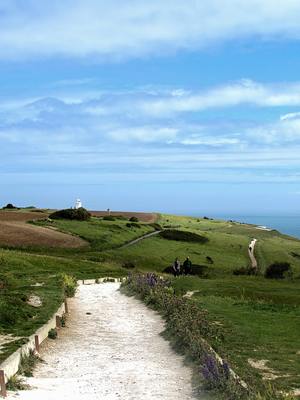
Known as the gateway of England, Dover welcomes millions of visitors from all over the globe each year in its role as the ferry capital of the world and the second busiest cruise port in the UK. The White Cliffs Country has a rich heritage. Within the walls of the town’s iconic castle, over 2,000 years of history waits to be explored, whilst the town’s museum is home to the Dover Bronze Age Boat, the world’s oldest known seagoing vessel. The town’s cliffs that are a welcome sight for today's cross-channel travellers also served as the control centre for the Dunkirk evacuation in 1940.
Day 22
Rotterdam , Netherlands
Saturday, 01/04/2028
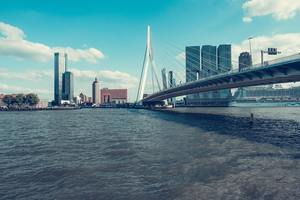
Rotterdam is a city that's a long way removed from most people's stereotypical notion of the Netherlands. There are few, if any, canals to be found here nor are there any quaint windmills. There is, however, a thriving modern city which is one of the busiest ports in the entire world.
Room Type & Prices
All prices per person based on double occupancy. Solo traveller prices — single occupancy. Contact our cruise experts for the latest availability and best fares.
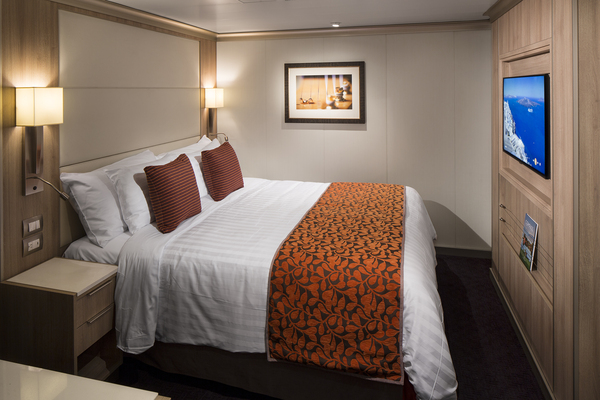
Interior
143–225 sqft · Up to 2 guests
Spa Inside
143–225 sqft · Up to 2 guests
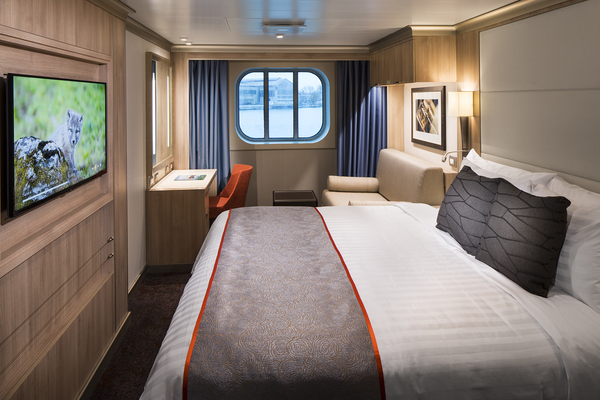
Ocean View Staterooms
175–282 sqft · Up to 2 guests
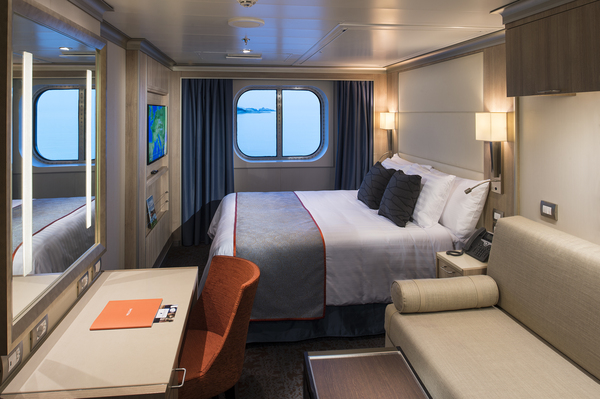
Spa Ocean View
175–282 sqft · Up to 2 guests
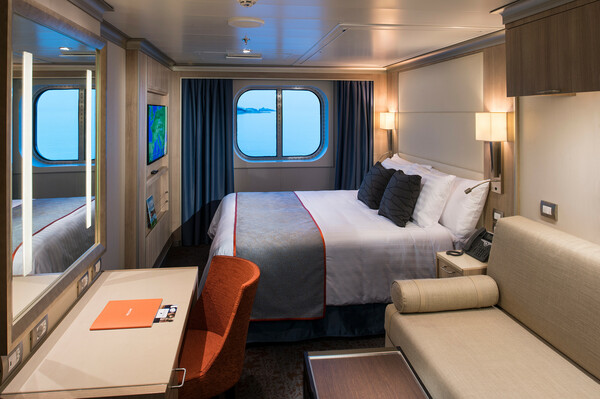
Family Ocean View Staterooms
222–231 sqft · Up to 5 guests
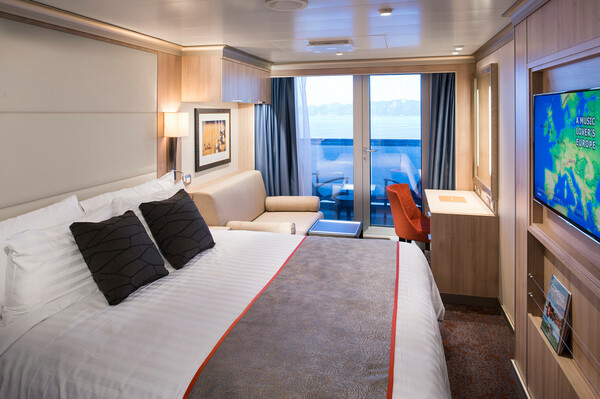
Verandah/Aft-View Verandah/Obstructed Verandah
228–405 sqft · Up to 2 guests
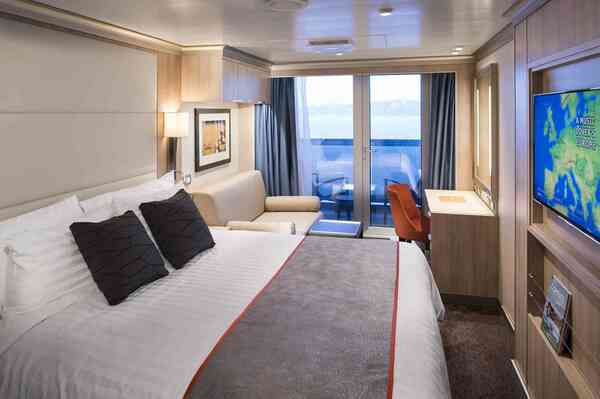
Spa Verandah
228–405 sqft · Up to 2 guests
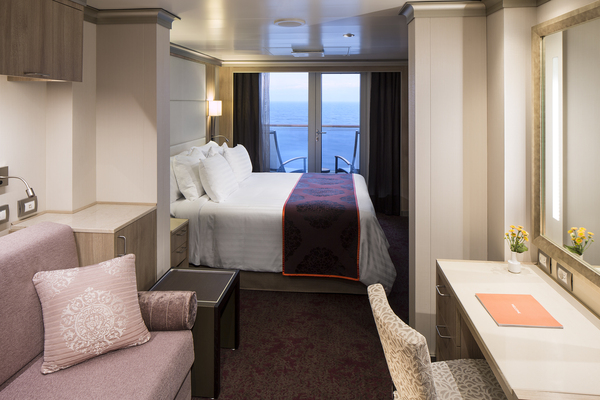
Vista Suite/Aft-View Vista Suite
260–356 sqft · Up to 2 guests
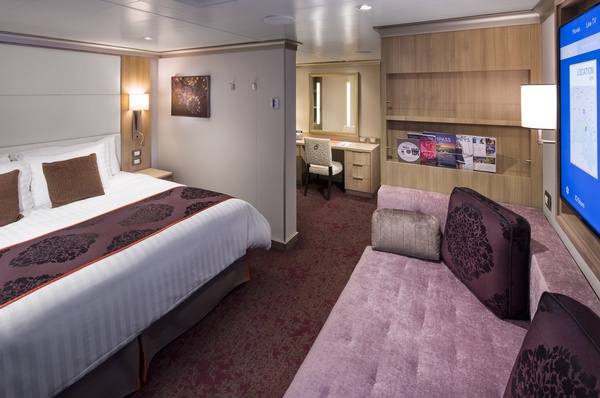
Signature Suite
393–400 sqft · Up to 3 guests
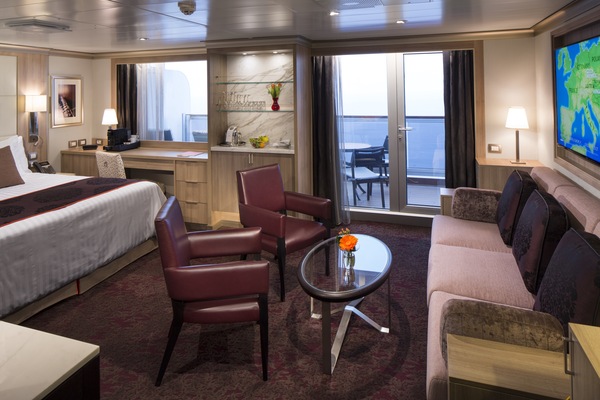
Neptune Suite
465–502 sqft · Up to 2 guests
Inside
| Cabin | Grade | Per Person | Avail. | |
|---|---|---|---|---|
| Interior · 143–225 sqft | N Interior Stateroom (N) | Enquire → | ||
| L Interior Stateroom (L) | Enquire → | |||
| K Interior Stateroom (K) | Enquire → | |||
| J Interior Stateroom (J) | Enquire → | |||
| I Large Interior Stateroom | Enquire → | |||
| Spa Inside · 143–225 sqft | IQ Interior Stateroom (Spa) | Enquire → |
Interior · 143–225 sqft
N Interior Stateroom (N)
Interior · 143–225 sqft
L Interior Stateroom (L)
Interior · 143–225 sqft
K Interior Stateroom (K)
Interior · 143–225 sqft
J Interior Stateroom (J)
Interior · 143–225 sqft
I Large Interior Stateroom
Spa Inside · 143–225 sqft
IQ Interior Stateroom (Spa)
Oceanview
| Cabin | Grade | Per Person | Avail. | |
|---|---|---|---|---|
| Ocean View Staterooms · 175–282 sqft | F Ocean View Stateroom (F) | Enquire → | ||
| E Ocean View Stateroom (E) | Enquire → | |||
| D Ocean View Stateroom (D) | Enquire → | |||
| C Ocean View Stateroom (C) | Enquire → | |||
| Spa Ocean View · 175–282 sqft | CQ Ocean View Stateroom (Spa) | Enquire → | ||
| Family Ocean View Staterooms · 222–231 sqft | FB Family Ocean View Stateroom (FB) | Enquire → | ||
| FA Family Ocean View Stateroom (FA) | Enquire → |
Ocean View Staterooms · 175–282 sqft
F Ocean View Stateroom (F)
Ocean View Staterooms · 175–282 sqft
E Ocean View Stateroom (E)
Ocean View Staterooms · 175–282 sqft
D Ocean View Stateroom (D)
Ocean View Staterooms · 175–282 sqft
C Ocean View Stateroom (C)
Spa Ocean View · 175–282 sqft
CQ Ocean View Stateroom (Spa)
Family Ocean View Staterooms · 222–231 sqft
FB Family Ocean View Stateroom (FB)
Family Ocean View Staterooms · 222–231 sqft
FA Family Ocean View Stateroom (FA)
Balcony
| Cabin | Grade | Per Person | Avail. | |
|---|---|---|---|---|
| Verandah/Aft-View Verandah/Obstructed Verandah · 228–405 sqft | VH Verandah Stateroom (VH) | Enquire → | ||
| VF Verandah Stateroom (VF) | Enquire → | |||
| VE Verandah Stateroom (VE) | Enquire → | |||
| VD Verandah Stateroom (VD) | Enquire → | |||
| VC Verandah Stateroom (VC) | Enquire → | |||
| VB Verandah Stateroom (VB) | Enquire → | |||
| VA Verandah Stateroom (VA) | Enquire → | |||
| V Verandah Stateroom (V) | Enquire → | |||
| VS Verandah Stateroom (VS) | Enquire → | |||
| Spa Verandah · 228–405 sqft | VQ Verandah Stateroom (Spa) | Enquire → |
Verandah/Aft-View Verandah/Obstructed Verandah · 228–405 sqft
VH Verandah Stateroom (VH)
Verandah/Aft-View Verandah/Obstructed Verandah · 228–405 sqft
VF Verandah Stateroom (VF)
Verandah/Aft-View Verandah/Obstructed Verandah · 228–405 sqft
VE Verandah Stateroom (VE)
Verandah/Aft-View Verandah/Obstructed Verandah · 228–405 sqft
VD Verandah Stateroom (VD)
Verandah/Aft-View Verandah/Obstructed Verandah · 228–405 sqft
VC Verandah Stateroom (VC)
Verandah/Aft-View Verandah/Obstructed Verandah · 228–405 sqft
VB Verandah Stateroom (VB)
Verandah/Aft-View Verandah/Obstructed Verandah · 228–405 sqft
VA Verandah Stateroom (VA)
Verandah/Aft-View Verandah/Obstructed Verandah · 228–405 sqft
V Verandah Stateroom (V)
Verandah/Aft-View Verandah/Obstructed Verandah · 228–405 sqft
VS Verandah Stateroom (VS)
Spa Verandah · 228–405 sqft
VQ Verandah Stateroom (Spa)
Suite
| Cabin | Grade | Per Person | Avail. | |
|---|---|---|---|---|
| Vista Suite/Aft-View Vista Suite · 260–356 sqft | BC Vista Suite (BC) | Enquire → | ||
| B Vista Suite (B) | Enquire → | |||
| A Vista Suite (A) | Enquire → | |||
| Signature Suite · 393–400 sqft | SY Signature Suite (SY) | Enquire → | ||
| SS Signature Suite (SS) | Enquire → | |||
| Neptune Suite · 465–502 sqft | SC Neptune Suite (SC) | Enquire → | ||
| SB Neptune Suite (SB) | Enquire → | |||
| SA Neptune Suite (SA) | Enquire → |
Vista Suite/Aft-View Vista Suite · 260–356 sqft
BC Vista Suite (BC)
Vista Suite/Aft-View Vista Suite · 260–356 sqft
B Vista Suite (B)
Vista Suite/Aft-View Vista Suite · 260–356 sqft
A Vista Suite (A)
Signature Suite · 393–400 sqft
SY Signature Suite (SY)
Signature Suite · 393–400 sqft
SS Signature Suite (SS)
Neptune Suite · 465–502 sqft
SC Neptune Suite (SC)
Neptune Suite · 465–502 sqft
SB Neptune Suite (SB)
Neptune Suite · 465–502 sqft
SA Neptune Suite (SA)
More Departures
14 nights
14-Day Atlantic Seaboard & Colonial New England: Quebec City
17/10/2026
From
£2,539
12 nights
12-Day Panama Canal Discovery: Costa Rica & Greater Antilles
18/10/2026
From
£2,129
11 nights
11-Day Mexican Riviera & Sea Of Cortez
20/10/2026
From
£1,549
11 nights
11-Day Mediterranean Splendor: Greece, Italy & Provence
24/10/2026
From
£3,059
9 nights
9-Day Southern Caribbean
30/10/2026
From
£1,619
7 nights
7-Day Norwegian Fjords With Nordfjord
31/10/2026
From
£1,319
Your Ship
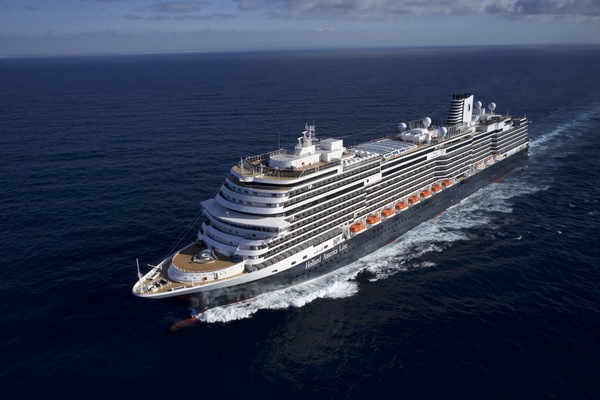
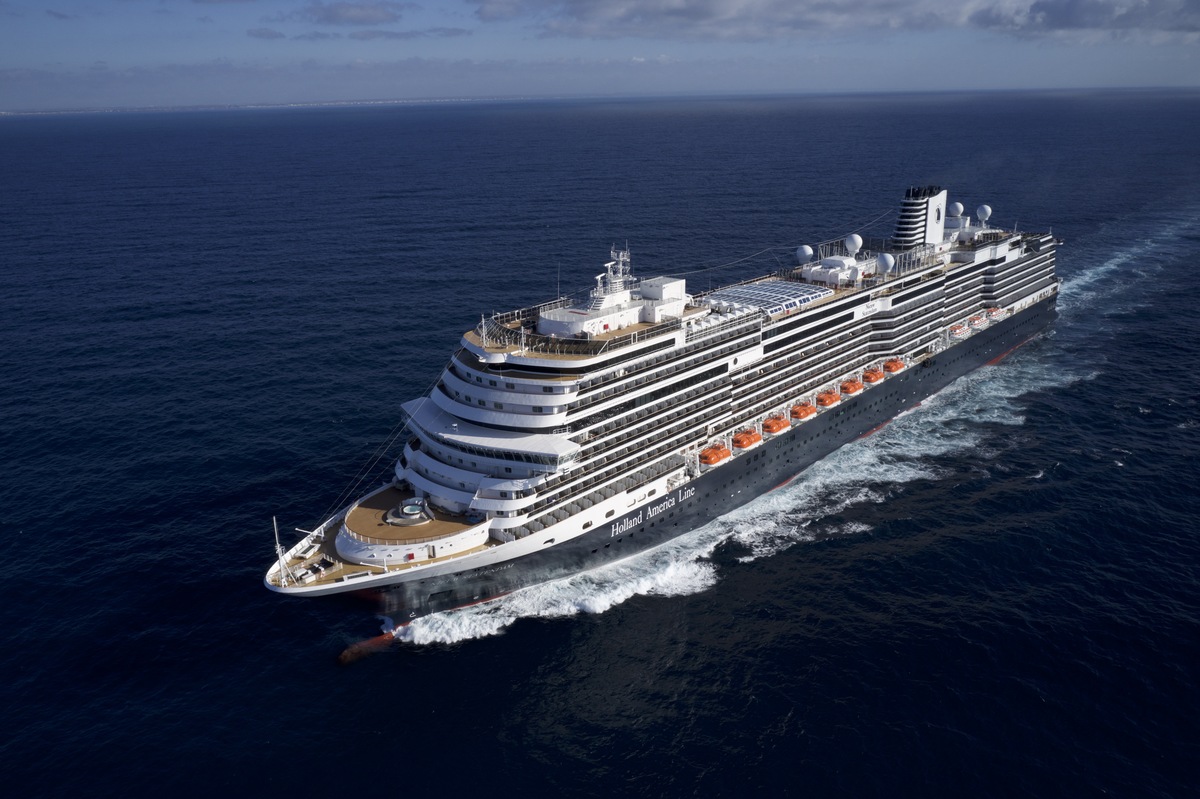
Nieuw Statendam
A showcase of Pinnacle Class sophistication — perfectly-sized, refined design, inviting spaces, and standout venues create an elevated experience at sea.