28-Day British Isles & Arctic Circle: North Cape Solstice
Cruise only — prices from Solo cruise only — from

Ports of Call & Itinerary
28-night voyage departing Rotterdam.
Printable Itinerary (PDF)Route Map
28-Day British Isles & Arctic Circle: North Cape Solstice
22 ports plotted · click a marker for details
Day 1
Rotterdam , Netherlands
Saturday, 27/05/2028
Rotterdam is a city that's a long way removed from most people's stereotypical notion of the Netherlands. There are few, if any, canals to be found here nor are there any quaint windmills. There is, however, a thriving modern city which is one of the busiest ports in the entire world.
Day 3
Queensferry , Scotland
Monday, 29/05/2028
Queensferry, also called South Queensferry or simply "The Ferry", is a town to the west of Edinburgh, Scotland. Traditionally a royal burgh of West Lothian,[3] it is now administered by the City of Edinburgh Council. It lies ten miles to the north-west of Edinburgh city centre, on the shore of the Firth of Forth between the Forth Bridge, Forth Road Bridge and the Queensferry Crossing.

Day 4
Invergordon , Scotland
Tuesday, 30/05/2028
The port of Invergordon is your gateway to the Great Glen, an area of Scotland that includes Loch Ness and the city of Inverness. Inverness, the capital of the Highlands, has the flavor of a Lowland town, its winds blowing in a sea-salt air from the Moray Firth. The Great Glen is also home to one of the world's most famous monster myths: in 1933, during a quiet news week, the editor of a local paper decided to run a story about a strange sighting of something splashing about in Loch Ness. But there's more to look for here besides Nessie, including inland lochs, craggy and steep-sided mountains, rugged promontories, deep inlets, brilliant purple and emerald moorland, and forests filled with astonishingly varied wildlife, including mountain hares, red deer, golden eagles, and ospreys.
Day 5
Portree, Isle of Skye , Scotland
Wednesday, 31/05/2028
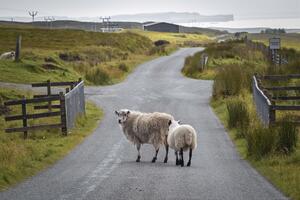
The Isle of Skye ranks near the top of most visitors' priority lists: the romance of Prince Charles Edward Stuart, known as Bonnie Prince Charlie, combined with the misty Cuillin Hills and their proximity to the mainland all contribute to its popularity. Today Skye remains mysterious and mountainous, an island of sunsets that linger brilliantly until late at night and of beautiful, soft mists. Much photographed are the really old crofts, one or two of which are still inhabited, with their thick stone walls and thatch roofs. Orientation on Skye is easy: follow the only roads around the loops on the northern part of the island and enjoy the road running the length of the Sleat Peninsula in southern Skye, taking the loop roads that exit to the north and south as you please. There are some stretches of single-lane road, but none poses a problem.

Day 6
Belfast , Northern Ireland
Thursday, 01/06/2028
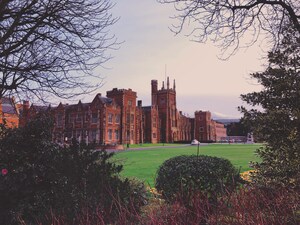
Before English and Scottish settlers arrived in the 1600s, Belfast was a tiny village called Béal Feirste ("sandbank ford") belonging to Ulster's ancient O'Neill clan. With the advent of the Plantation period (when settlers arrived in the 1600s), Sir Arthur Chichester, from Devon in southwestern England, received the city from the English Crown, and his son was made Earl of Donegall. Huguenots fleeing persecution from France settled near here, bringing their valuable linen-work skills. In the 18th century, Belfast underwent a phenomenal expansion—its population doubled every 10 years, despite an ever-present sectarian divide. Although the Anglican gentry despised the Presbyterian artisans—who, in turn, distrusted the native Catholics—Belfast's growth continued at a dizzying speed. The city was a great Victorian success story, an industrial boomtown whose prosperity was built on trade, especially linen and shipbuilding. Famously (or infamously), the Titanic was built here, giving Belfast, for a time, the nickname "Titanic Town." Having laid the foundation stone of the city's university in 1845, Queen Victoria returned to Belfast in 1849 (she is recalled in the names of buildings, streets, bars, monuments, and other places around the city), and in the same year, the university opened under the name Queen's College. Nearly 40 years later, in 1888, Victoria granted Belfast its city charter. Today its population is nearly 300,000, tourist numbers have increased, and this dramatically transformed city is enjoying an unparalleled renaissance.This is all a welcome change from the period when news about Belfast meant reports about "the Troubles." Since the 1994 ceasefire, Northern Ireland's capital city has benefited from major hotel investment, gentrified quaysides (or strands), a sophisticated new performing arts center, and major initiatives to boost tourism. Although the 1996 bombing of offices at Canary Wharf in London disrupted the 1994 peace agreement, the ceasefire was officially reestablished on July 20, 1997, and this embattled city began its quest for a newfound identity.Since 2008, the city has restored all its major public buildings such as museums, churches, theaters, City Hall, Ulster Hall—and even the glorious Crown Bar—spending millions of pounds on its built heritage. A gaol that at the height of the Troubles held some of the most notorious murderers involved in paramilitary violence is now a major visitor attraction.Belfast's city center is made up of three roughly contiguous areas that are easy to navigate on foot. From the south end to the north, it's about an hour's leisurely walk.
Day 7
Greenock , Scotland
Friday, 02/06/2028
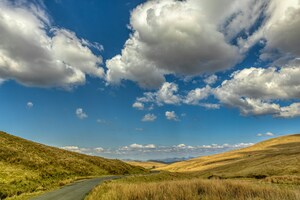
Trendy stores, a booming cultural life, fascinating architecture, and stylish restaurants reinforce Glasgow's claim to being Scotland's most exciting city. After decades of decline, it has experienced an urban renaissance uniquely its own. The city’s grand architecture reflects a prosperous past built on trade and shipbuilding. Today buildings by Charles Rennie Mackintosh hold pride of place along with the Zaha Hadid–designed Riverside Museum.Glasgow (the "dear green place," as it was known) was founded some 1,500 years ago. Legend has it that the king of Strathclyde, irate about his wife's infidelity, had a ring he had given her thrown into the river Clyde. (Apparently she had passed it on to an admirer.) When the king demanded to know where the ring had gone, the distraught queen asked the advice of her confessor, St. Mungo. He suggested fishing for it—and the first salmon to emerge had the ring in its mouth. The moment is commemorated on the city's coat of arms.The medieval city expanded when it was given a royal license to trade; the current High Street was the main thoroughfare at the time. The vast profits from American cotton and tobacco built the grand mansions of the Merchant City in the 18th century. In the 19th century the river Clyde became the center of a vibrant shipbuilding industry, fed by the city’s iron and steel works. The city grew again, but its internal divisions grew at the same time. The West End harbored the elegant homes of the newly rich shipyard owners. Down by the river, areas like the infamous Gorbals, with its crowded slums, sheltered the laborers who built the ships. They came from the Highlands, expelled to make way for sheep, or from Ireland, where the potato famines drove thousands from their homes.During the 19th century the population grew from 80,000 to more than a million. And the new prosperity gave Glasgow its grand neoclassical buildings, such as those built by Alexander "Greek" Thomson, as well as the adventurous visionary buildings designed by Charles Rennie Mackintosh and others who produced Glasgow’s Arts and Crafts movement. The City Chambers, built in 1888, are a proud statement in marble and gold sandstone, a clear symbol of the wealthy and powerful Victorian industrialists' hopes for the future.The decline of shipbuilding and the closure of the factories led to much speculation as to what direction the city would take now. The curious thing is that, at least in part, the past gave the city a new lease of life. It was as if people looked at their city and saw Glasgow’s beauty for the first time: its extraordinarily rich architectural heritage, its leafy parks, its artistic heritage, and its complex social history. Today Glasgow is a vibrant cultural center and a commercial hub, as well as a launching pad from which to explore the rest of Scotland, which, as it turns out, is not so far away. In fact, it takes only 40 minutes to reach Loch Lomond, where the other Scotland begins.
Day 8
Killybegs , Ireland
Saturday, 03/06/2028
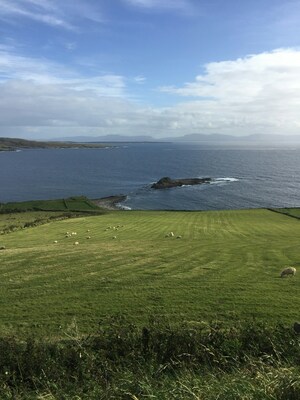
Killybegs The days start early in Killybegs, as this quiet fishing town rumbles to life, and ships with red and blue paint peeling from their hulls quietly depart, ready for a morning's hard work at sea. Located in a scenic part of County Donegal, Killybegs is Ireland's fishing capital, and the salty breeze and pretty streets serve as a revitalising medicine for visitors. The town is also your gateway to some of the country's most majestic coastal scenery, which is dotted with flashing white lighthouses, keeping watch over invigorating seascapes. Killybegs enjoys a privileged position on the coast of north west of Ireland, close to the spectacular Slieve League - a titanic mountain, which explodes upwards from frothing ocean. Walk as close as you dare to the coastline’s sheer drops, or admire the folding cliffs from the best vantage point, down on the water.
Day 9
Cruise by the Cliffs of Moher
Sunday, 04/06/2028
Day 9
Galway , Ireland
Sunday, 04/06/2028
Galway is a city in the West of Ireland in the province of Connacht. It lies on the River Corrib between Lough Corrib and Galway Bay and is surrounded by County Galway. It is the fourth most populous urban area in the Republic of Ireland and the sixth most populous city in the island of Ireland. It is both a picturesque and lively city with a wonderful avant-garde culture and a fascinating mixture of locally owned speciality shops, often featuring locally made crafts. Indeed local handcrafts are a feature of the entire region including hand knits, pottery, glass, jewellery and woodwork. The city’s hub is 18th-century Eyre Square, a popular meeting spot surrounded by shops, and traditional pubs that often offer live Irish folk music. Nearby, stone-clad cafes, boutiques and art galleries line the winding lanes of the Latin Quarter, which retains portions of the medieval city walls. The city bears the nickname "The City of the Tribes" because "fourteen tribes" of merchant families led the city in its Hiberno-Norman period. The merchants would have seen themselves as Irish gentry and loyal to the King. They later adopted the term as a badge of honour and pride in defiance of the town's Cromwellian occupier.

Day 11
Dublin , Ireland
Tuesday, 06/06/2028
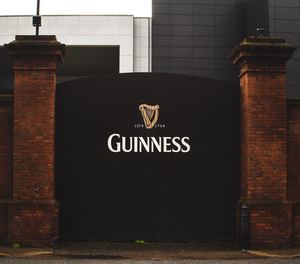
Dublin is making a comeback. The decade-long "Celtic Tiger" boom era was quickly followed by the Great Recession, but The Recovery has finally taken a precarious hold. For visitors, this newer and wiser Dublin has become one of western Europe's most popular and delightful urban destinations. Whether or not you're out to enjoy the old or new Dublin, you'll find it a colossally entertaining city, all the more astonishing considering its intimate size.It is ironic and telling that James Joyce chose Dublin as the setting for his famous Ulysses, Dubliners, and A Portrait of the Artist as a Young Man because it was a "center of paralysis" where nothing much ever changed. Which only proves that even the greats get it wrong sometimes. Indeed, if Joyce were to return to his once-genteel hometown today—disappointed with the city's provincial outlook, he left it in 1902 at the age of 20—and take a quasi-Homeric odyssey through the city (as he so famously does in Ulysses), would he even recognize Dublin as his "Dear Dirty Dumpling, foostherfather of fingalls and dotthergills"?For instance, what would he make of Temple Bar—the city's erstwhile down-at-the-heels neighborhood, now crammed with cafés and trendy hotels and suffused with a nonstop, international-party atmosphere? Or the simple sophistication of the open-air restaurants of the tiny Italian Quarter (named Quartier Bloom after his own creation), complete with sultry tango lessons? Or of the hot–cool Irishness, where every aspect of Celtic culture results in sold-out theaters, from Once, the cult indie movie and Broadway hit, to Riverdance, the old Irish mass-jig recast as a Las Vegas extravaganza? Plus, the resurrected Joyce might be stirred by the songs of Hozier, fired up by the sultry acting of Michael Fassbender, and moved by the award-winning novels of Colum McCann. As for Ireland's capital, it's packed with elegant shops and hotels, theaters, galleries, coffeehouses, and a stunning variety of new, creative little restaurants can be found on almost every street in Dublin, transforming the provincial city that suffocated Joyce into a place almost as cosmopolitan as the Paris to which he fled. And the locals are a hell of a lot more fun! Now that the economy has finally turned a corner, Dublin citizens can cast a cool eye over the last 20 crazy years. Some argue that the boomtown transformation of their heretofore-tranquil city has permanently affected its spirit and character. These skeptics (skepticism long being a favorite pastime in the capital city) await the outcome of "Dublin: The Sequel," and their greatest fear is the possibility that the tattered old lady on the Liffey has become a little less unique, a little more like everywhere else.Oh ye of little faith: the rare ole gem that is Dublin is far from buried. The fundamentals—the Georgian elegance of Merrion Square, the Norman drama of Christ Church Cathedral, the foamy pint at an atmospheric pub—are still on hand to gratify. Most of all, there are the locals themselves: the nod and grin when you catch their eye on the street, the eagerness to hear half your life story before they tell you all of theirs, and their paradoxically dark but warm sense of humor. It's expected that 2016 will be an extra-special year in the capital, as centenary celebrations of the fateful 1916 Easter Rising will dominate much of the cultural calendar.
Day 12
Cork , Ireland
Wednesday, 07/06/2028
Cork City received its first charter in 1185 from Prince John of Norman England, and it takes its name from the Irish word corcaigh, meaning "marshy place." The original 6th-century settlement was spread over 13 small islands in the River Lee. Major development occurred during the 17th and 18th centuries with the expansion of the butter trade, and many attractive Georgian-design buildings with wide bowfront windows were constructed during this time. As late as 1770 Cork's present-day main streets—Grand Parade, Patrick Street, and the South Mall—were submerged under the Lee. Around 1800, when the Lee was partially dammed, the river divided into two streams that now flow through the city, leaving the main business and commercial center on an island, not unlike Paris's Île de la Cité. As a result, the city has a number of bridges and quays, which, although initially confusing, add greatly to the port's unique character. Cork can be very "Irish" (hurling, Gaelic football, televised plowing contests, music pubs, and peat smoke). But depending on what part of town you're in, Cork can also be distinctly un-Irish—the sort of place where hippies, gays, and farmers drink at the same pub.

Day 14
Dover , England
Friday, 09/06/2028
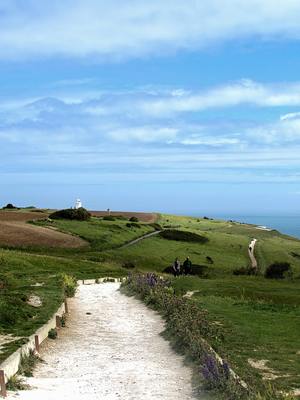
Known as the gateway of England, Dover welcomes millions of visitors from all over the globe each year in its role as the ferry capital of the world and the second busiest cruise port in the UK. The White Cliffs Country has a rich heritage. Within the walls of the town’s iconic castle, over 2,000 years of history waits to be explored, whilst the town’s museum is home to the Dover Bronze Age Boat, the world’s oldest known seagoing vessel. The town’s cliffs that are a welcome sight for today's cross-channel travellers also served as the control centre for the Dunkirk evacuation in 1940.
Day 15
Rotterdam , Netherlands
Saturday, 10/06/2028
Rotterdam is a city that's a long way removed from most people's stereotypical notion of the Netherlands. There are few, if any, canals to be found here nor are there any quaint windmills. There is, however, a thriving modern city which is one of the busiest ports in the entire world.
Day 17
Haugesund , Norway
Monday, 12/06/2028
Day 18
Ålesund , Norway
Tuesday, 13/06/2028
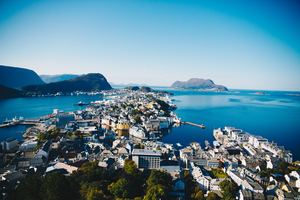
The coastal town of Ålesund is the commercial capital of the Møre og Romsdal district. But more important, it is noted for its characteristic Jugendstil (Art Nouveau) buildings, which some claim make Ålesund one of the most beautiful towns in Norway. This Art Nouveau style emerged when the town was completely rebuilt after a devastating fire in 1904 destroyed nearly 800 buildings and left 10,000 residents homeless. It is said that the fire started by a tipped oil lamp. Rebuilding was carried out with the help of many young, foreign architects who added their own flourishes to the architectural blend of German Jugendstil and Viking roots. Today, narrow streets are crammed with buildings topped with turrets, spires and gables that bear decorations of dragonheads and curlicues. As one of the few remaining Art Nouveau towns in the world, in 1998 Ålesund was awarded the coveted Houens National Memorial Prize for the preservation of its unique architecture.
Day 19
Cruising Trondheim Fjord
Wednesday, 14/06/2028
Day 19
Trondheim , Norway
Wednesday, 14/06/2028
One of Scandinavia's oldest cities, Trondheim was the first capital of Norway, from AD 997 to 1380. Founded in 997 by Viking king Olav Tryggvason, it was first named Nidaros (still the name of the cathedral), a composite word referring to the city's location at the mouth of the Nidelva River. Today, it's Central Norway's largest (and Norway's third largest) city, with a population of 150,000. The wide streets of the historic city center remain lined with brightly painted wood houses and striking warehouses. But it's no historic relic: it's also the home to NTNU (Norwegian University of Science and Technology) and is Norway's technological capital.
Day 21
Scenic Cruising
Friday, 16/06/2028
Day 21
Honningsvåg , Norway
Friday, 16/06/2028
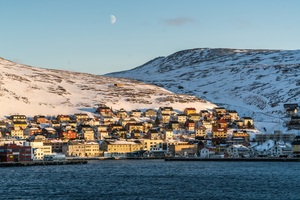
Searching in 1553 for a northeast passage to India, British navigator Richard Chancellor came upon a crag 307 yards above the Barents Sea. He named the jut of rock North Cape, or Nordkapp. Today Europe's northernmost point is a rite-of-passage journey for nearly all Scandinavians and many others. Most cruise passengers visit Nordkapp from Honningsvåg, a fishing village on Magerøya Island. The journey from Honningsvåg to Nordkapp covers about 35 km (22 miles) across a landscape characterized by rocky tundra and grazing reindeer, which are rounded up each spring by Sami herdsmen in boats. The herdsmen herd the reindeer across a mile-wide channel from their winter home on the mainland. Honningvåg's northerly location makes for long, dark winter nights and perpetually sun-filled summer days. The village serves as the gateway to Arctic exploration and the beautiful Nordkapp Plateau, a destination that calls to all visitors of this region. Most of those who journey to Nordkapp (North Cape), the northernmost tip of Europe, are in it for a taste of this unique, otherworldly, rugged yet delicate landscape. You'll see an incredible treeless tundra, with crumbling mountains and sparse dwarf plants. The subarctic environment is very vulnerable, so don't disturb the plants. Walk only on marked trails and don't remove stones, leave car marks, or make campfires. Because the roads are closed in winter, the only access is from the tiny fishing village of Skarsvåg via Sno-Cat, a thump-and-bump ride that's as unforgettable as the desolate view.
Day 22
Tromsø , Norway
Saturday, 17/06/2028
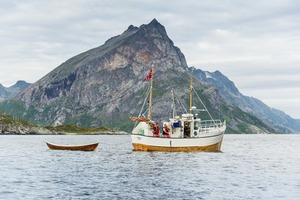
With its centre located on the island of Tromsø, the municipality of Tromsø is more than five times the size of Norway’s capital, Oslo, and is the world’s northernmost university city. Lying 200 miles inside the Arctic Circle, it is known as the 'Gateway to the Arctic' because it was used as a starting point for hunters looking for Arctic foxes, polar bears and seals. In the 19th century it was a base for explorers on Arctic expeditions – a history that is remembered in the city’s Polar Museum, which you can visit on an excursion. Also commemorated in the area is the history of Norway’s indigenous people, the Sami. Visitors can learn about the traditions, heritage and modern preservation of the Sami culture at the Tromsø Museum. Nowadays, Tromsø is a charming mix of old and new, with wooden buildings sitting alongside contemporary architecture such as the impressive glacier-like Arctic Cathedral, which features one of the largest stained glass windows in Europe. Looking down on the city is Mount Storsteinen, and a cable car runs to the top, giving wonderful views over the surrounding countryside of forested peaks and reindeer pastures.
Day 24
Åndalsnes , Norway
Monday, 19/06/2028
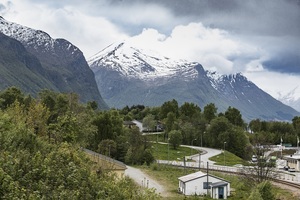
A small town in Norway’s fjord country, Åndalsnes is a gateway to the rugged wilderness of the Romsdalfjord. Known as the 'village between the mountains and the fjords', it typifies Norway's striking natural beauty with its setting on a promontory lined by alps and set at the mouth of the Rauma River. The town itself is tucked under the lofty mountain peaks, backed by lush, green scenery. Nearby is the impressive Trollveggen, or 'Troll Wall', which at 6,000 feet is Europe's highest vertical cliff face and is often topped by cloud. The precipice is said to be the ultimate trial for rock climbers, who regularly flock here to accept the challenge. Åndalsnes is also the terminus of the famous Rauma Railway which runs 70 miles alongside the emerald-green Rauma river and through some of Norway’s most spectacular scenery to Dombås (2160 feet above sea level) where it then connects to the main Oslo to Trondheim line.
Day 25
Stavanger , Norway
Tuesday, 20/06/2028
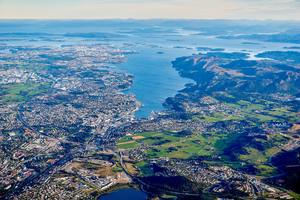
Overlooking the Atlantic Ocean, Stavanger flourished in the 19th century as a fishing port. While other towns in Norway have suffered with the decline of this industry, Stavanger has kept its economy booming by diversifying, first into shipbuilding and now into oil. These two contrasting industries have created a city of two halves – a modern area of high-rise buildings and a historic centre with cobbled streets and old wooden houses. The city centre was the birthplace of Alexander Kielland, one of the great 19th-century Norwegian novelists. Stavanger Cathedral, dating from 1125, is an impressive building and the only medieval cathedral in Norway that has not been substantially altered since it was first built. From Stavanger you can explore the attractive blue waters of Lysefjord, surrounded by cliffs and striking rock formations, and also visit Hafrsfjord where the Viking King Harald won an important battle that started the Unification of Norway. Those preferring to explore on their own may wish to visit the interesting Petroleum Museum.
Day 26
Lerwick, Shetland Islands , Scotland
Wednesday, 21/06/2028
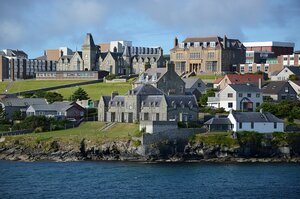
Founded by Dutch fishermen in the 17th century, Lerwick today is a busy town and administrative center. Handsome stone buildings—known as lodberries—line the harbor; they provided loading bays for goods, some of them illegal. The town's twisting flagstone lanes and harbor once heaved with activity, and Lerwick is still an active port today. This is also where most visitors to Shetland dock, spilling out of cruise ships, allowing passengers to walk around the town.
Day 28
Dover , England
Friday, 23/06/2028
Known as the gateway of England, Dover welcomes millions of visitors from all over the globe each year in its role as the ferry capital of the world and the second busiest cruise port in the UK. The White Cliffs Country has a rich heritage. Within the walls of the town’s iconic castle, over 2,000 years of history waits to be explored, whilst the town’s museum is home to the Dover Bronze Age Boat, the world’s oldest known seagoing vessel. The town’s cliffs that are a welcome sight for today's cross-channel travellers also served as the control centre for the Dunkirk evacuation in 1940.
Day 29
Rotterdam , Netherlands
Saturday, 24/06/2028
Rotterdam is a city that's a long way removed from most people's stereotypical notion of the Netherlands. There are few, if any, canals to be found here nor are there any quaint windmills. There is, however, a thriving modern city which is one of the busiest ports in the entire world.
Room Type & Prices
All prices per person based on double occupancy. Solo traveller prices — single occupancy. Contact our cruise experts for the latest availability and best fares.
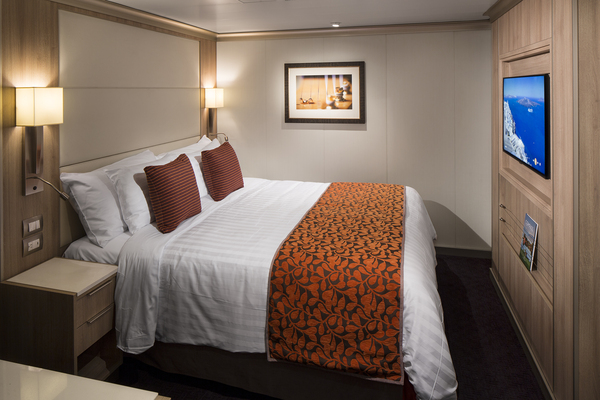
Interior
143–225 sqft · Up to 2 guests
Spa Inside
143–225 sqft · Up to 2 guests
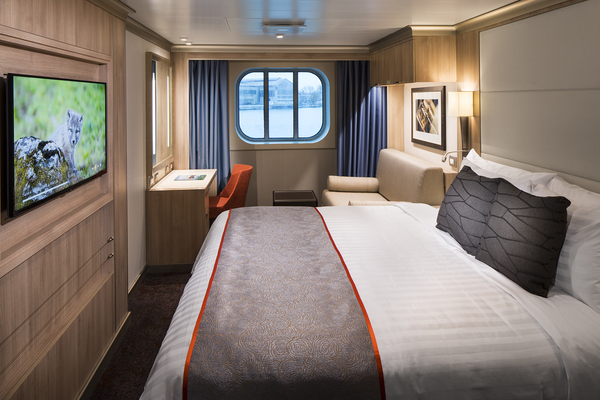
Ocean View Staterooms
175–282 sqft · Up to 2 guests
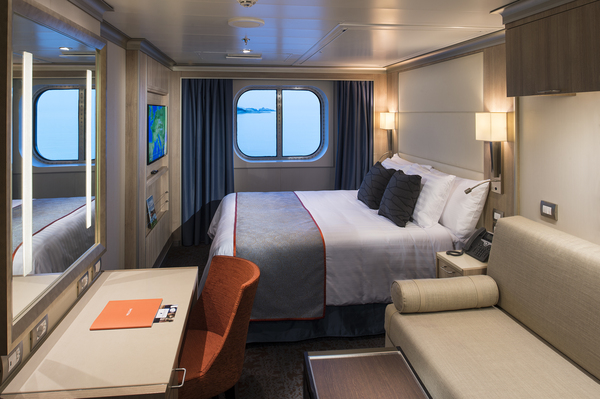
Spa Ocean View
175–282 sqft · Up to 2 guests
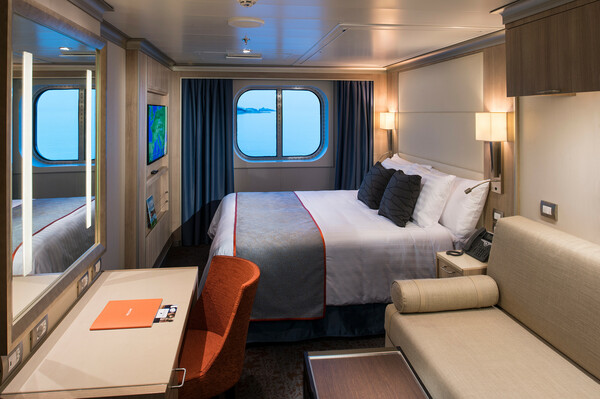
Family Ocean View Staterooms
222–231 sqft · Up to 5 guests
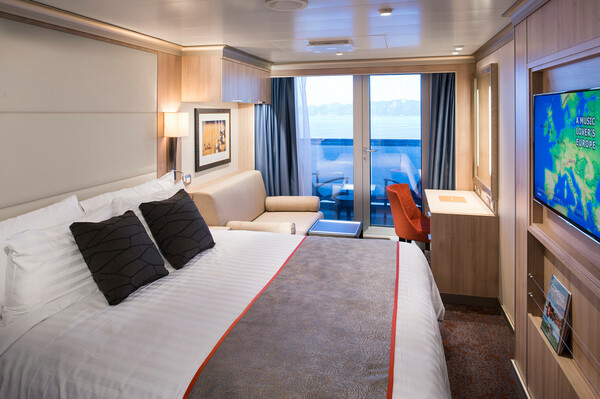
Verandah/Aft-View Verandah/Obstructed Verandah
228–405 sqft · Up to 2 guests
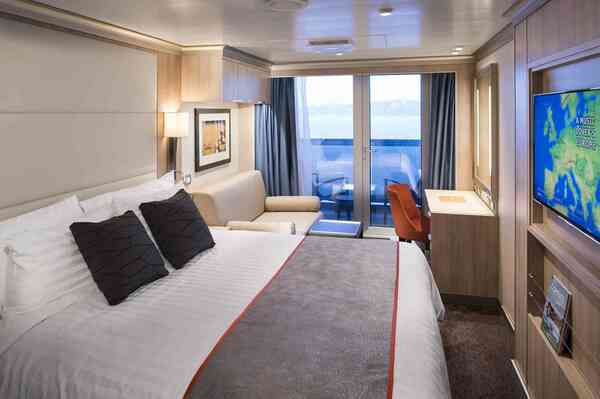
Spa Verandah
228–405 sqft · Up to 2 guests
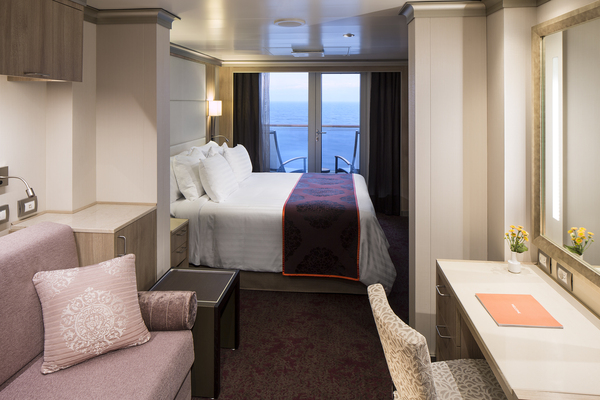
Vista Suite/Aft-View Vista Suite
260–356 sqft · Up to 2 guests
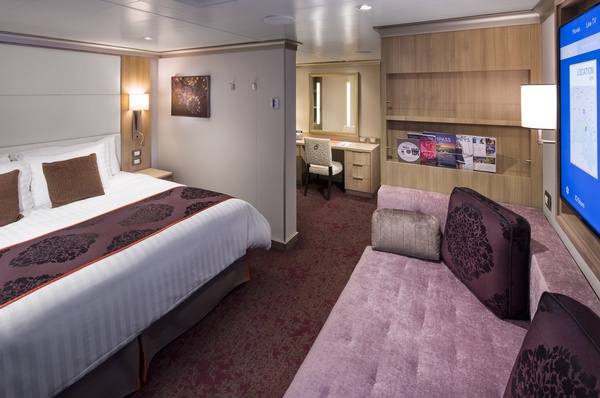
Signature Suite
393–400 sqft · Up to 3 guests
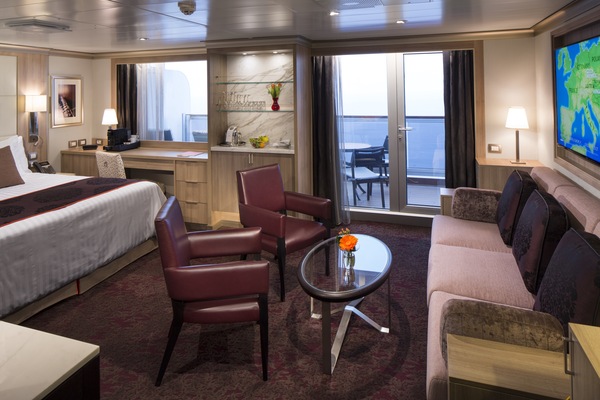
Neptune Suite
465–502 sqft · Up to 2 guests
Inside
| Cabin | Grade | Per Person | Avail. | |
|---|---|---|---|---|
| Interior · 143–225 sqft | N Interior Stateroom (N) | Enquire → | ||
| L Interior Stateroom (L) | Enquire → | |||
| K Interior Stateroom (K) | Enquire → | |||
| J Interior Stateroom (J) | Enquire → | |||
| I Large Interior Stateroom | Enquire → | |||
| Spa Inside · 143–225 sqft | IQ Interior Stateroom (Spa) | Enquire → |
Interior · 143–225 sqft
N Interior Stateroom (N)
Interior · 143–225 sqft
L Interior Stateroom (L)
Interior · 143–225 sqft
K Interior Stateroom (K)
Interior · 143–225 sqft
J Interior Stateroom (J)
Interior · 143–225 sqft
I Large Interior Stateroom
Spa Inside · 143–225 sqft
IQ Interior Stateroom (Spa)
Oceanview
| Cabin | Grade | Per Person | Avail. | |
|---|---|---|---|---|
| Ocean View Staterooms · 175–282 sqft | F Ocean View Stateroom (F) | Enquire → | ||
| E Ocean View Stateroom (E) | Enquire → | |||
| D Ocean View Stateroom (D) | Enquire → | |||
| C Ocean View Stateroom (C) | Enquire → | |||
| Spa Ocean View · 175–282 sqft | CQ Ocean View Stateroom (Spa) | Enquire → | ||
| Family Ocean View Staterooms · 222–231 sqft | FB Family Ocean View Stateroom (FB) | Enquire → | ||
| FA Family Ocean View Stateroom (FA) | Enquire → |
Ocean View Staterooms · 175–282 sqft
F Ocean View Stateroom (F)
Ocean View Staterooms · 175–282 sqft
E Ocean View Stateroom (E)
Ocean View Staterooms · 175–282 sqft
D Ocean View Stateroom (D)
Ocean View Staterooms · 175–282 sqft
C Ocean View Stateroom (C)
Spa Ocean View · 175–282 sqft
CQ Ocean View Stateroom (Spa)
Family Ocean View Staterooms · 222–231 sqft
FB Family Ocean View Stateroom (FB)
Family Ocean View Staterooms · 222–231 sqft
FA Family Ocean View Stateroom (FA)
Balcony
| Cabin | Grade | Per Person | Avail. | |
|---|---|---|---|---|
| Verandah/Aft-View Verandah/Obstructed Verandah · 228–405 sqft | VH Verandah Stateroom (VH) | Enquire → | ||
| VF Verandah Stateroom (VF) | Enquire → | |||
| VE Verandah Stateroom (VE) | Enquire → | |||
| VD Verandah Stateroom (VD) | Enquire → | |||
| VC Verandah Stateroom (VC) | Enquire → | |||
| VB Verandah Stateroom (VB) | Enquire → | |||
| VA Verandah Stateroom (VA) | Enquire → | |||
| V Verandah Stateroom (V) | Enquire → | |||
| VS Verandah Stateroom (VS) | Enquire → | |||
| Spa Verandah · 228–405 sqft | VQ Verandah Stateroom (Spa) | Enquire → |
Verandah/Aft-View Verandah/Obstructed Verandah · 228–405 sqft
VH Verandah Stateroom (VH)
Verandah/Aft-View Verandah/Obstructed Verandah · 228–405 sqft
VF Verandah Stateroom (VF)
Verandah/Aft-View Verandah/Obstructed Verandah · 228–405 sqft
VE Verandah Stateroom (VE)
Verandah/Aft-View Verandah/Obstructed Verandah · 228–405 sqft
VD Verandah Stateroom (VD)
Verandah/Aft-View Verandah/Obstructed Verandah · 228–405 sqft
VC Verandah Stateroom (VC)
Verandah/Aft-View Verandah/Obstructed Verandah · 228–405 sqft
VB Verandah Stateroom (VB)
Verandah/Aft-View Verandah/Obstructed Verandah · 228–405 sqft
VA Verandah Stateroom (VA)
Verandah/Aft-View Verandah/Obstructed Verandah · 228–405 sqft
V Verandah Stateroom (V)
Verandah/Aft-View Verandah/Obstructed Verandah · 228–405 sqft
VS Verandah Stateroom (VS)
Spa Verandah · 228–405 sqft
VQ Verandah Stateroom (Spa)
Suite
| Cabin | Grade | Per Person | Avail. | |
|---|---|---|---|---|
| Vista Suite/Aft-View Vista Suite · 260–356 sqft | BC Vista Suite (BC) | Enquire → | ||
| B Vista Suite (B) | Enquire → | |||
| A Vista Suite (A) | Enquire → | |||
| Signature Suite · 393–400 sqft | SY Signature Suite (SY) | Enquire → | ||
| SS Signature Suite (SS) | Enquire → | |||
| Neptune Suite · 465–502 sqft | SC Neptune Suite (SC) | Enquire → | ||
| SB Neptune Suite (SB) | Enquire → | |||
| SA Neptune Suite (SA) | Enquire → |
Vista Suite/Aft-View Vista Suite · 260–356 sqft
BC Vista Suite (BC)
Vista Suite/Aft-View Vista Suite · 260–356 sqft
B Vista Suite (B)
Vista Suite/Aft-View Vista Suite · 260–356 sqft
A Vista Suite (A)
Signature Suite · 393–400 sqft
SY Signature Suite (SY)
Signature Suite · 393–400 sqft
SS Signature Suite (SS)
Neptune Suite · 465–502 sqft
SC Neptune Suite (SC)
Neptune Suite · 465–502 sqft
SB Neptune Suite (SB)
Neptune Suite · 465–502 sqft
SA Neptune Suite (SA)
More Departures
14 nights
14-Day Atlantic Seaboard & Colonial New England: Quebec City
17/10/2026
From
£2,539
12 nights
12-Day Panama Canal Discovery: Costa Rica & Greater Antilles
18/10/2026
From
£2,129
11 nights
11-Day Mexican Riviera & Sea Of Cortez
20/10/2026
From
£1,549
11 nights
11-Day Mediterranean Splendor: Greece, Italy & Provence
24/10/2026
From
£3,059
9 nights
9-Day Southern Caribbean
30/10/2026
From
£1,619
7 nights
7-Day Norwegian Fjords With Nordfjord
31/10/2026
From
£1,319
Your Ship
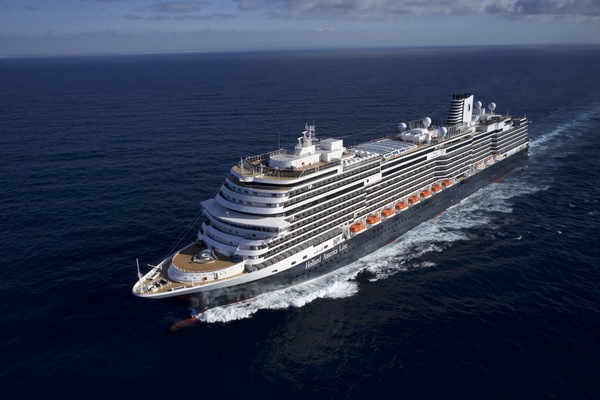
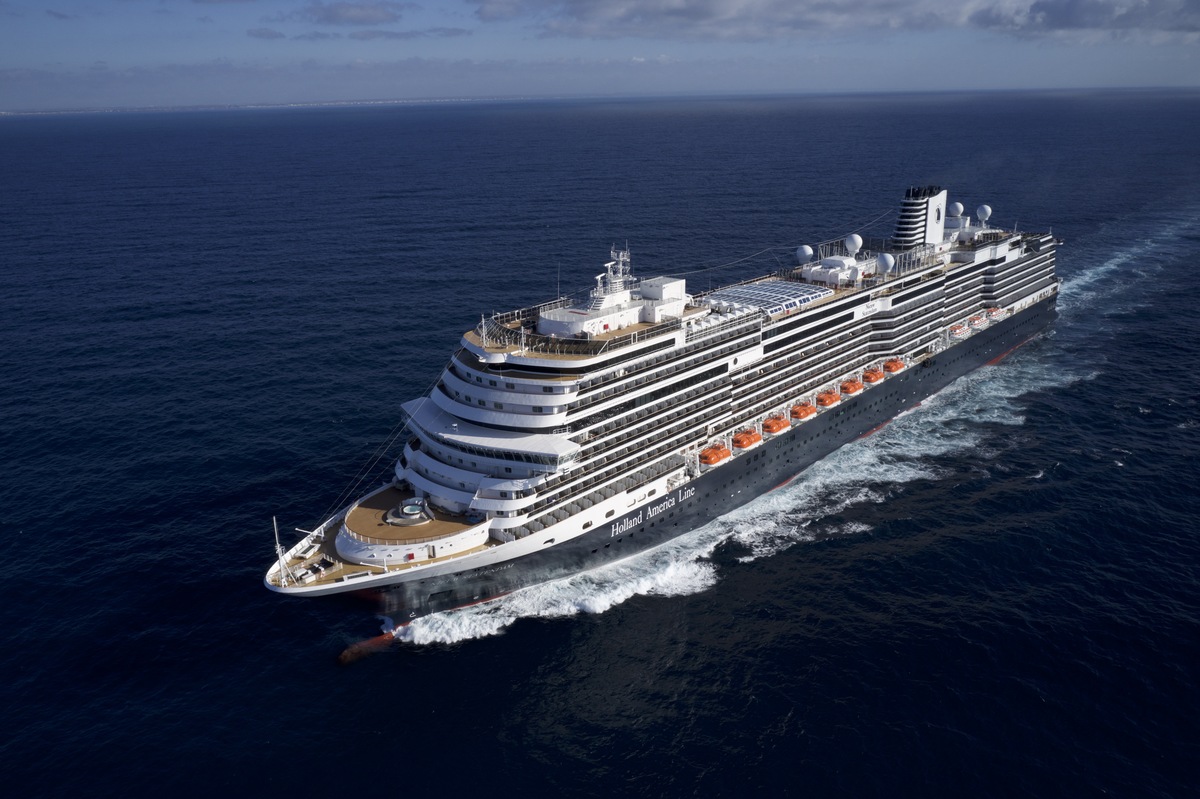
Nieuw Statendam
A showcase of Pinnacle Class sophistication — perfectly-sized, refined design, inviting spaces, and standout venues create an elevated experience at sea.