Dalmatian Diversion
Cruise only — prices from Solo cruise only — from

Ports of Call & Itinerary
12-night voyage departing Barcelona, arriving Venice.
Printable Itinerary (PDF)Route Map
Dalmatian Diversion
12 ports plotted · click a marker for details
Day 1
Barcelona , Spain
Sunday, 03/10/2027
The infinite variety of street life, the nooks and crannies of the medieval Barri Gòtic, the ceramic tile and stained glass of Art Nouveau facades, the art and music, the throb of street life, the food (ah, the food!)—one way or another, Barcelona will find a way to get your full attention. The capital of Catalonia is a banquet for the senses, with its beguiling mix of ancient and modern architecture, tempting cafés and markets, and sun-drenched Mediterranean beaches. A stroll along La Rambla and through waterfront Barceloneta, as well as a tour of Gaudí's majestic Sagrada Famíliaand his other unique creations, are part of a visit to Spain's second-largest city. Modern art museums and chic shops call for attention, too. Barcelona's vibe stays lively well into the night, when you can linger over regional wine and cuisine at buzzing tapas bars.

Day 2
Marseille , France
Monday, 04/10/2027
Since being designated a European Capital of Culture for 2013, with an estimated €660 million of funding in the bargain, Marseille has been in the throes of an extraordinary transformation, with no fewer than five major new arts centers, a beautifully refurbished port, revitalized neighborhoods, and a slew of new shops and restaurants. Once the underdog, this time-burnished city is now welcoming an influx of weekend tourists who have colonized entire neighborhoods and transformed them into elegant pieds-à-terre (or should we say, mer). The second-largest city in France, Marseille is one of Europe's most vibrant destinations. Feisty and fond of broad gestures, it is also as complicated and as cosmopolitan now as it was when a band of Phoenician Greeks first sailed into the harbor that is today's Vieux Port in 600 BC. Legend has it that on that same day a local chieftain's daughter, Gyptis, needed to choose a husband, and her wandering eyes settled on the Greeks' handsome commander Protis. Her dowry brought land near the mouth of the Rhône, where the Greeks founded Massalia, the most important Continental shipping port in antiquity. The port flourished for some 500 years as a typical Greek city, enjoying the full flush of classical culture, its gods, its democratic political system, its sports and theater, and its naval prowess. Caesar changed all that, besieging the city in 49 BC and seizing most of its colonies. In 1214 Marseille was seized again, this time by Charles d'Anjou, and was later annexed to France by Henri IV in 1481, but it was not until Louis XIV took the throne that the biggest transformations of the port began; he pulled down the city walls in 1666 and expanded the port to the Rive Neuve (New Riverbank). The city was devastated by plague in 1720, losing more than half its population. By the time of the Revolution, Marseille was on the rebound once again, with industries of soap manufacturing and oil processing flourishing, encouraging a wave of immigration from Provence and Italy. With the opening of the Suez Canal in 1869, Marseille became the greatest boomtown in 19th-century Europe. With a large influx of immigrants from areas as exotic as Tangiers, the city quickly acquired the multicultural population it maintains to this day.
Day 3
Monaco , Monaco
Tuesday, 05/10/2027
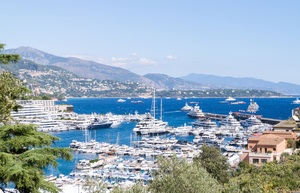
The 202-hectare Principality of Monaco is located east of France’s Mediterranean coast. Known for its royal family, especially Prince Albert of Monaco, its casinos and racetracks and for being a wealthy state with no applied taxes. Monaco is reachable by air through the French airport of Nice Côte d'Azur, located approximately 16 miles from the principality.
Day 4
Portofino , Italy
Wednesday, 06/10/2027
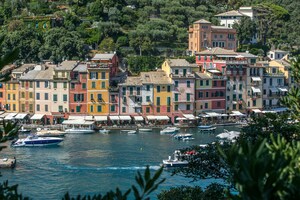
One of the most photographed villages along the coast, with a decidedly romantic and affluent aura, Portofino has long been a popular destination for the rich and famous. Once an ancient Roman colony and taken by the Republic of Genoa in 1229, it’s also been ruled by the French, English, Spanish, and Austrians, as well as by marauding bands of 16th-century pirates. Elite British tourists first flocked to the lush harbor in the mid-1800s. Some of Europe's wealthiest drop anchor in Portofino in summer, but they stay out of sight by day, appearing in the evening after buses and boats have carried off the day-trippers.There's not actually much to do in Portofino other than stroll around the wee harbor, see the castle, walk to Punta del Capo, browse at the pricey boutiques, and sip a coffee while people-watching. However, weaving through picture-perfect cliffside gardens and gazing at yachts framed by the sapphire Ligurian Sea and the cliffs of Santa Margherita can make for quite a relaxing afternoon. There are also several tame, photo-friendly hikes into the hills to nearby villages.Unless you're traveling on a deluxe budget, you may want to stay in Camogli or Santa Margherita Ligure rather than at one of Portofino's few very expensive hotels. Restaurants and cafés are good but also pricey (don't expect to have a beer here for much under €10).
Day 5
Livorno , Italy
Thursday, 07/10/2027
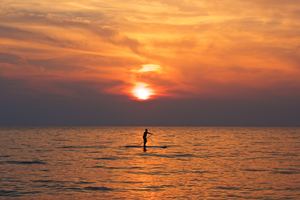
Livorno is a gritty city with a long and interesting history. In the early Middle Ages it alternately belonged to Pisa and Genoa. In 1421 Florence, seeking access to the sea, bought it. Cosimo I (1519–74) started construction of the harbor in 1571, putting Livorno on the map. After Ferdinando I de' Medici (1549–1609) proclaimed Livorno a free city, it became a haven for people suffering from religious persecution; Roman Catholics from England and Jews and Moors from Spain and Portugal, among others, settled here. The Quattro Mori (Four Moors), also known as the Monument to Ferdinando I, commemorates this. (The statue of Ferdinando I dates from 1595, the bronze Moors by Pietro Tacca from the 1620s.)In the following centuries, and particularly in the 18th, Livorno boomed as a port. In the 19th century the town drew a host of famous Britons passing through on their grand tours. Its prominence continued up to World War II, when it was heavily bombed. Much of the town's architecture, therefore, postdates the war, and it's somewhat difficult to imagine what it might have looked like before. Livorno has recovered from the war, however, as it's become a huge point of departure for container ships, as well as the only spot in Tuscany for cruise ships to dock for the day.Most of Livorno's artistic treasures date from the 17th century and aren't all that interesting unless you dote on obscure baroque artists. Livorno's most famous native artist, Amedeo Modigliani (1884–1920), was of much more recent vintage. Sadly, there's no notable work by him in his hometown.There may not be much in the way of art, but it's still worth strolling around the city. The Mercato Nuovo, which has been around since 1894, sells all sorts of fruits, vegetables, grains, meat, and fish. Outdoor markets nearby are also chock-full of local color. The presence of Camp Darby, an American military base just outside town, accounts for the availability of many American products.If you have time, Livorno is worth a stop for lunch or dinner at the very least.
Day 6
Bastia , France
Friday, 08/10/2027
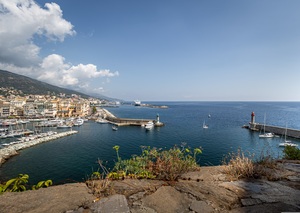
Corsica's northern capital, Bastia, is the centre of commerce and industry and a thriving freight and passenger port. Commerce, more than tourism, is its main focus, providing employment for many Corsicans. Bastia's industrial sprawl, however, is offset by its aged charm. The presence of an overwhelming Italian atmosphere adds to the city's attraction. Two distinct areas comprise the city: Terra Vecchia, the old quarter, consisting of haphazard streets, flamboyant Baroque churches and lofty tenements, with their crumbling golden-grey walls set against a backdrop of fire-darkened hills; and the more orderly Terra Nova, the historic district favoured by prominent doctors, lawyers and architects. The city dates from Roman times, when a base was set up at Biguglia to the south. Under the Genoese, Bastia was the island's capital for four centuries and of major importance for the export of wine to the Italian mainland. They built a fortress (bastiglia), which gave the town its name. The Genoese also were responsible for laying the foundation for the area's prosperity by planting vines, olives, chestnut trees and other experimental crops. This resulted in an energetic and enterprising region, still a characteristic of today's northern Corsica. Although Napoleon had appointed Ajaccio the capital of the island in 1811- initiating a rivalry that still exists - Bastia established a stronger trading position with mainland France. As a result, the Nouveau Port was created in 1862 to cope with the increasing traffic with France and Italy. Bastia's economic prominence and a German division based here during World War II accounted for severe bombing attacks. Many buildings were destroyed, including much of the old governor's palace. Of the two largest towns on the island, Ajaccio and Bastia, the latter boasts a more genuine Corsican character. Visitors can experience an authentic feel of island life by wandering through the maze of narrow streets of Bastia's old quarter and by exploring its fortifications. Don't miss the vast Place Saint-Nicolas just north of the old quarter; it is the focal point of the city. Open to the sea and lined with shady trees and sidewalk cafes, it is a perfect place for people watching and for taking in the local ambiance. Pier Information The ship is scheduled to dock at the port of Bastia. The city's focal point, Place Saint-Nicolas, is a distance of 650 feet (200 metres) to walk. Taxis are generally available at the pier but it is highly recommended to book in advance if you want to be sure to get one. It is recommended to establish the fare before leaving the port. Shopping The main shopping streets, Boulevard Paoli and Rue Cesar Campinchi, are less than one half miles (500 metres) from the port terminal. Handicrafts and the area's specialties such as honey, wine and liqueurs may be of interest. Most shops are open from 9:00 a.m. to 12:00 p.m. and 2:30 p.m. to 7:00 p.m. Shops are closed for the day on Sundays and some shops may also close Monday mornings (some souvenirs shops may open Sundays during the high season of July-August). The local currency is the euro. Cuisine A variety of restaurants offer a good choice of eating possibilities. Some of the best restaurants are found around the Vieux Port and on the Quai des Martyrs. French cuisine and seafood feature prominently on menus as well as such Corsican specialties as wild boar, charcuterie and aziminu, a local version of bouillabaisse. Evidence of Bastia's strong Italian influence is apparent in the numerous pizza and pasta places in the Nouveau Port area. For outdoor dining and people watching, cafes around lively Place Saint-Nicolas are a perfect place. Other Sites Oratoire de Saint-Roch Located in the Terra Vecchia quarter, the chapel is a Genoese Baroque extravaganza built in 1604. The walls are covered with finely carved wooden panelling and the organ is magnificent with its decoration of gilt and wooden sculpture. Oratoire de L'Immaculee Conception Although its exterior is rather austere, the flamboyant interior of this 17th-century church with gilt and marble ceiling, frescoes and crystal chandeliers creates an ambiance of an opera house. Vieux Port Site of the original Porto Prado, the area around the Vieux Port is the most appealing part of town. Its soaring houses seem to bend inwards towards the water. Once busy with Genoese traders, the building of the ferry terminal and commercial docks have reduced much of the action at Vieux Port. Terra Nova As the administrative core of old Bastia, Terra Nova displays a distinct air of affluence. Its most impressive building is the 14th-century Governor's Palace. During the Genoese heyday the governor and the bishop lived here, entertaining foreign dignitaries and hosting massive parties. Private arrangements for independent sightseeing may be requested through the Tour Office on board, subject to the availability of English-speaking guides.
Day 7
Civitavecchia , Italy
Saturday, 09/10/2027
Italy's vibrant capital lives in the present, but no other city on earth evokes its past so powerfully. For over 2,500 years, emperors, popes, artists, and common citizens have left their mark here. Archaeological remains from ancient Rome, art-stuffed churches, and the treasures of Vatican City vie for your attention, but Rome is also a wonderful place to practice the Italian-perfected il dolce far niente, the sweet art of idleness. Your most memorable experiences may include sitting at a caffè in the Campo de' Fiori or strolling in a beguiling piazza.

Day 9
Kotor , Montenegro
Monday, 11/10/2027
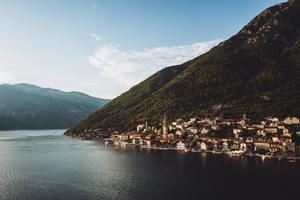
Backed by imposing mountains, tiny Kotor lies hidden from the open sea, tucked into the deepest channel of the Bokor Kotorska (Kotor Bay), which is Europe's most southerly fjord. To many, this town is more charming than its sister UNESCO World Heritage Site, Dubrovnik, retaining more authenticity, but with fewer tourists and spared the war damage and subsequent rebuilding which has given Dubrovnik something of a Disney feel.Kotor's medieval Stari Grad (Old Town) is enclosed within well-preserved defensive walls built between the 9th and 18th centuries and is presided over by a proud hilltop fortress. Within the walls, a labyrinth of winding cobbled streets leads through a series of splendid paved piazzas, rimmed by centuries-old stone buildings. The squares are now haunted by strains from buskers but although many now house trendy cafés and chic boutiques, directions are still given medieval-style by reference to the town’s landmark churches.In the Middle Ages, as Serbia's chief port, Kotor was an important economic and cultural center with its own highly regarded schools of stonemasonry and iconography. From 1391 to 1420 it was an independent city-republic and later, it spent periods under Venetian, Austrian, and French rule, though it was undoubtedly the Venetians who left the strongest impression on the city's architecture. Since the breakup of Yugoslavia, some 70% of the stone buildings in the romantic Old Town have been snapped up by foreigners, mostly Brits and Russians. Porto Montenegro, a new marina designed to accommodate some of the world’s largest super yachts, opened in nearby Tivat in 2011, and along the bay are other charming seaside villages, all with better views of the bay than the vista from Kotor itself where the waterside is congested with cruise ships and yachts. Try sleepy Muo or the settlement of Prčanj in one direction around the bay, or Perast and the Roman mosaics of Risan in the other direction.
Day 10
Dubrovnik , Croatia
Tuesday, 12/10/2027
Nothing can prepare you for your first sight of Dubrovnik. Lying 216 km (135 miles) southeast of Split and commanding a jaw-dropping coastal location, it is one of the world's most beautiful fortified cities. Its massive stone ramparts and fortress towers curve around a tiny harbor, enclosing graduated ridges of sun-bleached orange-tiled roofs, copper domes, and elegant bell towers. Your imagination will run wild picturing what it looked like seven centuries ago when the walls were built, without any suburbs or highways around it, just this magnificent stone city rising out of the sea.In the 7th century AD, residents of the Roman city Epidaurum (now Cavtat) fled the Avars and Slavs of the north and founded a new settlement on a small rocky island, which they named Laus, and later Ragusa. On the mainland hillside opposite the island, the Slav settlement called Dubrovnik grew up. In the 12th century the narrow channel separating the two settlements was filled in (now the main street through the Old Town, called Stradun), and Ragusa and Dubrovnik became one. The city was surrounded by defensive walls during the 13th century, and these were reinforced with towers and bastions in the late 15th century.From 1358 to 1808 the city thrived as a powerful and remarkably sophisticated independent republic, reaching its golden age during the 16th century. In 1667 many of its splendid Gothic and Renaissance buildings were destroyed by an earthquake. The defensive walls survived the disaster, and the city was rebuilt in baroque style.Dubrovnik lost its independence to Napoléon in 1808, and in 1815 passed to Austria-Hungary. During the 20th century, as part of Yugoslavia, the city became a popular tourist destination, and in 1979 it was listed as a UNESCO World Heritage Site. During the war for independence, it came under heavy siege. Thanks to careful restoration, few traces of damage remain; however, there are maps inside the Pile and Ploče Gates illustrating the points around the city where damage was done. It’s only when you experience Dubrovnik yourself that you can understand what a treasure the world nearly lost

Day 11
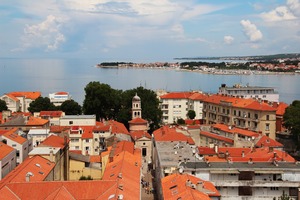
Zadar , Croatia
Wednesday, 13/10/2027
Dalmatia's capital for more than 1,000 years, Zadar is all too often passed over by travelers on their way to Split or Dubrovnik. What they miss out on is a city of more than 73,000 that is remarkably lovely and lively despite—and, in some measure, because of—its tumultuous history. The Old Town, separated from the rest of the city on a peninsula some 4 km (2½ miles) long and just 1,640 feet wide, is bustling and beautiful: the marble pedestrian streets are replete with Roman ruins, medieval churches, palaces, museums, archives, and libraries. Parts of the new town are comparatively dreary, a testament to what a world war followed by decades of communism, not to mention a civil war, can do to the architecture of a city that is 3,000 years old. A settlement had already existed on the site of the present-day city for some 2,000 years when Rome finally conquered Zadar in the 1st century BC; the foundations of the forum can be seen today. Before the Romans came the Liburnians had made it a key center for trade with the Greeks and Romans for 800 years. In the 3rd century BC the Romans began to seriously pester the Liburnians, but required two centuries to bring the area under their control. During the Byzantine era, Zadar became the capital of Dalmatia, and this period saw the construction of its most famous church, the 9th-century St. Donat's Basilica. It remained the region's foremost city through the ensuing centuries. The city then experienced successive onslaughts and occupations—both long and short—by the Osogoths, the Croatian-Hungarian kings, the Venetians, the Turks, the Habsburgs, the French, the Habsburgs again, and finally the Italians before becoming part of Yugoslavia and, in 1991, the independent republic of Croatia. Zadar was for centuries an Italian-speaking city, and Italian is still spoken widely, especially by older people. Indeed, it was ceded to Italy in 1921 under the Treaty of Rapallo (and reverted to its Italian name of Zara). Its occupation by the Germans from 1943 led to intense bombing by the Allies during World War II, which left most of the city in ruins. Zadar became part of Tito's Yugoslavia in 1947, prompting many Italian residents to leave. Zadar's most recent ravages occurred during a three-month siege by Serb forces and months more of bombardment during the Croatian-Serbian war between 1991 and 1995. But you'd be hard-pressed to find outward signs of this today in what is a city to behold. There are helpful interpretive signs in English all around the Old Town, so you certainly won't feel lost when trying to make sense of the wide variety of architectural sites you might otherwise pass by with only a cursory look.
Day 12
Venice , Italy
Thursday, 14/10/2027
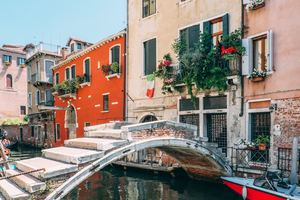
Venice is a city unlike any other. No matter how often you've seen it in photos and films, the real thing is more dreamlike than you could imagine. With canals where streets should be, water shimmers everywhere. The fabulous palaces and churches reflect centuries of history in what was a wealthy trading center between Europe and the Orient. Getting lost in the narrow alleyways is a quintessential part of exploring Venice, but at some point you'll almost surely end up in Piazza San Marco, where tourists and locals congregate for a coffee or an aperitif.
Day 13
Venice , Italy
Friday, 15/10/2027
Venice is a city unlike any other. No matter how often you've seen it in photos and films, the real thing is more dreamlike than you could imagine. With canals where streets should be, water shimmers everywhere. The fabulous palaces and churches reflect centuries of history in what was a wealthy trading center between Europe and the Orient. Getting lost in the narrow alleyways is a quintessential part of exploring Venice, but at some point you'll almost surely end up in Piazza San Marco, where tourists and locals congregate for a coffee or an aperitif.
Room Type & Prices
All prices per person based on double occupancy. Solo traveller prices — single occupancy. Contact our cruise experts for the latest availability and best fares.
Prices include return flights from your chosen departure airport.
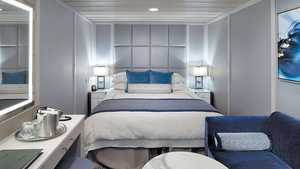
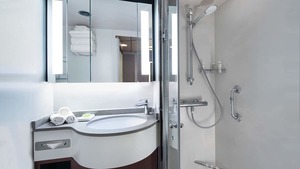
Inside Staterooms
160 sqft · Up to 2 guests
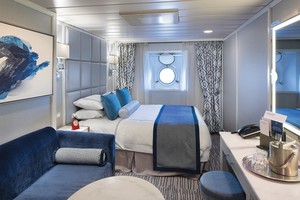

Ocean View Stateroom
165 sqft · Up to 2 guests
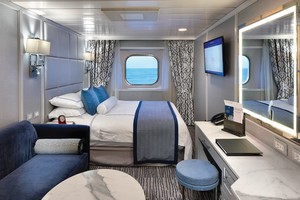
Deluxe Ocean View Stateroom
165 sqft · Up to 2 guests
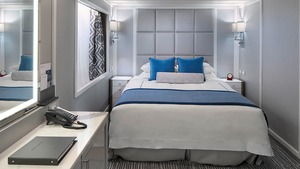
Solo Oceanivew Stateroom
143–165 sqft · Up to 1 guests
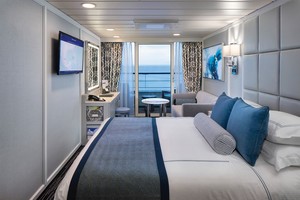
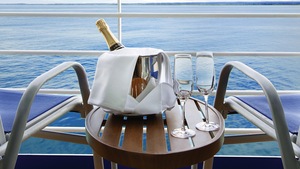
Veranda Stateroom
216 sqft · Up to 2 guests
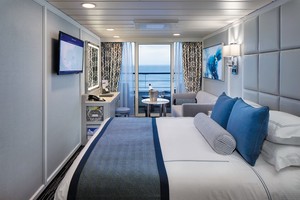
Concierge Level Veranda Stateroom
216 sqft · Up to 2 guests
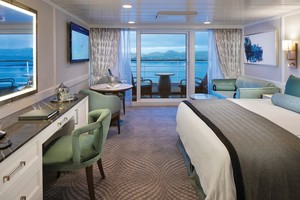
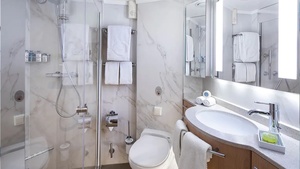
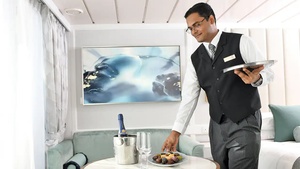
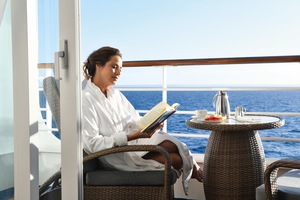
Penthouse Suite
322 sqft · Up to 2 guests
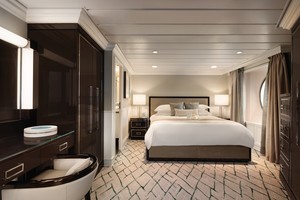
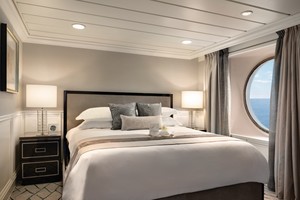
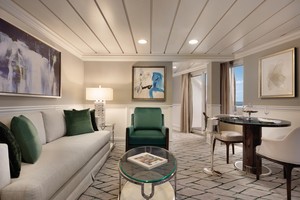
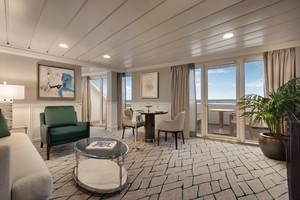
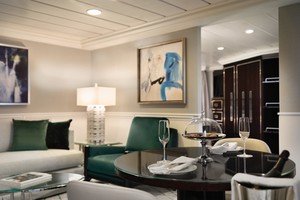
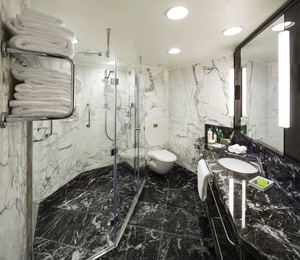
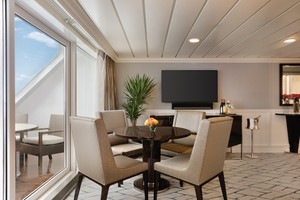
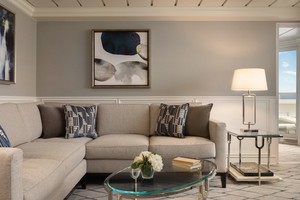
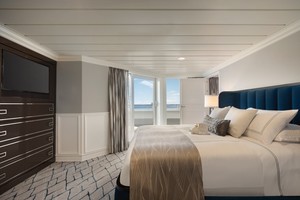
Vista Suite
786 sqft · Up to 2 guests
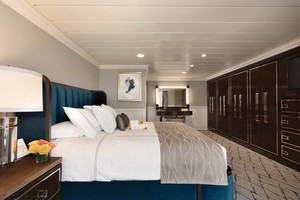
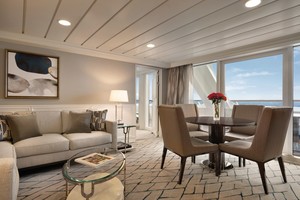
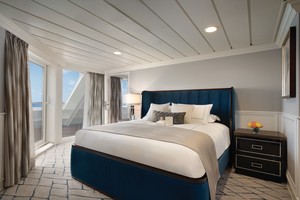
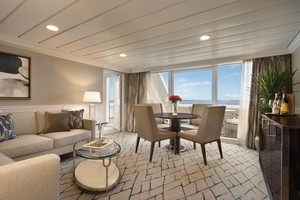
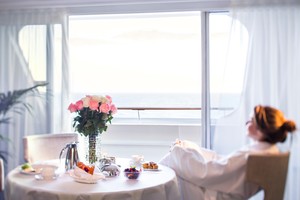
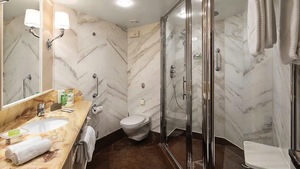
Owner's Suite
1000 sqft · Up to 2 guests
Inside
Oceanview
Balcony
| Cabin | Grade | Per Person | Avail. | |
|---|---|---|---|---|
| Veranda Stateroom · 216 sqft | B2 Veranda Stateroom (B2) | Enquire → | ||
| B1 Veranda Stateroom (B1) | Enquire → | |||
| Concierge Level Veranda Stateroom · 216 sqft | A3 Concierge Level Veranda (A3) | Enquire → | ||
| A2 Concierge Level Veranda (A2) | Enquire → | |||
| A1 Concierge Level Veranda (A1) | Enquire → |
Veranda Stateroom · 216 sqft
B2 Veranda Stateroom (B2)
Veranda Stateroom · 216 sqft
B1 Veranda Stateroom (B1)
Concierge Level Veranda Stateroom · 216 sqft
A3 Concierge Level Veranda (A3)
Concierge Level Veranda Stateroom · 216 sqft
A2 Concierge Level Veranda (A2)
Concierge Level Veranda Stateroom · 216 sqft
A1 Concierge Level Veranda (A1)
More Departures
11 nights
Canada Explorer
17/10/2026
Solo From
£8,879
From
£5,449
14 nights
Mediterranean Classics
17/10/2026
From
£7,099
10 nights
South Pacific Splendor
19/10/2026
From
£3,829
10 nights
Havens Of Italy & Spain
19/10/2026
Solo From
£5,519
10 nights
Southern European Gems
23/10/2026
Solo From
£5,369
From
£4,959
14 nights
Caribbean Enchantment
28/10/2026
Solo From
£7,819
From
£2,465
Your Ship
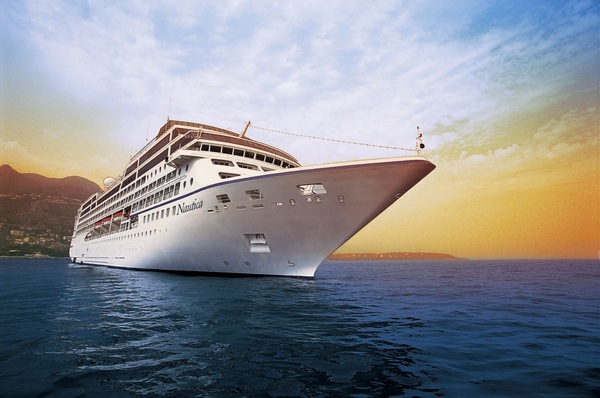
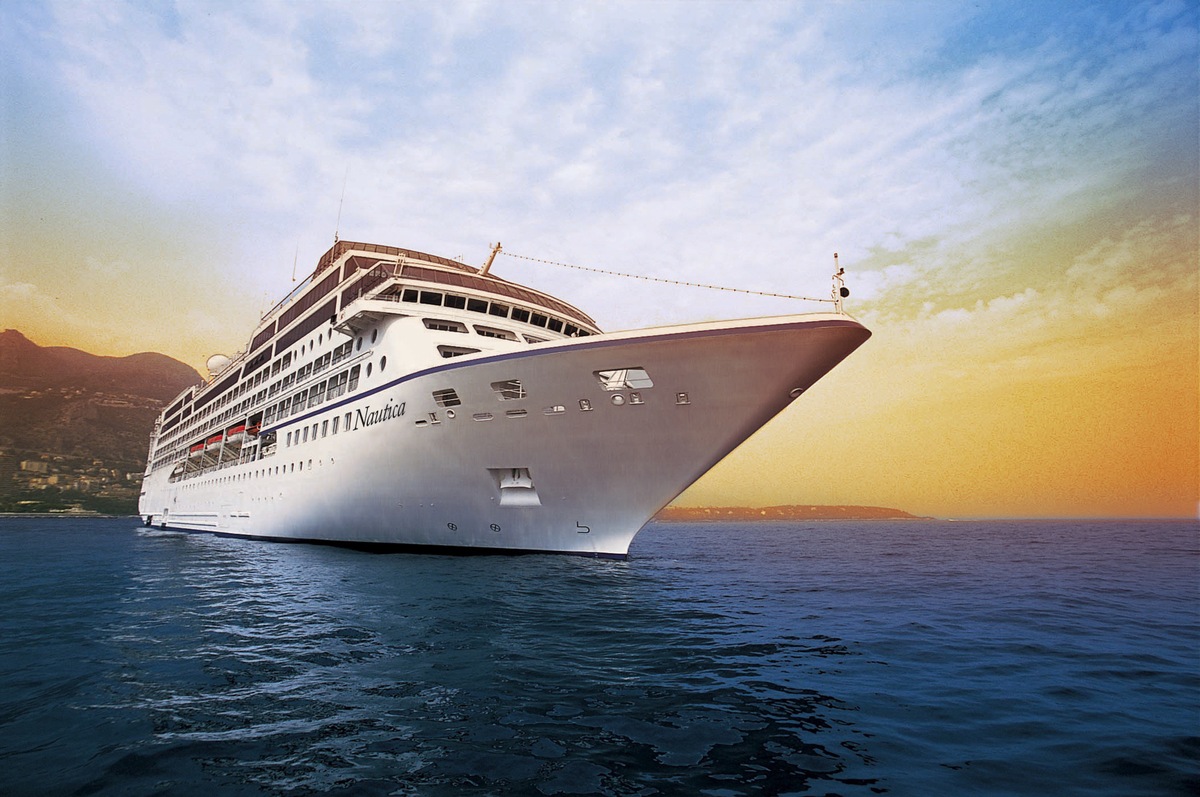
Oceania Nautica
The better-than-new Nautica blends sophistication with a contemporary flair to create a casually elegant ambiance that embodies the most treasured elements of our celebrated ships. Every surface of every suite and stateroom is entirely new, while in the public spaces, a refreshed color palette of soft sea and sky tones surrounds a tasteful renewal of fabrics, furnishings and lighting fixtures that exquisitely encompasses the inimitable style and comfort of Oceania Cruises.