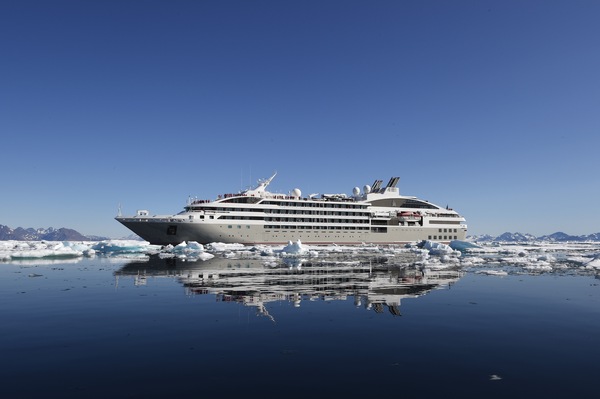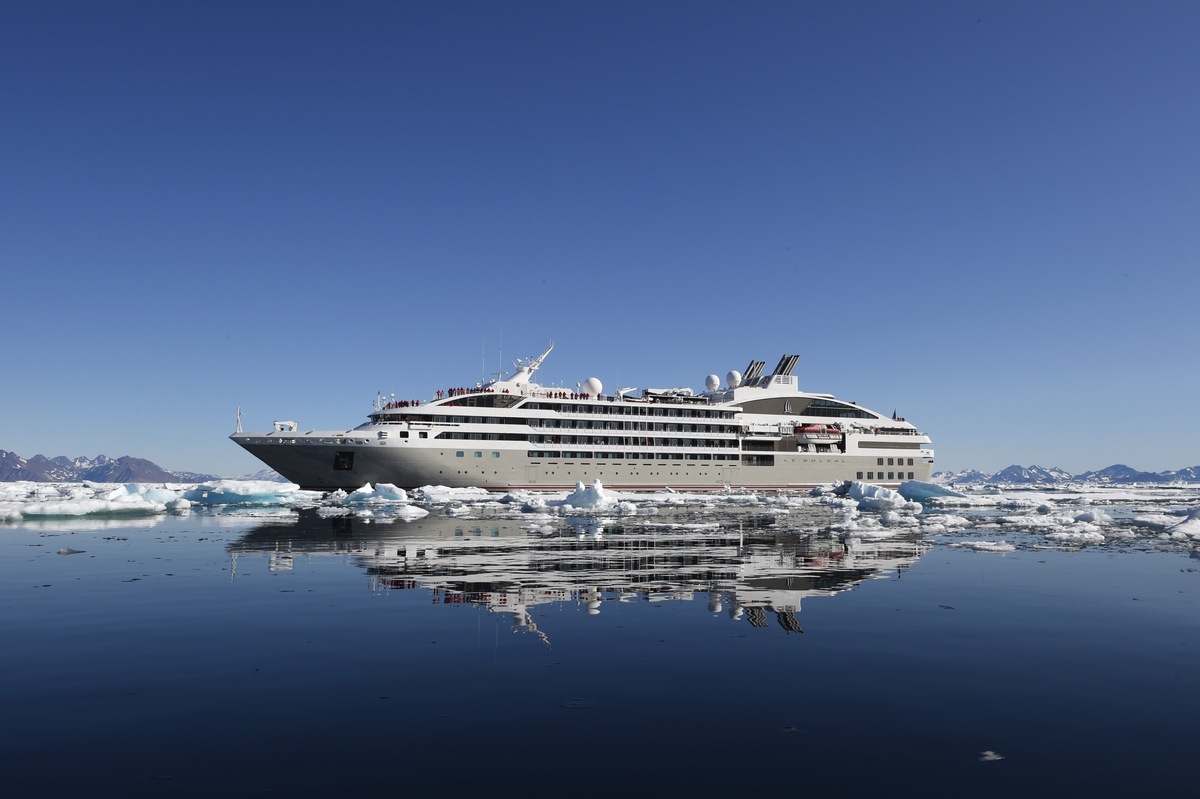
Expedition to New Zealand’s Subantarctic Islands
Discover the wild, unspoilt beauty of New Zealand's Fiordlands and Subantarctic Islands on this exceptional journey. Immerse yourself in the heart of the UNESCO-listed Fiordland Na...
Cruise only — prices from Solo cruise only — from

Ports of Call & Itinerary
14-night voyage departing Timaru.
Printable Itinerary (PDF)Route Map
Expedition to New Zealand’s Subantarctic Islands
13 ports plotted · click a marker for details
Day 1
Timaru , New Zealand
Thursday, 28/12/2028
Situated almost equidistant between Christchurch and Dunedin, Timaru has oft been overlooked by those just needing to get from one city to another but more fool them! The town’s name comes from the Māori name Te Maru, meaning ‘place of shelter’ and the pretty town reveals not only stunning Middle Earth landscape and views to write home about, but an intact Victorian / Edwardian shopping precinct with many of the building being built in local volcanic bluestone. Understandably, beach life is very important here and the long ribbons of white sandy beaches and clean seas are perfect for a swimming, sunning and spoiling yourself! Voted one of New Zealand’s top 10 most loved beaches, Caroline Bay is simply a treasure. Built on the rolling hills created from the lava flows of the extinct Mt Horrible volcano, Timaru is a melting pot of culture, history, adventure and dramatic scenery. Art lovers too will not be left wanting as the city’s art gallery holds the third largest public art collection in the South Island. Walking enthusiasts will not want to miss one of the many walks along the coast or rivers that vary from short paved paths – ideal for pushchairs and wheelchairs to longer, more strenuous hikes. Well signposted and maintained, these tracks are especially beautiful in the autumn when the leaves are turning colour. And do not forget to be on the lookout for penguins, which will happily waddle alongside you some of the way!

Day 2
Oban, Stewart Island , New Zealand
Friday, 29/12/2028
Stewart Island is home to New Zealand's newest national park, Rakiura National Park. The third and most southerly of New Zealand's main islands, Stewart Island is separated from the South Island by the 24-km (15-miles) Foveaux Strait. Its original Māori name, Te Punga O Te Waka a Maui, means "the anchor stone of Maui's canoe." Māori mythology says the island's landmass held the god Maui's canoe secure while he and his crew raised the great fish—the North Island. Today the island is more commonly referred to by its other Māori name, Rakiura, which means "the land of the glowing skies." This refers to the spectacular sunrises and sunsets and to the southern lights, or aurora australis. The European name of Stewart Island dates back to 1809. It memorializes an officer William W. Stewart on an early sealing vessel, the Pegasus, who was the first to chart the island. The island covers some 1,700 square km (650 square miles). It measures about 75 km (46 miles) from north to south and about the same distance across at its widest point. On the coastline, sharp cliffs rise from a succession of sheltered bays and beaches. In the interior, forested hills rise gradually toward the west side of the island. Seals and penguins frequent the coast, and the island's prolific birdlife includes a number of species rarely seen in any other part of the country. In fact, this is the surest place to see a kiwi. The Stewart Island brown kiwi, or tokoeka, is the largest species of this kind of bird. Unlike their mainland cousins, these kiwis can be seen during the day as well as at night. It's a rare and amusing experience to watch these pear-shape birds scampering on a remote beach as they feed on sand hoppers and grubs. Māori have visited Stewart Island for centuries. Archaeologists' studies of 13th-century Māori middens (refuse heaps) indicate that the island was once a rich, seasonal resource for hunting, fishing, and gathering seafood. A commonly eaten delicacy at that time, the titi, also known as the muttonbird, still occasionally appears on menus. In the early 19th century, explorers, sealers, missionaries, and miners settled the island. They were followed by fishermen and sawmillers who established settlements around the edges of Paterson Inlet and Halfmoon and Horseshoe bays. In the 1920s Norwegians set up a whaling enterprise, and many descendants of these seafaring people remain. Fishing, aquaculture, and tourism are now the mainstays of the island's economy. Even by New Zealand standards, Stewart Island is remote, raw, and untouched. The appeal is its seclusion, its relaxed way of life, and its untouched quality. Stewart Island is not for everyone: if you must have shopping malls, casinos, or umbrella drinks on the beach, don't come here. Visitors should be prepared for the fact that Stewart Island can be chilly, windy, and rainy, even in the middle of summer.
Day 3
Doubtful Sound , New Zealand
Saturday, 30/12/2028

Day 3
Dusky Sound , New Zealand
Saturday, 30/12/2028
Despite being discovered by Cook more than 240 years ago, Dusky Sound is one of the few truly untouched destinations left on earth. Found on the southwest corner of New Zealand’s Fiordland National Park, Dusky Sound has the auspicious title of “titanic mason” given to it by the Maoris, as no other explanation seems to fit; it is almost impossible to comprehend the sheer breadth of geological events that created this seemingly perfect sculpture, as the sheer cliffs that rise vertically upward from the ocean dwarf the ship. This incredibly beautiful fiord offers many magical wildernesses and stunning scenery that bathe in “Lord of the Rings” grandeur. A breeding site for Fiordland Penguins, Dusky Sound is an important ornithological area too, with a wealth of birdlife to be found here. This remote, untouched region is also home to a wide range of sea life, as the fresh and salt water combine to create an extraordinary aquatic environment. An unforgettable journey for both the experienced and the uninitiated, anyone looking to visit a place unmarked by the passage of time will be spoilt its breathtaking beauty.
Day 4
Milford Sound , New Zealand
Sunday, 31/12/2028
New Zealand fiord country along with Fiordland National Park is one of New Zealand's premier attractions. Incredibly beautiful, wild and remote, the region is an intriguing combination of rugged mountain ranges, dense rainforest, solitary alpine lakes, sparkling rivers and splashing waterfalls. Much of Fiordland is virtually unexplored wilderness and still the habitat of rare birds. As the ship cruises the beautiful Doubtful, Dusky and Milford Sounds, experience the majestic fiordland of South Island's western coast. Captain James Cook sailed along this coast in 1770 and again in 1773, when he anchored at Dusky Sound for a rest and ship repair. Doubtful Sound is one of the region's most majestic fiords. It is ten times larger than Milford Sound. As the ship cruises into Hall Arm, gaze at vertical cliffs and mighty waterfalls plunging over sheer rock faces. In fine weather, mountains and greenery are reflected in the protected waters of the fiord. Farther north lies Milford Sound. Far from any populated area, Milford Sound is famous for its grandeur and spectacular beauty. It is perhaps the best example of New Zealand's renowned classic landscape of steep granite peaks framing glacier-carved inlets with mirrored reflections on dark waters. Dominating the scene is Milford's landmark, the triangular pinnacle of Mitre Peak. Along the sheer cliffs, several waterfalls tumble more than 500 feet (154 metres) into the sheltered Sound. Only a few moored boats and a scattering of buildings at the head of the Sound break the unity of mountains, forest and water. This spectacular beauty and unspoiled setting is yours to enjoy as the ship cruises Milford Sound.
Day 5
Snares Islands , New Zealand
Monday, 01/01/2029
The Snares Islands, also known as ‘The Snares’ are the northernmost of New Zealand's subantarctic islands. The islands are totally uninhabited and land mammals were never introduced on the islands, so it is only inhabited by sea mammals, birds and flora. The area is among one of five subantarctic island groups forming the New Zealand Subantarctic Islands, designated as a World Heritage Site by UNESCO.

Day 6
Enderby Island , New Zealand
Tuesday, 02/01/2029
Enderby Island is the second largest island in the archipelago which is brimming with a magnificent flora and fauna environment. The island has become well known for being home to the rare yellow-eyed penguin and it is further the primary breeding location for the New Zealand Sra Lion. Enjoy a guided tour of the Northern Cliffs track and if you’re lucky, spend some time observing the sea lion colony.

Day 6
Musgrave Inlet, Auckland Islands , New Zealand
Tuesday, 02/01/2029
Musgrave Inlet in the Aukland Islands is a unique bay that boasts excellent wildlife and intriguing caves which can be explored via the Zodiac® inflatables. The Auckland Islands are the largest of the Subantarctic Islands and boast the richest flora, the largest number of subantarctic invertebrates and some of the rarest birds on earth meaning you’re sure to see some incredible wildlife during your time at Musgrave Inlet.
Day 8
Macquarie Island, Tasmania , Australia
Thursday, 04/01/2029
Macquarie Island is a UNESCO World Heritage Site due to its major geoconservation significance. It is the only island in the world that is entirely composed of oceanic crust and rocks from the mantel. The unique diversity of the island makes it a truly remarkable place to visit. Sand Bay is located on the east coast where you will find Royal and King Penguin rookeries as well as Southern Elephant Seals, and if the weather permits, you will have the opportunity to get closer on a Zodiac®.

Day 9
Macquarie Island, Tasmania , Australia
Friday, 05/01/2029
Macquarie Island is a UNESCO World Heritage Site due to its major geoconservation significance. It is the only island in the world that is entirely composed of oceanic crust and rocks from the mantel. The unique diversity of the island makes it a truly remarkable place to visit. Sand Bay is located on the east coast where you will find Royal and King Penguin rookeries as well as Southern Elephant Seals, and if the weather permits, you will have the opportunity to get closer on a Zodiac®.
Day 11
Campbell Island , New Zealand
Sunday, 07/01/2029
The Campbell Islands are a group of subantarctic islands in New Zealand. Known for its rich flora display, Campbell Islands are overflowing with megaherbs, herbaceous, perennial wildflowers which are recognised for their great size, colourful flowers and large leaves. The islands are furthermore home to some rare, and critically endangered birds including the Campbell Island teal and snipe. Enjoy a guided walk on the Col Lyell Saddle boardwalk and head out on the Zodiac for a unique tour around the coastline of Perseverance Harbour.
Day 13
Antipodes Islands , New Zealand
Tuesday, 09/01/2029
Day 15
Timaru , New Zealand
Thursday, 11/01/2029
Situated almost equidistant between Christchurch and Dunedin, Timaru has oft been overlooked by those just needing to get from one city to another but more fool them! The town’s name comes from the Māori name Te Maru, meaning ‘place of shelter’ and the pretty town reveals not only stunning Middle Earth landscape and views to write home about, but an intact Victorian / Edwardian shopping precinct with many of the building being built in local volcanic bluestone. Understandably, beach life is very important here and the long ribbons of white sandy beaches and clean seas are perfect for a swimming, sunning and spoiling yourself! Voted one of New Zealand’s top 10 most loved beaches, Caroline Bay is simply a treasure. Built on the rolling hills created from the lava flows of the extinct Mt Horrible volcano, Timaru is a melting pot of culture, history, adventure and dramatic scenery. Art lovers too will not be left wanting as the city’s art gallery holds the third largest public art collection in the South Island. Walking enthusiasts will not want to miss one of the many walks along the coast or rivers that vary from short paved paths – ideal for pushchairs and wheelchairs to longer, more strenuous hikes. Well signposted and maintained, these tracks are especially beautiful in the autumn when the leaves are turning colour. And do not forget to be on the lookout for penguins, which will happily waddle alongside you some of the way!
Room Type & Prices
All prices per person based on double occupancy. Solo traveller prices — single occupancy. Contact our cruise experts for the latest availability and best fares.
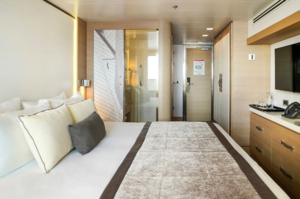
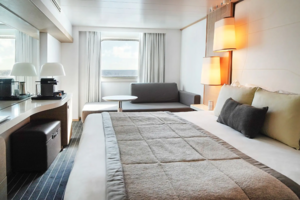
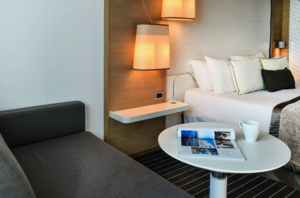
Window or Porthole Stateroom
226 sqft · Up to 3 guests
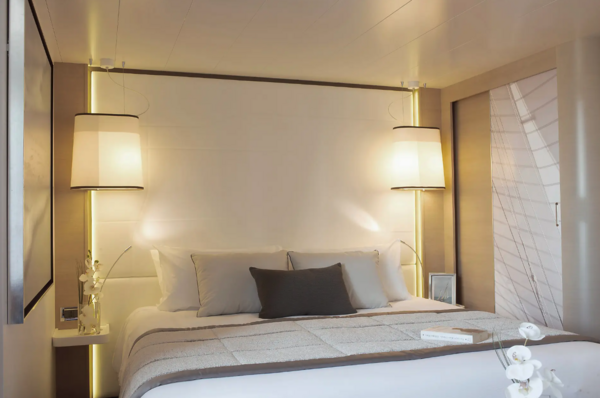
Lower Deck Balcony Stateroom
193 sqft · Up to 2 guests
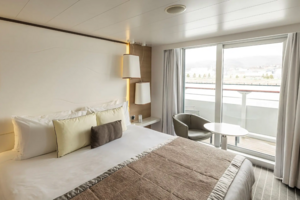
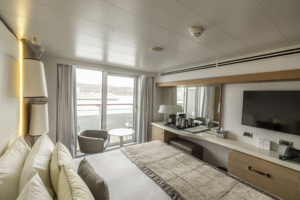
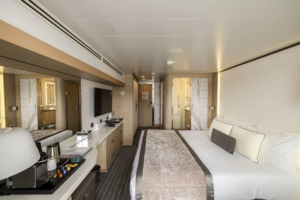
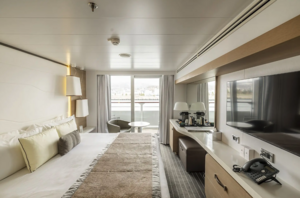
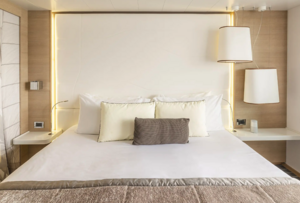
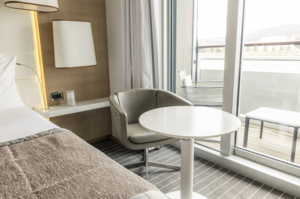
Upper Decks Balcony Stateroom
193 sqft · Up to 2 guests

Deluxe Suite
290 sqft · Up to 2 guests

Prestige Suite
398 sqft · Up to 2 guests
Oceanview
| Cabin | Grade | Per Person | Avail. | |
|---|---|---|---|---|
| Window or Porthole Stateroom · 226 sqft | SP3 Superior Stateroom | Enquire → | ||
| Lower Deck Balcony Stateroom · 193 sqft | DEL Deluxe Stateroom | Enquire → | ||
| Upper Decks Balcony Stateroom · 193 sqft | PR4 Prestige Stateroom Deck 4 | Enquire → | ||
| PR5 Prestige Stateroom Deck 5 | Enquire → | |||
| PR6 Prestige Stateroom Deck 6 | Enquire → |
Window or Porthole Stateroom · 226 sqft
SP3 Superior Stateroom
Lower Deck Balcony Stateroom · 193 sqft
DEL Deluxe Stateroom
Upper Decks Balcony Stateroom · 193 sqft
PR4 Prestige Stateroom Deck 4
Upper Decks Balcony Stateroom · 193 sqft
PR5 Prestige Stateroom Deck 5
Upper Decks Balcony Stateroom · 193 sqft
PR6 Prestige Stateroom Deck 6
More Departures
7 nights
Cruising Southern Spain and Portugal – with Smithsonian Journeys
17/10/2026
Solo From
£8,690
From
£5,610
7 nights
A Symphony at Sea: The Musical Traditions of Greece
18/10/2026
Solo From
£14,760
From
£7,730
14 nights
Secret Polynesia: Unexplored Tuamotu, the Gambier Islands and the Austral Islands
18/10/2026
Solo From
£19,380
From
£10,230
10 nights
From Panama’s wild beauty to Peruvian shores
20/10/2026
Solo From
£5,140
From
£4,770
7 nights
Ancient Cities of the Mediterranean
22/10/2026
Solo From
£16,120
From
£10,930
19 nights
Ocean Voyage: Lisbonne - Buenos Aires
24/10/2026
Solo From
£5,880
From
£5,500
Your Ship
Le Soléal
Designed in 2013, Le Soléal combines French elegance with cutting-edge technologies to explore the world in comfort and style.