Romantic Respites In Greece
Cruise only — prices from Solo cruise only — from

Ports of Call & Itinerary
10-night voyage departing Fusina, arriving Piraeus.
Printable Itinerary (PDF)Route Map
Romantic Respites In Greece
9 ports plotted · click a marker for details
Day 1
Fusina , Italy
Friday, 10/09/2027
Day 2
Adriatic Sea
Saturday, 11/09/2027
Day 3
Rijeka , Croatia
Sunday, 12/09/2027
Water is the essence of Kvarner, and the region's largest city expresses this simply. Whether in Croatian or Italian (Fiume) the translation of the name to English is the same: river. Although the history of Croatia's third city goes back to the days of Imperial Rome, modern Rijeka evolved under the rule of Austria-Hungary. The historic core retains vestiges of the old Habsburg monarchy from the time when Rijeka served as the empire's outlet to the Adriatic. During the 1960s, under Yugoslavia, the suburbs expanded rapidly. Rijeka is the country's largest port, with a huge shipyard, massive dry-dock facilities, refineries, and other heavy industries offering large-scale employment. Since the breakup of Yugoslavia, however, Rijeka's role as a shipping town has declined significantly. Much business shifted north to the smaller Slovene ports during the crippling wars of the 1990s, and although some has returned, the volume remains less than half that seen in 1980.
Day 4
Split , Croatia
Monday, 13/09/2027
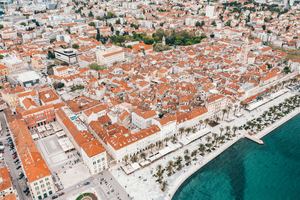
Split's ancient core is so spectacular and unusual that a visit is more than worth your time. The heart of the city lies within the walls of Roman emperor Diocletian's retirement palace, which was built in the 3rd century AD. Diocletian, born in the nearby Roman settlement of Salona in AD 245, achieved a brilliant career as a soldier and became emperor at the age of 40. In 295 he ordered this vast palace to be built in his native Dalmatia, and when it was completed he stepped down from the throne and retired to his beloved homeland. Upon his death, he was laid to rest in an octagonal mausoleum, around which Split's magnificent cathedral was built.In 615, when Salona was sacked by barbarian tribes, those fortunate enough to escape found refuge within the stout palace walls and divided up the vast imperial apartments into more modest living quarters. Thus, the palace developed into an urban center, and by the 11th century the settlement had expanded beyond the ancient walls.Under the rule of Venice (1420–1797), Split—as a gateway to the Balkan interior—became one of the Adriatic's main trading ports, and the city's splendid Renaissance palaces bear witness to the affluence of those times. When the Habsburgs took control during the 19th century, an overland connection to Central Europe was established by the construction of the Split–Zagreb–Vienna railway line.After World War II, the Tito years saw a period of rapid urban expansion: industrialization accelerated and the suburbs extended to accommodate high-rise apartment blocks. Today the historic center of Split is included on UNESCO's list of World Heritage Sites.
Day 5
Bari , Italy
Tuesday, 14/09/2027
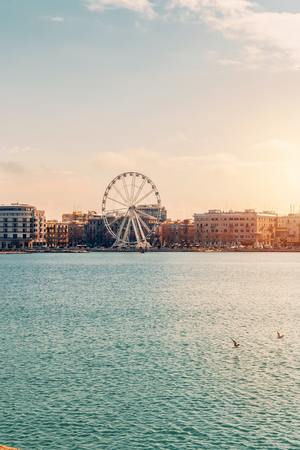
Bari, capital of the province of Apulia, lies on southern Italy's Adriatic coast. Its busy port is a leading commercial and industrial centre as well as a transit point for travellers catching ferries across the Adriatic to Greece. Bari comprises a new and an old town. To the north, on a promontory between the old and new harbours, lies the picturesque old town, or Citta Vecchia, with a maze of narrow, crooked streets. To the south is the spacious and regularly planned new town, which has developed considerably since 1930, when the Levant Fair was first held here. The heart of the modern town is Piazza della Liberta. The busy thoroughfare, Corso Vittorio Emanuele II, separates the new town from the old. At the eastern end of the Corso begins the Lungomare Nazario Sauro, a magnificent seafront promenade that runs along the old harbour. Bari and the Apulian region were long recognized for their strategic location, attracting a succession of colonizers such as the Normans, Moors and Spaniards, each leaving their mark.
Day 6
Igoumenítsa , Greece
Wednesday, 15/09/2027
Day 7
Katakolon , Greece
Thursday, 16/09/2027
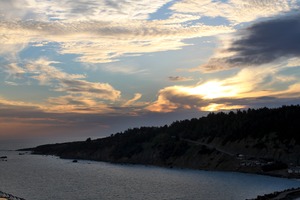
Katakolon could not seem less of a cruise port if it tried. A tiny enclave clinging to the western Peloponnese coast, it's a sleepy place except when ships dock. But it's a popular cruise destination because of its proximity to Olympia. Ancient Olympia was one of the most important cities in classical Greece. The Sanctuary of Zeus was the city's raison d'être, and attracted pilgrims from around the eastern Mediterranean, and later the city played host to Olympic Games, the original athletic games that were the inspiration for today's modern sporting pan-planetary meet. At the foot of the tree-covered Kronion hill, in a valley near two rivers, Katakolon is today one of the most popular ancient sites in Greece. If you don't want to make the trip to Olympia, then Katakolon is an ideal place for a leisurely Greek lunch while you watch the fishermen mend their nets, but there's just not much else to do there.
Day 8
Cruising the Mediterranean Sea
Friday, 17/09/2027
Day 9
Monemvasía , Greece
Saturday, 18/09/2027
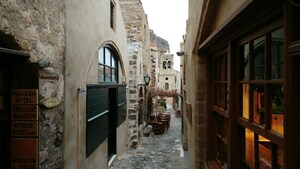
Monemvasia boasts a varied and colorful history that can be traced to the 8th-century when Greeks fleeing the Slav invasion of Lakonia found refuge here. In its heyday it controlled sea travel between the Levant and European shores. The wall-encircled Lower Town extends along the slopes of a 985-foot-high crag that projects into the sea on the east side of the Peloponnese. For centuries an impressive stronghold, population dwindled as the inhabitants moved to the mainland. But with the beginning of a restoration program aimed to preserve Monemvasia's heritage, the Lower Town experienced a new lease on life, and people have begun to return. The Upper Town is situated on top of the Rock of Monemvasia. It is reached via a zigzagging, paved lane. An almost impregnable bastion in earlier days, it has been uninhabited for centuries, but still manages to preserve its magnificent appearance. Visitors today can explore the remains of the ancient citadel-castle and visit the church of Hagia Sofia. From the summit there is also a fantastic view of the surrounding area.
Day 10
Mykonos , Greece
Sunday, 19/09/2027
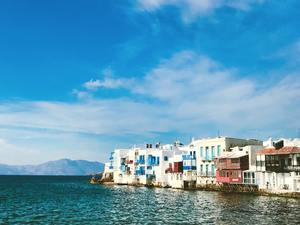
Although the fishing boats still go out in good weather, Mykonos largely makes its living from tourism these days. The summer crowds have turned one of the poorest islands in Greece into one of the richest. Old Mykonians complain that their young, who have inherited stores where their grandfathers once sold eggs or wine, get so much rent that they have lost ambition, and in summer sit around pool bars at night with their friends, and hang out in Athens in winter when island life is less scintillating. Put firmly on the map by Jackie O in the 1960s, Mykonos town—called Hora by the locals—remains the Saint-Tropez of the Greek islands. The scenery is memorable, with its whitewashed streets, Little Venice, the Kato Myli ridge of windmills, and Kastro, the town's medieval quarter. Its cubical two- or three-story houses and churches, with their red or blue doors and domes and wooden balconies, have been long celebrated as some of the best examples of classic Cycladic architecture. Luckily, the Greek Archaeological Service decided to preserve the town, even when the Mykonians would have preferred to rebuild, and so the Old Town has been impressively preserved. Pink oleander, scarlet hibiscus, and trailing green pepper trees form a contrast amid the dazzling whiteness, whose frequent renewal with whitewash is required by law. Any visitor who has the pleasure of getting lost in its narrow streets (made all the narrower by the many outdoor stone staircases, which maximize housing space in the crowded village) will appreciate how its confusing layout was designed to foil pirates—if it was designed at all. After Mykonos fell under Turkish rule in 1537, the Ottomans allowed the islanders to arm their vessels against pirates, which had a contradictory effect: many of them found that raiding other islands was more profitable than tilling arid land. At the height of Aegean piracy, Mykonos was the principal headquarters of the corsair fleets—the place where pirates met their fellows, found willing women, and filled out their crews. Eventually the illicit activity evolved into a legitimate and thriving trade network. Morning on Mykonos town's main quay is busy with deliveries, visitors for the Delos boats, lazy breakfasters, and street cleaners dealing with the previous night's mess. In late morning the cruise-boat people arrive, and the shops are all open. In early afternoon, shaded outdoor tavernas are full of diners eating salads (Mykonos's produce is mostly imported); music is absent or kept low. In mid- and late afternoon, the town feels sleepy, since so many people are at the beach, on excursions, or sleeping in their air-conditioned rooms; even some tourist shops close for siesta. By sunset, people have come back from the beach, having taken their showers and rested. At night, the atmosphere in Mykonos ramps up. The cruise-boat people are mostly gone, coughing three-wheelers make no deliveries in the narrow streets, and everyone is dressed sexy for summer and starting to shimmy with the scene. Many shops stay open past midnight, the restaurants fill up, and the bars and discos make ice cubes as fast as they can. Ready to dive in? Begin your tour of Mykonos town (Hora) by starting out at its heart: Mando Mavrogenous Square.
Day 11
Piraeus , Greece
Monday, 20/09/2027
It's no wonder that all roads lead to the fascinating and maddening metropolis of Athens. Lift your eyes 200 feet above the city to the Parthenon, its honey-color marble columns rising from a massive limestone base, and you behold architectural perfection that has not been surpassed in 2,500 years. But, today, this shrine of classical form dominates a 21st-century boomtown. To experience Athens—Athína in Greek—fully is to understand the essence of Greece: ancient monuments surviving in a sea of cement, startling beauty amid the squalor, tradition juxtaposed with modernity. Locals depend on humor and flexibility to deal with the chaos; you should do the same. The rewards are immense. Although Athens covers a huge area, the major landmarks of the ancient Greek, Roman, and Byzantine periods are close to the modern city center. You can easily walk from the Acropolis to many other key sites, taking time to browse in shops and relax in cafés and tavernas along the way. From many quarters of the city you can glimpse "the glory that was Greece" in the form of the Acropolis looming above the horizon, but only by actually climbing that rocky precipice can you feel the impact of the ancient settlement. The Acropolis and Filopappou, two craggy hills sitting side by side; the ancient Agora (marketplace); and Kerameikos, the first cemetery, form the core of ancient and Roman Athens. Along the Unification of Archaeological Sites promenade, you can follow stone-paved, tree-lined walkways from site to site, undisturbed by traffic. Cars have also been banned or reduced in other streets in the historical center. In the National Archaeological Museum, vast numbers of artifacts illustrate the many millennia of Greek civilization; smaller museums such as the Goulandris Museum of Cycladic Art Museum and the Byzantine and Christian Museum illuminate the history of particular regions or periods. Athens may seem like one huge city, but it is really a conglomeration of neighborhoods with distinctive characters. The Eastern influences that prevailed during the 400-year rule of the Ottoman Empire are still evident in Monastiraki, the bazaar area near the foot of the Acropolis. On the northern slope of the Acropolis, stroll through Plaka (if possible by moonlight), an area of tranquil streets lined with renovated mansions, to get the flavor of the 19th-century's gracious lifestyle. The narrow lanes of Anafiotika, a section of Plaka, thread past tiny churches and small, color-washed houses with wooden upper stories, recalling a Cycladic island village. In this maze of winding streets, vestiges of the older city are everywhere: crumbling stairways lined with festive tavernas; dank cellars filled with wine vats; occasionally a court or diminutive garden, enclosed within high walls and filled with magnolia trees and the flaming trumpet-shaped flowers of hibiscus bushes. Formerly run-down old quarters, such as Thission, Gazi and Psirri, popular nightlife areas filled with bars and mezedopoleia (similar to tapas bars), are now in the process of gentrification, although they still retain much of their original charm, as does the colorful produce and meat market on Athinas. The area around Syntagma Square, the tourist hub, and Omonia Square, the commercial heart of the city about 1 km (½ mi) northwest, is distinctly European, having been designed by the court architects of King Otho, a Bavarian, in the 19th century. The chic shops and bistros of ritzy Kolonaki nestle at the foot of Mt. Lycabettus, Athens's highest hill (909 feet). Each of Athens's outlying suburbs has a distinctive character: in the north is wealthy, tree-lined Kifissia, once a summer resort for aristocratic Athenians, and in the south and southeast lie Glyfada, Voula, and Vouliagmeni, with their sandy beaches, seaside bars, and lively summer nightlife. Just beyond the city's southern fringes is Piraeus, a bustling port city of waterside fish tavernas and Saronic Gulf views.

Room Type & Prices
All prices per person based on double occupancy. Solo traveller prices — single occupancy. Contact our cruise experts for the latest availability and best fares.
Prices include return flights from your chosen departure airport.

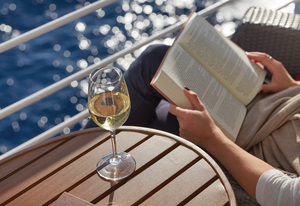
Deluxe Veranda Suite
301 sqft · Up to 3 guests
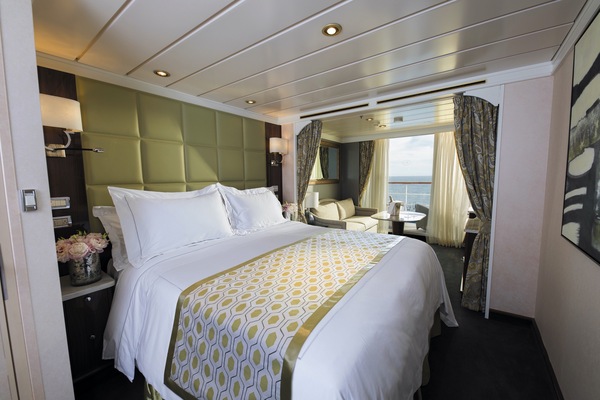
Concierge Suite
301 sqft · Up to 3 guests
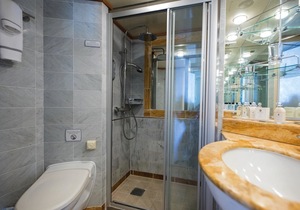
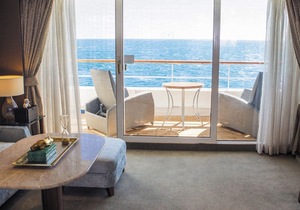
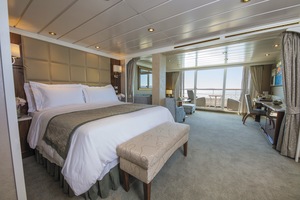
Penthouse Suite
449 sqft · Up to 3 guests
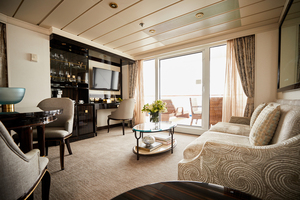
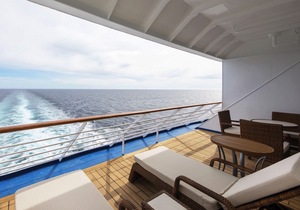
Horizon View Suite
628 sqft · Up to 3 guests

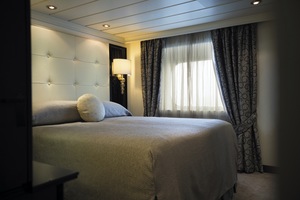
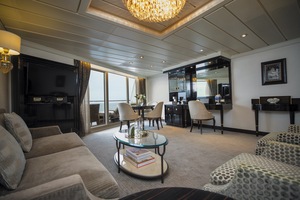
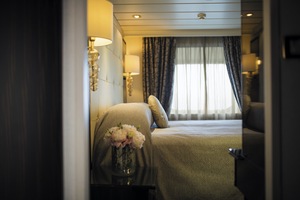
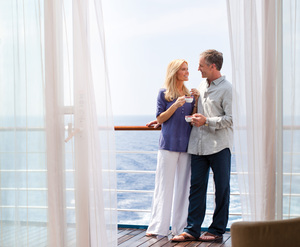
Seven Seas Suite
601–847 sqft · Up to 3 guests
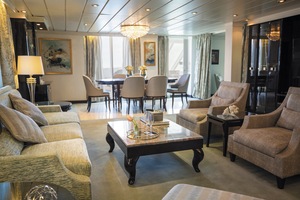
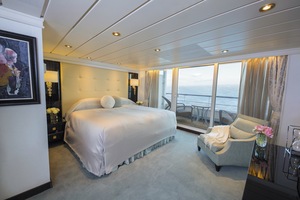
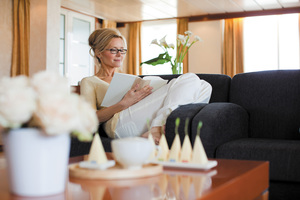
Signature Suite
2002 sqft · Up to 5 guests
Suite
| Cabin | Grade | Per Person | Avail. | |
|---|---|---|---|---|
| Deluxe Veranda Suite · 301 sqft | H Deluxe Veranda Suite (H) | Enquire → | ||
| G Deluxe Veranda Suite (G) | Enquire → | |||
| F Deluxe Veranda Suite (F) | Enquire → | |||
| Concierge Suite · 301 sqft | E Concierge Suite (E) | Enquire → | ||
| D Concierge Suite (D) | Enquire → | |||
| Penthouse Suite · 449 sqft | C Penthouse Suite (C) | Enquire → | ||
| B Penthouse Suite (B) | Enquire → | |||
| A Penthouse Suite (A) | Enquire → | |||
| Horizon View Suite · 628 sqft | HS | Enquire → | ||
| Seven Seas Suite · 601–847 sqft | SS | Enquire → | ||
| Signature Suite · 2002 sqft | SG | Enquire → |
Deluxe Veranda Suite · 301 sqft
H Deluxe Veranda Suite (H)
Deluxe Veranda Suite · 301 sqft
G Deluxe Veranda Suite (G)
Deluxe Veranda Suite · 301 sqft
F Deluxe Veranda Suite (F)
Concierge Suite · 301 sqft
E Concierge Suite (E)
Concierge Suite · 301 sqft
D Concierge Suite (D)
Penthouse Suite · 449 sqft
C Penthouse Suite (C)
Penthouse Suite · 449 sqft
B Penthouse Suite (B)
Penthouse Suite · 449 sqft
A Penthouse Suite (A)
Horizon View Suite · 628 sqft
HS
Seven Seas Suite · 601–847 sqft
SS
Signature Suite · 2002 sqft
SG
More Departures
7 nights
Mediterranean Discovery
17/10/2026
From
£7,699
10 nights
Glamorous Grecian Nights
24/10/2026
From
£9,739
16 nights
Epic Atlantic Escapade
30/10/2026
From
£107,239
15 nights
Sapphire Sea Dreams
15/11/2026
From
£100,579
10 nights
Turkish Treasures
27/11/2026
From
£7,959
10 nights
Sunset Serenity
01/12/2026
From
£6,299
Your Ship
Seven Seas Mariner
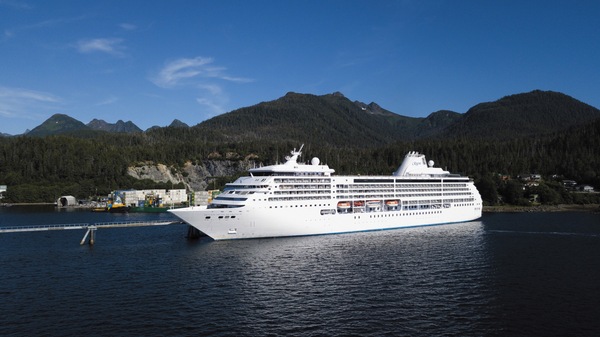
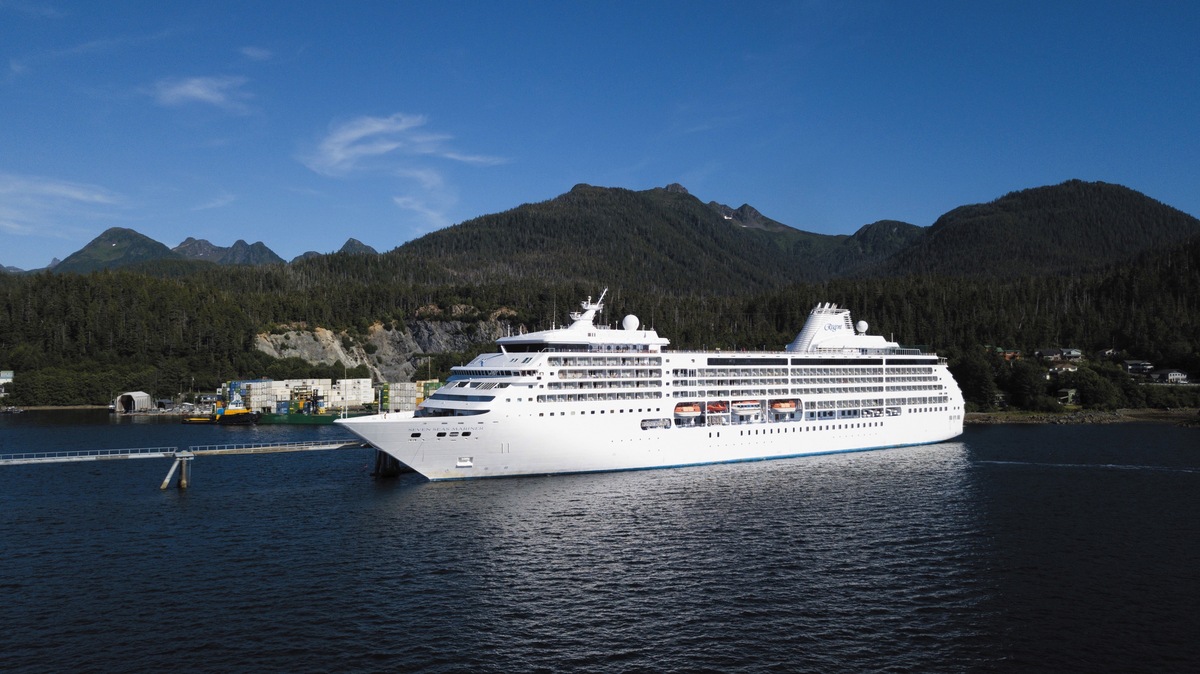
Seven Seas Mariner® exudes class, from the delectable offerings of Chartreuse to the debonair atmosphere of the Connoisseur Club.
Attention to detail distinguishes Regent Seven Sea Cruises™ and the exceptional suites on Seven Seas Mariner®. With our all-inclusive fares, every guest enjoys spacious closets, well-appointed bathrooms and a private balcony with views of the shimmering sea.