14-Day Jewels Of The British Isles
Cruise only — prices from Solo cruise only — from

Ports of Call & Itinerary
14-night voyage departing Dover.
Printable Itinerary (PDF)Route Map
14-Day Jewels Of The British Isles
13 ports plotted · click a marker for details
Day 1
Dover , England
Saturday, 03/07/2027
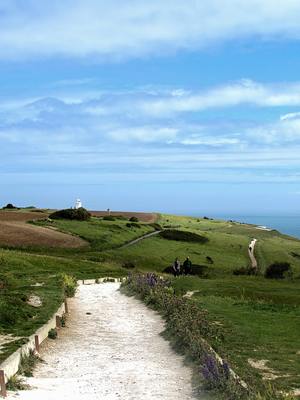
Known as the gateway of England, Dover welcomes millions of visitors from all over the globe each year in its role as the ferry capital of the world and the second busiest cruise port in the UK. The White Cliffs Country has a rich heritage. Within the walls of the town’s iconic castle, over 2,000 years of history waits to be explored, whilst the town’s museum is home to the Dover Bronze Age Boat, the world’s oldest known seagoing vessel. The town’s cliffs that are a welcome sight for today's cross-channel travellers also served as the control centre for the Dunkirk evacuation in 1940.
Day 2
Cowes, Isle of Wight , England
Sunday, 04/07/2027
The 147-square-mile island with its pretty bays and thatched villages is like a miniature England. A well-preserved Victorian character dates from no other than Queen Victoria herself, who favored the island as her summer residence and made it her permanent home after the death of her husband, Prince Albert. Several other great names have close associations with the Isle of Wight, such as Tennyson, Dickens and Keats. The small port of Cowes at the northern tip of the island hosts every year in August Britain’s most prestigious sailing event – Cowes Week, often called “the yachtsman’s Ascot.”This is when the cozy and laid-back island bursts with visitors from all over, who fill the ranks of the island’s retired folk. Apart from being a haven for sailing craft, the world’s first hovercraft made its test runs here in the 1950s. For a place of relatively small size, the Isle of Wight packs a startling variety of landscapes and coastal scenery, ranging from a terrain of low-lying woodland and pasture to open chalky downland fringed by high cliffs. In addition, there are a number of historic buildings and a splendid array of well-preserved Victoriana. The town of Cowes is bisected by the Medina River, with West Cowes near the harbor being the old, pretty part, while East Cowes is more industrialized. Outside the suburbs stands Osborne House, Queen Victoria’s favorite residence. The grand mansion was largely designed by Albert, and the interior has been left very much as it was in the Queen’s lifetime. Around the island, some of the highlights include the Needles, three tall chalk stacks beneath the cliffs at the far west end of the island. The small village of Shanklin is known for its golden cliffs and a scenic steep ravine whose mossy, fern-filled woods have been embellished with tiny lights and thatched tea shops. The port of Yarmouth features an attractive fortress and quaint pubs in the main square. Pier Information The ship is scheduled to anchor off Cowes. Guests will be taken ashore via ship’s tender. Walking distance to the town center is approximately 5 minutes. Taxis are generally available for trips around the island. Shopping Shops in the town center of Cowes carry maritime items and yachting attire, local glassware and the famous Isle of Wight colored sand. Normal opening times are from 9:00 a.m. to 5:00 p.m. The local currency is the pound. Cuisine Not surprisingly, seafood is a good choice as well as other popular English fare. If you fancy lunch ashore, you may want to give the Amadeus Restaurant in Cowes a try, or stop in one of the local pubs for a quick meal and a cold beer. Other Sites Most of the island’s sights are covered in the organized excursions. Additionally, at the far west end of the island is the site of The Needles, a cluster of three tall chalk stacks beneath steep cliffs. The drive there takes about 45 minutes each way. Nearby is Alum Bay. The oxidized sandstone cliffs are popular for their multicolored sands, which are collected and arranged in diverse glass bottles, making popular souvenirs. Private arrangements are not encouraged in this port.

Day 3
Fowey , England
Monday, 05/07/2027
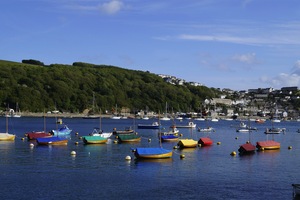
Nestled in the mouth of a wooded estuary, Fowey (pronounced Foy) is still very much a working china-clay port as well as a focal point for the sailing fraternity. Increasingly, it's also a favored home of the rich and famous. Good and varied dining and lodging options abound; these are most in demand during Regatta Week in mid- to late August and the annual Fowey Festival of Words and Music in mid-May. The Bodinnick and Polruan ferries take cars as well as foot passengers across the river for the coast road on to Looe.A few miles west of Fowey are a pair of very different gardens: the Eden Project, a futuristic display of plants from around the world, and the Lost Gardens of Heligan, a revitalized reminder of the Victorian age.
Day 5
Bantry , Ireland
Wednesday, 07/07/2027

Day 6
Kinsale , Ireland
Thursday, 08/07/2027

Day 7
Holyhead , Wales
Friday, 09/07/2027
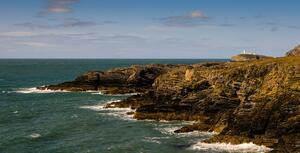
Once a northern defense post against Irish raiders, Holyhead later became best known as a ferry port for Ireland. The dockside bustle is not matched by the town, however, which maintains just a small population. Nonetheless, thousands of years of settlement have given Holyhead rich historical ruins to explore, with more in the surrounding hiking friendly landscape.
Day 8
Belfast , Northern Ireland
Saturday, 10/07/2027
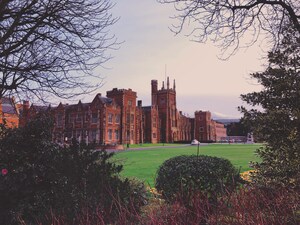
Before English and Scottish settlers arrived in the 1600s, Belfast was a tiny village called Béal Feirste ("sandbank ford") belonging to Ulster's ancient O'Neill clan. With the advent of the Plantation period (when settlers arrived in the 1600s), Sir Arthur Chichester, from Devon in southwestern England, received the city from the English Crown, and his son was made Earl of Donegall. Huguenots fleeing persecution from France settled near here, bringing their valuable linen-work skills. In the 18th century, Belfast underwent a phenomenal expansion—its population doubled every 10 years, despite an ever-present sectarian divide. Although the Anglican gentry despised the Presbyterian artisans—who, in turn, distrusted the native Catholics—Belfast's growth continued at a dizzying speed. The city was a great Victorian success story, an industrial boomtown whose prosperity was built on trade, especially linen and shipbuilding. Famously (or infamously), the Titanic was built here, giving Belfast, for a time, the nickname "Titanic Town." Having laid the foundation stone of the city's university in 1845, Queen Victoria returned to Belfast in 1849 (she is recalled in the names of buildings, streets, bars, monuments, and other places around the city), and in the same year, the university opened under the name Queen's College. Nearly 40 years later, in 1888, Victoria granted Belfast its city charter. Today its population is nearly 300,000, tourist numbers have increased, and this dramatically transformed city is enjoying an unparalleled renaissance.This is all a welcome change from the period when news about Belfast meant reports about "the Troubles." Since the 1994 ceasefire, Northern Ireland's capital city has benefited from major hotel investment, gentrified quaysides (or strands), a sophisticated new performing arts center, and major initiatives to boost tourism. Although the 1996 bombing of offices at Canary Wharf in London disrupted the 1994 peace agreement, the ceasefire was officially reestablished on July 20, 1997, and this embattled city began its quest for a newfound identity.Since 2008, the city has restored all its major public buildings such as museums, churches, theaters, City Hall, Ulster Hall—and even the glorious Crown Bar—spending millions of pounds on its built heritage. A gaol that at the height of the Troubles held some of the most notorious murderers involved in paramilitary violence is now a major visitor attraction.Belfast's city center is made up of three roughly contiguous areas that are easy to navigate on foot. From the south end to the north, it's about an hour's leisurely walk.
Day 9
Oban , Scotland
Sunday, 11/07/2027
Oban, "little bay" in Gaelic, today has a resident population of 8,500 and is the unofficial capital of the West Highlands - the "Gateway to the Isles." The panoramic views of the mountains, lochs and islands which have captivated artists, authors, composers, and poets for centuries are as striking now as they were when Dunollie Castle, a ruined keep which has stood sentinel over the narrow entrance to the sheltered bay for around six hundred years, was the northern outpost of the Dalriadic Scots. It is no surprise to find Oban in the 21st-century remains a magnet for travellers from all over the world. The town's present day popularity owes much to the Victorians, and as early as 1812, when the Comet steamship linked Oban with Glasgow, the town played host to intrepid travellers touring Staffa - the inspiration for Mendelssohn's Hebridean Overture - and Iona - home of Scottish Christianity since St Columba stepped ashore in AD563. Indeed once Oban had the royal seal of approval from Queen Victoria, who called it "one of the finest spots we have seen," the town's destiny as an endearingly enchanting holiday destination was as firmly set as the lava columns of Fingal's Cave in Oban is justifiably known as the “gateway to the Isles.” The town's south pier is the embarkation point for car ferries to Mull, Coll, Tiree, Barra, South Uist, Colonsay, Lismore and Islay. From these islands you can travel further a field to Iona, Staffa and to many of the smaller less well known isles.

Day 10
Stornoway, Isle of Lewis , Scotland
Monday, 12/07/2027
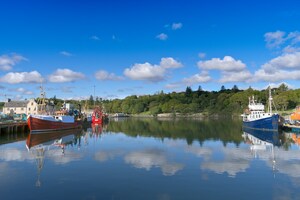
Tour description Stornoway, Scotland The Isle of Lewis and Harris is the northernmost and largest of the Outer Hebrides-the Western Isles in common parlance. The island's only major town, Stornoway, is on a nearly landlocked harbor on the east coast of Lewis. It's the port capital for the Outer Hebrides and the island's cultural center, such that it is. Stornoway has an increasing number of good restaurants. Lewis has some fine historic attractions, including the Calanais Standing Stones-a truly magical place. The Uists are known for their rare, plentiful wildlife. Stornoway. Besides being the island's main entry point for ferries, Stornoway is also Lewis's main arts center. You'll find some good restaurants in town if you want to have lunch off the ship. The town can be explored by bicycle if you are so inclined. Local rental shops can give you advice on where to ride, including a route to Tolsta that takes in five stunning beaches before reaching the edge of moorland. An Lanntair Arts Centre. The fabulous An Lanntair Arts Centre has exhibitions of contemporary and traditional art, as well as a cinema, a gift shop, and a restaurant serving international and Scottish fare. There are frequent traditional musical and theatrical events in the impressive auditorium. Kenneth St.. Black House. In the small community of Arnol, the Black House is a well-preserved example of an increasingly rare type of traditional Hebridean home. Once common throughout the islands-even into the 1950s-these dwellings were built without mortar and thatched on a timber framework without eaves. Other characteristic features include an open central peat hearth and the absence of a chimney-hence the soot and the designation black. On display inside are many of the house's original furnishings. To reach Arnol from Port of Ness, head south on the A857 and pick up the A858 at Barvas. Off A858, 21 mi southwest of Port of Ness. Admission charged. Calanais Standing Stones. These impressive stones are actually part of a cluster of several different archaeological sites in this area. Probably positioned in several stages between 3000 BC and 1500 BC, the grouping consists of an avenue of 19 monoliths extending northward from a circle of 13 stones, with other rows leading south, east, and west. Ruins of a cairn sit within the circle on the east side. Researchers believe they may have been used for astronomical observations, but you can create your own explanations. The visitor center has an exhibit on the stones, a gift shop, and a tearoom. On an unmarked road off A858. Admission charged. Dun Carloway. One of the best-preserved Iron Age brochs (circular stone towers) in Scotland, Dun Carloway dominates the scattered community of Carloway. The mysterious tower was probably built around 2,000 years ago as protection against seaborne raiders. The Dun Broch Centre explains more about the broch and its setting. Off A857. Gearrannan. Up a side road north from Carloway, Gearrannan is an old black-house village that has been brought back to life with a museum screening excellent short films on peat cutting and weaving. For a unique experience, groups can rent the restored houses. Leverburgh. At Leverburgh you can take the ferry to North Uist. Nearby Northton has several attractions; St. Clement's Church at Rodel is particularly worth a visit. MacGillivray Centre. Located in a round building overlooking the bay, the MacGillivray Centre gives insight into the life and work of William MacGillivray (1796-1852), a noted naturalist with strong links to Harris. MacGillivray authored the five-volume History of British Birds. This is a great location for a picnic (there are tables for just such a purpose). A walk to a ruined church starts at the parking lot. A859, Northton. Seallam! Visitor Centre and Co Leis Thu? Genealogical Research Centre. The center is where you can trace your Western Isles ancestry. Photographs and interpretive signs describe the history of Harris and its people. The owners organize guided walks and cultural evenings weekly between May and September. Off A859, Northton. Admission charged. St. Clement's Church. At the southernmost point of Harris is the community of Rodel, where you can find St. Clement's Church, a cruciform church standing on a hillock. This is the most impressive pre-Reformation church in the Outer Hebrides; it was built around 1500 and contains the magnificently sculptured tomb (1528) of the church's builder, Alasdair Crotach, MacLeod chief of Dunvegan Castle. Rodel is 3 mi south of Leverburgh and 21 mi south of Tarbert. A859, Rodel. Port of Ness. The stark, windswept community of Port of Ness, 30 mi north of Stornoway, cradles a small harbor squeezed in among the rocks. Butt of Lewis Lighthouse. At the northernmost point of Lewis stands the Butt of Lewis Lighthouse, designed by David and Thomas Stevenson (of the prominent engineering family whose best-known member was not an engineer at all, but the novelist Robert Louis Stevenson). The structure was first lighted in 1862. The adjacent cliffs provide a good vantage point for viewing seabirds, whales, and porpoises. The lighthouse is northwest of Port of Ness along the B8014. Shopping Harris tweed is available at many outlets on the islands, including some of the weavers' homes; keep an eye out for signs directing you to weavers' workshops. Harris Tweed Artisans Cooperative. The Harris Tweed Artisans Cooperative sells stylish and quirky hand-crafted tweed clothing, hats, accessories, all made by artists belonging to the cooperative. 40 Point St., Stornoway. Borgh Pottery. At Borgh Pottery, open from Monday to Saturday 9:30 to 6, you can buy attractive hand-thrown studio pottery made on the premises, including lamps, vases, mugs, and dishes. Fivepenny House, A857, Borve.
Day 11
Kirkwall, Orkney Islands , Scotland
Tuesday, 13/07/2027
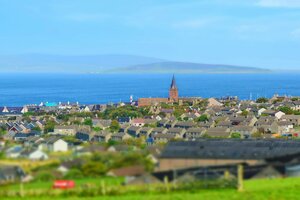
In bustling Kirkwall, the main town on Orkney, there's plenty to see in the narrow, winding streets extending from the harbor. The cathedral and some museums are highlights.
Day 12
Dundee , Scotland
Wednesday, 14/07/2027

Day 13
Leith , Scotland
Thursday, 15/07/2027
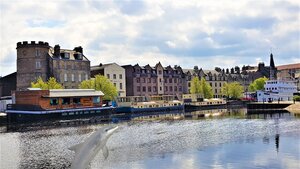
Day 15
Dover , England
Saturday, 17/07/2027
Known as the gateway of England, Dover welcomes millions of visitors from all over the globe each year in its role as the ferry capital of the world and the second busiest cruise port in the UK. The White Cliffs Country has a rich heritage. Within the walls of the town’s iconic castle, over 2,000 years of history waits to be explored, whilst the town’s museum is home to the Dover Bronze Age Boat, the world’s oldest known seagoing vessel. The town’s cliffs that are a welcome sight for today's cross-channel travellers also served as the control centre for the Dunkirk evacuation in 1940.
Room Type & Prices
All prices per person based on double occupancy. Solo traveller prices — single occupancy. Contact our cruise experts for the latest availability and best fares.
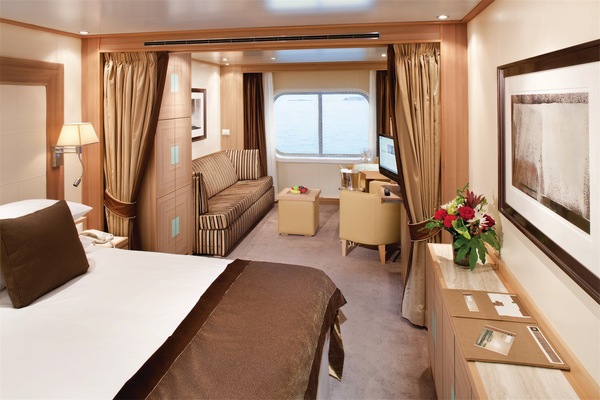
Ocean View Suite
295 sqft · Up to 2 guests
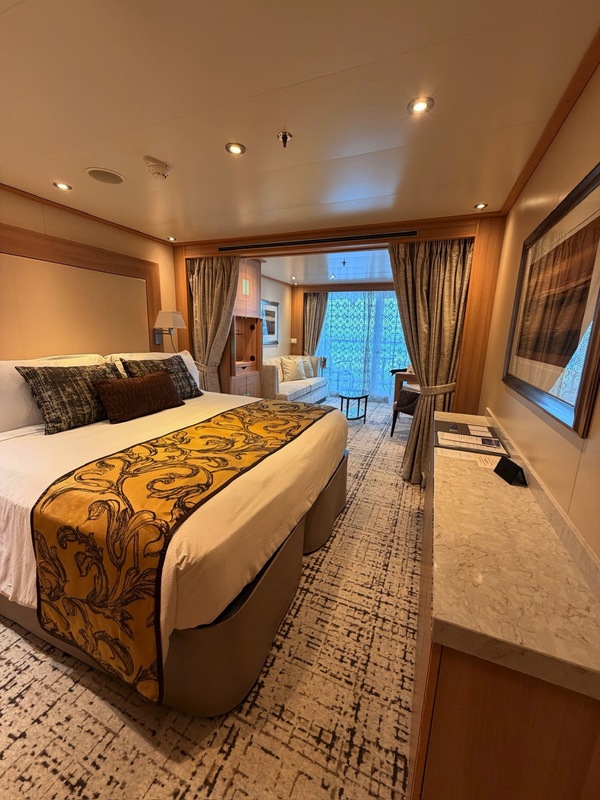
Veranda Suite
314–385 sqft · Up to 2 guests
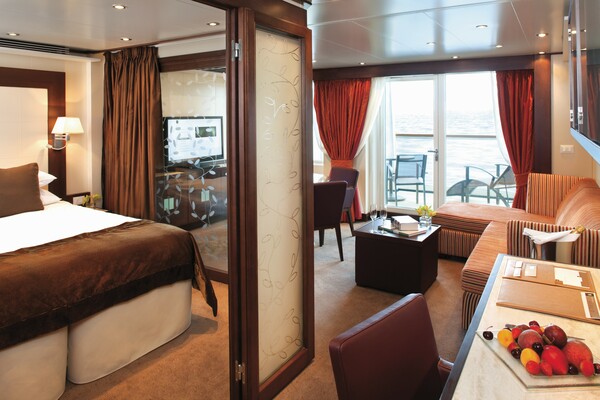
Penthouse Suite
534 sqft · Up to 2 guests
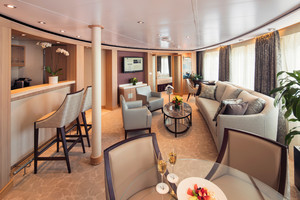
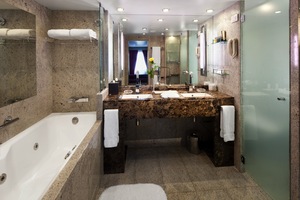
Owner's Suite
639–947 sqft · Up to 2 guests
Suite
| Cabin | Grade | Per Person | Avail. | |
|---|---|---|---|---|
| Ocean View Suite · 295 sqft | A Ocean View Suite (A) | Enquire → | ||
| A1 Ocean View Suite (A1) | Enquire → | |||
| Veranda Suite · 314–385 sqft | V1 Veranda Suite (Deck 5 - Fwd) | Enquire → | ||
| V2 Veranda Suite (Decks 6/7/8 - Fwd) | Enquire → | |||
| V3 Veranda Suite (Deck 6 - Mid) | Enquire → | |||
| V4 Veranda Suite (Deck 7/8 - Mid) | Enquire → | |||
| Penthouse Suite · 534 sqft | PH | Enquire → | ||
| Owner's Suite · 639–947 sqft | O1 Owner's Suite (Deck 6) | Enquire → | ||
| O2 Owner's Suite (Deck 8) | Enquire → |
Ocean View Suite · 295 sqft
A Ocean View Suite (A)
Ocean View Suite · 295 sqft
A1 Ocean View Suite (A1)
Veranda Suite · 314–385 sqft
V1 Veranda Suite (Deck 5 - Fwd)
Veranda Suite · 314–385 sqft
V2 Veranda Suite (Decks 6/7/8 - Fwd)
Veranda Suite · 314–385 sqft
V3 Veranda Suite (Deck 6 - Mid)
Veranda Suite · 314–385 sqft
V4 Veranda Suite (Deck 7/8 - Mid)
Penthouse Suite · 534 sqft
PH
Owner's Suite · 639–947 sqft
O1 Owner's Suite (Deck 6)
Owner's Suite · 639–947 sqft
O2 Owner's Suite (Deck 8)
More Departures
7 nights
7-Day Turkey & Greek Isle Gems
18/10/2026
From
£3,798
12 nights
12-Day Canada & New England Fall Foliage
19/10/2026
From
£6,813
7 nights
7-Day Grecian & Roman Gems
25/10/2026
From
£4,198
13 nights
13-Day Atlantic Coast: Lighthouses & New England Charms
31/10/2026
From
£6,283
9 nights
9-Day Jewels Of Andalusia & The Balearic Islands
01/11/2026
From
£5,498
12 nights
12-Day Exploration Of Japan & South Korea
03/11/2026
From
£8,998
Your Ship
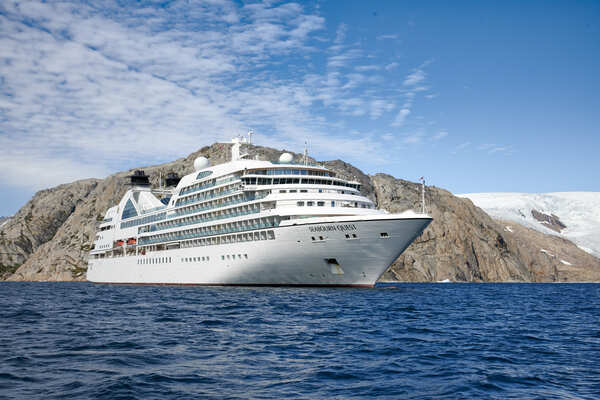
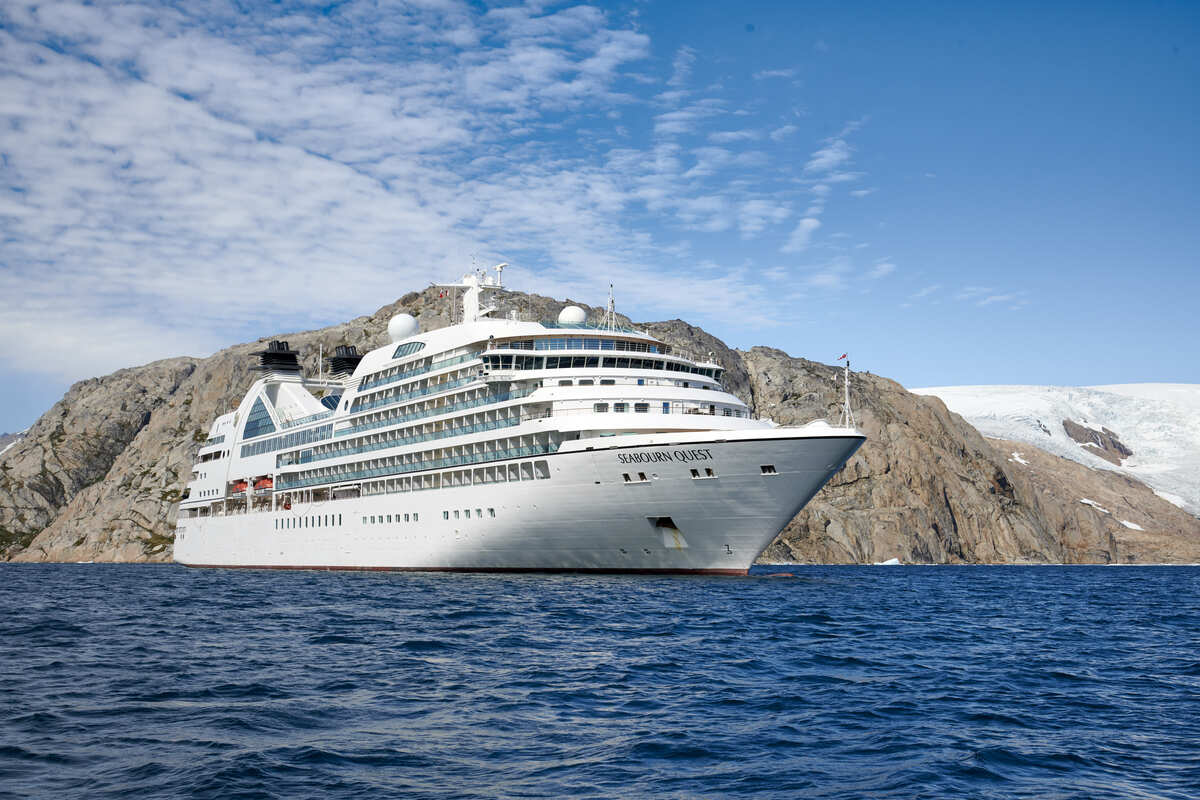
Seabourn Quest
Seabourn Quest is the third iteration of the vessel design that has been called “a game-changer for the luxury segment.” True to her Seabourn bloodlines, wherever she sails around the world Seabourn Quest carries with her a bevy of award-winning dining venues that are comparable to the finest restaurants to be found anywhere. Seabourn Quest offers a variety of dining options to suit every taste and every mood with never an extra charge.