Civitavecchia to Barcelona
Cruise only — prices from Solo cruise only — from

Ports of Call & Itinerary
11-night voyage departing Civitavecchia, arriving Barcelona.
Printable Itinerary (PDF)Route Map
Civitavecchia to Barcelona
10 ports plotted · click a marker for details
Day 1
Civitavecchia , Italy
Sunday, 18/10/2026
All roads lead to Rome, and with good reason - this city is one of the world’s most thrilling, offering unmatched history along every street. An evocative, inspiring and utterly artistic capital of unrivalled cultural impact, Rome is a city of back-to-back landmarks, which will take you on an exhilarating journey through the ages. This may be one of the world’s oldest cities, but it’s well and truly lived in. The ruins are punctuated with murmuring cafes, and the outdoor seating of restaurants sprawls out across piazzas, enticing you to sample tangles of creamy pasta and crispy pizzas. Rome’s incredible Roman Forum is littered with the ruins of its ancient administrations, which have stood firm for 2,000 years, since the times when the area was the centre of the Western world. Few sites are more simultaneously beautiful and haunting than that of the storied Colosseum, which looms deep into Rome’s rich blue sky. Take a tour to learn details of the grisly goings-on within. The best way to experience Rome is to wander its streets, gelato in hand. There is a lot to see here - whether it’s the domed spectacle of the Pantheon, or the elaborate flowing waters and artistry of the Trevi Fountain. Vatican City is an astonishing, colossal display of Catholic grandeur, while the Spanish Steps – crowned by the Trinità dei Monti church – offer a beautiful spot to gather and soak up the lively atmosphere of this humming city. With so much on the to-do list, you’ll relish the breaks you take, enjoying simple pleasures like a strong espresso, or fresh pasta with tomato sauce and ripped basil.

Day 3
Taormina , Italy
Tuesday, 20/10/2026
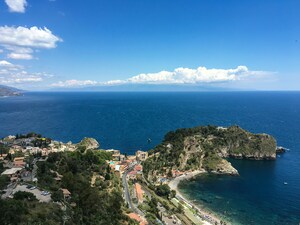
Hugging a long, sweeping bay, Giardini Naxos welcomes you ashore to some of Sicily’s most scenic and historic sites. Naxos was the first Greek settlement on Sicily, and it is surrounded by remarkable remains and swirling mythology. With a long arc of sun-soaked golden sand, you can kick back by the waves - and cool off with a dip into the sea's refreshing embrace. Up above the seaside revelry, the spectacular Taormina hillside town perches - containing rich Roman and Greek history. Visit to encounter one of Sicily’s best views, as you look down over the rejuvenating blue of the sea, and the looming backdrop of Mount Etna rising in the distance. The majestic, honey-coloured Greek theatre is a highlight, standing before the distant loom of the volcano. Head towards the puffs of cloud, and wisps of smoke, that gather around the peak of Sicily’s mighty volcano, which is among the most active in Europe. Arrive through vineyards, thriving in this fertile soil, before taking the 1,737-metre incline to the summit of the legendary mountain of fire, across fields of solidified lava flows. Known to the Greeks as the home of the God of Fire, and the one-eyed Cyclops, the mountain continues to amaze and awe with its restless power. Vineyards carpet the scenery - interrupted by occasional cactai and citrus groves – and produce some of Sicily’s most refined flavours. Enjoy a glass of wine on Giardini Naxos’ seafront, and toast your time on these rich Sicilian shores.
Day 4
Valletta , Malta
Wednesday, 21/10/2026
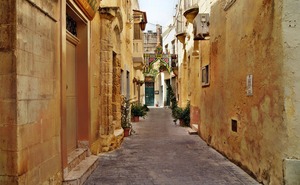
Perched high on the imposing Sciberras Peninsula, Valletta immediately presents its massive, protective walls and vertical bastions to visitors arriving by sea. Rising to 47 metres in places, the fortifications protect lavish palaces, grand domes and illustrious gardens. Built by the Knights of St John on the narrow peninsular, Valletta is a compact, richly historical treasure trove of Baroque wonders. Ascend to reach the restful, flower-filled Upper Barrakka Gardens, where cannons fire and boom in salute at noon each day, sending echoing cracks of noise out across the waves below. Recognised as 2018’s European Capital of Culture, Valletta is a fascinating and dense haven of history and intrigue. A busy, bustling capital, the breathtaking St John’s Cathedral - commissioned in 1572 - is almost concealed among its narrow streets. The relatively modest exterior is counterpointed by a staggeringly opulent, gold-leaf bathed interior, containing a Caravaggio masterpiece - the shadowy vision of the Beheading of St John. Cinematic and magnificent, Valletta has served as a filming location for Game of Thrones - but real epic history abounds on this rocky isle too. From the prehistoric and megalithic sites of the Hypogeum of Paola and Tarxien, to the fascinating War Museum at Fort St Elmo. Mdina also waits nearby, and the former medieval capital is a striking contrast to the island’s main city. Cars are barred from its streets, and it offers endlessly atmospheric old-time wanders. With a strategic positioning in the Mediterranean, Malta is a jewel that many have wrestled for over the centuries. Independence from Britain was finally achieved in 1964, but the close allegiance remains evident, with English recognised as an official language, cars driving on the left, and red post boxes and telephone gleaming in Malta’s sunshine.
Day 5
Valletta , Malta
Thursday, 22/10/2026
Perched high on the imposing Sciberras Peninsula, Valletta immediately presents its massive, protective walls and vertical bastions to visitors arriving by sea. Rising to 47 metres in places, the fortifications protect lavish palaces, grand domes and illustrious gardens. Built by the Knights of St John on the narrow peninsular, Valletta is a compact, richly historical treasure trove of Baroque wonders. Ascend to reach the restful, flower-filled Upper Barrakka Gardens, where cannons fire and boom in salute at noon each day, sending echoing cracks of noise out across the waves below. Recognised as 2018’s European Capital of Culture, Valletta is a fascinating and dense haven of history and intrigue. A busy, bustling capital, the breathtaking St John’s Cathedral - commissioned in 1572 - is almost concealed among its narrow streets. The relatively modest exterior is counterpointed by a staggeringly opulent, gold-leaf bathed interior, containing a Caravaggio masterpiece - the shadowy vision of the Beheading of St John. Cinematic and magnificent, Valletta has served as a filming location for Game of Thrones - but real epic history abounds on this rocky isle too. From the prehistoric and megalithic sites of the Hypogeum of Paola and Tarxien, to the fascinating War Museum at Fort St Elmo. Mdina also waits nearby, and the former medieval capital is a striking contrast to the island’s main city. Cars are barred from its streets, and it offers endlessly atmospheric old-time wanders. With a strategic positioning in the Mediterranean, Malta is a jewel that many have wrestled for over the centuries. Independence from Britain was finally achieved in 1964, but the close allegiance remains evident, with English recognised as an official language, cars driving on the left, and red post boxes and telephone gleaming in Malta’s sunshine.
Day 6
La Goulette , Tunisia
Friday, 23/10/2026
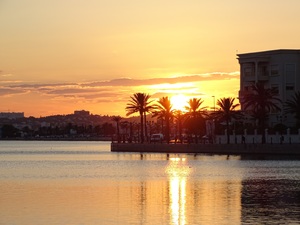
Tunisia's capital lies at the western end of the shallow Lake Tunis which opens to the sea at La Goulette. This is the first of a string of beach suburbs that stretches away to the north it is here that the city's port is located. This coastal area includes the ruins of ancient Carthage and the picturesque suburb of Sidi Bou Said places that attract more visitors than Tunis itself. As far as capital cities go Tunis has an easy-going unhurried air about it. It is a very liberal city by Islamic standards and certainly leading the way in Western trends for the rest of the country. In Tunisia the struggle for independence didn't take the violent course that it did in Algeria. Ruler Ahmed Bey who governed from 1837 to 1855 encouraged Westernization and brought in military and other advisors to this end. In 1861 during the reign of Mohammed Sadiq a constitution - the first in the Arab world - was proclaimed. Until the time of the French protectorate the medina was very much the center of things. Then under the French influence the ville nouvelle (new city) emerged with its major banks department stores and administrative services. The main focus of ville nouvelle is the wide tree-lined Avenue Habib Bourguiba. At its western end this major thoroughfare becomes the Avenue de France terminating in the Place de la Victoire and the entrance to the medina.
Day 7
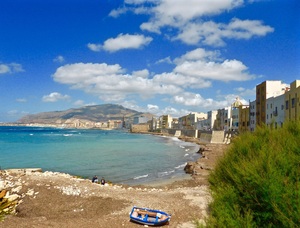
Trapani, Sicily , Italy
Saturday, 24/10/2026
Surrounded by glowing turquoise waters and rugged coastline Trapani invites you to explore western Sicily's ruins intense flavours and sun-soaked leisure pursuits. Built on salt and tuna exports Trapani is experiencing a renaissance having been lovingly spruced up as a sailing capital and an international airport bringing in visitors from far and wide. The town looks out over the Egadi Islands gazing west to witness some of Siciliy's most evocative sunset displays. Start exploring Trapani from its historic core a dense network of alleys hosting a collection of small shops restaurants and wine bars. You’ll encounter the Cathedral of San Lorenzo – where colourful artworks are spread below sweeping arches and a beautiful domed roof. Sicily feels like an island on the cusp of continents and Trapani practically has one foot in Africa as you soak in its pretty whitewash houses and fusion of foods and arts. Discover the Ancient Greek influence by venturing to rich archaeological sites nearby like Selinus and Segesta where the treasures from the past have been unearthed and displayed. Pyramids of white salt rise up at the Riserva Naturale Saline di Trapani e Paceco. These salt marshes and windmills are a symbol of Trapani and although sea salt production is much less important today the small white hills remain a Trapani landmark. Look out for the pink flamingos wading in the salt pans below. For beach days the Egadi Islands can be easily reached from Trapani - Favignana is the largest and most popular.
Day 8
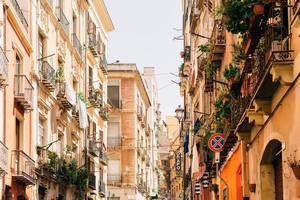
Cagliari , Italy
Sunday, 25/10/2026
The serene sea approach to Cagliari is an exquisitely beautiful way to first lay eyes on the city’s mesmerising interplay of colour, spires and domed churches. Sat on Sardinia’s south coast, Cagliari is the island’s largest city, and a sun-blessed escape of beaches, architecture and Mediterranean food – where stress evaporates on contact. That first sight of Cagliari’s mosaic of architecture reveals much about the island’s history, and is a living document of the civilisations and influences that have passed through. Combining Byzantine churches with crumbling Roman ruins and Pisan towers, it’s an elegant, beguiling place to explore. Usher in the morning with a short, sharp espresso hit, before wandering along to San Benedetto market’s bustle, crammed full of overflowing heaps of local produce. Taste crisp, freshly-baked bread, thin shavings of sheep’s cheese, and ripe red strawberries, as you wander amid the market’s melody of good-natured bartering. The Castello quarter’s tight, flower-draped streets and salmon-hued brick buildings incline up above the Med’s softly lapping waves. Climb Bastione di Saint Remy staircase to Terrazza Umberto’s views of the turquoise Gulf of Angels. Next, Cathedral of Santa Maria awaits, with its marbled interiors, elaborate side chapels and intricately decorated crypt. Once you’ve unravelled Cagliari’s historical tapestry, Poetto Beach invites you to find a spot on almost five miles of uninterrupted sand, met by a dazzling expanse of turquoise water.
Day 10
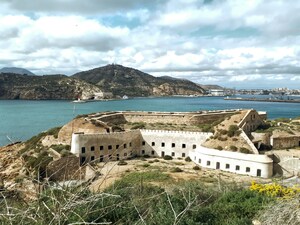
Cartagena , Spain
Tuesday, 27/10/2026
On the crossroads of mighty cultures, this Murcian port has endless ancient stories to share. A valuable natural harbour attracted many civilisations to this sun-bathed, southeasterly setting - following its foundation by the Carthaginians in 227 BC. Blending the imprints left by countless cultures on this global junction, the presence of everyone from the Vandals to the Phoenicians and Moors can be felt as you explore, walking between ruins and celebrated modernist architecture along Calle Mayor. Cartagena is crowned by the soaring Castillo de la Concepcion - rise to the stout castle aboard a panoramic lift. Inside, look through reams of archaeological treasures, or admire the rolling views down over the port and across the waters. Watch out for the electric blue peacocks who strut flamboyantly. Cartagena's emergence as a visitor destination coincided with a stunning discovery in 1988 - the bowl of a gloriously preserved Roman Theatre. Enter to sit among the grandiose ancient venue, so evocative, you can't help but imagine the historic performances that have graced its stage. Wander the breezy waterfront, looking across the narrow strait towards Africa's distant haze, and spotting gleaming warships. Cartagena's perfect harbour means it has been one of Spain's oldest strategic navy positions since the 16th century. Settle to enjoy the joys of tapas in lively bars - sampling crisped paella, squid and honeyed-aubergine. Easter's Semana Santa festivities are typically lively here, as hooded processions, lavish floats and sombre fiery displays roll through the streets.
Day 11
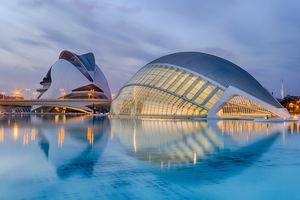
Valencia , Spain
Wednesday, 28/10/2026
Valencia is a proud city. During the Civil War, it was the last seat of the Republican Loyalist government (1935–36), holding out against Franco’s National forces until the country fell to 40 years of dictatorship. Today it represents the essence of contemporary Spain—daring design and architecture along with experimental cuisine—but remains deeply conservative and proud of its traditions. Though it faces the Mediterranean, Valencia's history and geography have been defined most significantly by the River Turia and the fertile floodplain (huerta) that surrounds it. The city has been fiercely contested ever since it was founded by the Greeks. El Cid captured Valencia from the Moors in 1094 and won his strangest victory here in 1099: he died in the battle, but his corpse was strapped into his saddle and so frightened the besieging Moors that it caused their complete defeat. In 1102 his widow, Jimena, was forced to return the city to Moorish rule; Jaume I finally drove them out in 1238. Modern Valencia was best known for its frequent disastrous floods until the River Turia was diverted to the south in the late 1950s. Since then the city has been on a steady course of urban beautification. The lovely bridges that once spanned the Turia look equally graceful spanning a wandering municipal park, and the spectacularly futuristic Ciutat de les Arts i les Ciències (City of Arts and Sciences), most of it designed by Valencia-born architect Santiago Calatrava, has at last created an exciting architectural link between this river town and the Mediterranean. If you're in Valencia, an excursion to Albufera Nature Park is a worthwhile day trip.
Day 12
Barcelona , Spain
Thursday, 29/10/2026
Having attracted over 82 million visitors in 2017, Spain is gaining popularity as a travel destination. The country lures travellers from across the world with its promise of authenticity, charisma, and memorable moments. Spain’s culture is a celebration of the finer things in life, an expression of spirit, heritage and fun: colourful fiestas, delectable cuisine, age-defining art, music, dance, sport and so much more. Each region of the country has evolved a character of its own, meaning the country is unified by a sense of cultural multiplicity. Barcelona, the capital of Catalonia, is a masterpiece that embellishes the Spanish canvas. The fact that the Barcelona’s iconic cathedral, La Sagrada Familia, is still under construction over 141 years after construction commenced pays testament to the city’s artistic perfectionism, which pervades all aspects of life here. Apparent in the city’s architecture, layout, and cultural practices, aestheticism retains its value here. Antoni Gaudí, whose iconic style of modernist architecture is among Barcelona’s leading attractions, could perhaps be credited with designing the face of this magnificent city. Enjoy getting to know the vivacious personality behind Barcelona’s beauty.

Room Type & Prices
All prices per person based on double occupancy. Solo traveller prices — single occupancy. Contact our cruise experts for the latest availability and best fares.
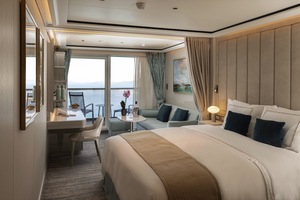
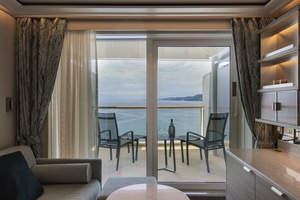
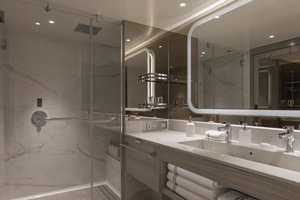
Classic Veranda Suite
355 sqft · Up to 3 guests
Superior Veranda Suite
355 sqft · Up to 3 guests
More Departures
14 nights
Tokyo to Tokyo
17/10/2026
Solo From
£18,500
From
£10,900
7 nights
Papeete to Papeete
18/10/2026
Solo From
£8,500
From
£4,350
7 nights
Athens to Athens
19/10/2026
Solo From
£10,200
From
£4,600
6 nights
King George Island to King George Island
20/10/2026
Solo From
£12,500
From
£10,000
9 nights
Puerto Williams to King George Island
20/10/2026
Solo From
£8,625
From
£7,900
20 nights
Lisbon to Cape Town
21/10/2026
Solo From
£11,375
From
£6,400
Your Ship
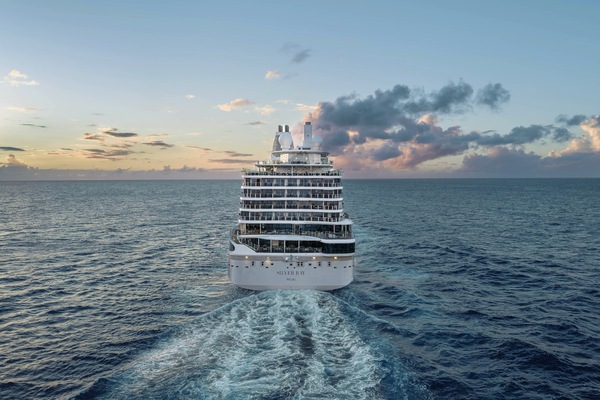
Silver Ray
Set sail on our newest ship Silver Ray.