Apra to Kobe
Cruise only — prices from Solo cruise only — from

Ports of Call & Itinerary
14-night voyage departing Apra (Agana), arriving Kobe.
Printable Itinerary (PDF)Route Map
Apra to Kobe
11 ports plotted · click a marker for details
Day 1
Apra (Agana) , Guam
Sunday, 02/05/2027
Guam is blessed with spectacular natural beauty and a rich cultural history. Apra Harbor is a deep-water port located on the western side of the island. The island is part of the Mariana Islands and near the Mariana Trench which is the deepest part of the earth’s oceans and the deepest location of the earth itself. The port serves both as a U.S. naval station and Guam’s main commercial port. The harbour formed by the Orote Peninsula to the south and Cabras Island in the north is considered to be one of the best natural ports in the Pacific. Guam’s unique culture traditions and heritage have remained intact despite European imperialism wars and changing foreign governments. Archaeological evidence suggests that the indigenous Chamorros of Indo-Malayan descent migrated from the Southeast Asian islands and settled throughout the Marianas archipelago. Being expert seamen and skilled craftsmen they flourished and built unique houses and canoes suited to the region. As a matriarchal society and through the prestige of the women much of the Chamorro culture and traditions were able to survive. Since the 16th century a wave of foreigners have arrived on Guam’s shores including Ferdinand Magellan in 1521 who remained on the island for three days to restock his small convoy. Americans Asians Europeans Micronesians and other visitors have since left their imprint on the island’s pastimes and tastes.
Day 2
Saipan , Northern Mariana Islands
Monday, 03/05/2027
The Northern Mariana Islands are a chain of 15 tropical islands in the western Pacific Ocean about 120 miles (193 km) north of Guam. At 12 miles in length and 5 miles wide (19 x 8 km) Saipan is the largest of the 15 islands and site of the CNMI capital. Settlement of Saipan and its neighbouring islands occurred circa 2000 BC by the Chamorro people who arrived via similar routes as their cousins in Guam. Ferdinand Magellan first sighted the Mariana Islands in March 1521 and claimed “Las Islas de las Velas Latinas” for Spain. In 1668 the islands’ name changed to the present one in honour of Mariana of Austria the widow of Spain’s king Philip IV. In 1986 President Ronald Reagan proclaimed the Northern Marianas a United States Commonwealth and its residents U.S. citizens. Today Saipan boasts a well-developed tourist industry which is concentrated around Garapan the capital. In addition to beaches and colourful marine life American World War II relics overgrown Japanese bunkers and mangrove swamps can be seen around the island. Garapan located on the western side of the island is home to major hotels and the American Memorial Park which honours American soldiers who died during the Battle of Saipan.
Day 3
Pagan Island , Northern Mariana Islands
Tuesday, 04/05/2027
Among the 15 islands of the Northern Marianas, Pagan Island is one of Micronesia’s finest. Biologically diverse, volcanically active (the last major eruption was in 1981) and geologically one of the Marianas most interesting, Pagan Island promises stunning sites and scenery in equimeasure. Pagan is in fact two islands, joined by an isthmus. Archaeological finds put human habitation on the islands several centuries pre-AD, and it is believed that the island was settled in 1,500 BC by Micronesian people, who practiced agriculture and cultivated plants. Official discovery dates it to the 17th century by Jesuits, however, it is possible that European deserters from the first Magellan expedition set foot on the island a century earlier. Nearby Guam island has geological proof dating back to 30-million years. Current population is just seven. Numerous volcanic eruptions have left Pagan swathed in sloping sheets of lava and almost bereft of ecological richness. There is some light broadleaf forest (endemic to Micronesia), scrub grasslands and swamps. The Marianas are given ecoregional status on the basis of its endemic bird fauna. Seven species are native the archipelago, including the critically endangered Mariana crow and Rota bridled white-eye and the endangered Micronesian megapode.
Day 6
Torishima Island Cruising
Friday, 07/05/2027
Day 7
Shimizu , Japan
Saturday, 08/05/2027
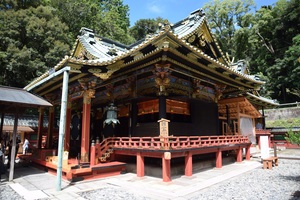
Feel your heart thumping at your first sight of Japan’s most heavenly vision - Mount Fuji’s cone emerging through the haze. With its summit dipped in pure white snow the iconic volcano’s cone is one of the most famous natural landmarks in the world - and a picturesque backdrop for Shimizu. Come ashore to this serene vision of beauty – and whether you head straight for the siren-call of the volcano’s slopes or the sanctuary of gorgeous heritage-rich shrines and tranquil tea plantations - spine-tingling views of Japan’s most tallest mountain are never far away. A perfectly symmetrical spectacle visible for miles around Mount Fuji is an adored national symbol of Japan. Travel closer to its slopes to soak in some of the country’s finest panoramas. Or take in the views with a dash of local culture at the Fujisan Hongu Sengen Shrine – an elegant shrine that stands in thrall to the salt and pepper volcano close by. The Shiraito Waterfall World Heritage Site flows just beneath the volcano – visit to see the gloriously wide curtain of water gushing through the thick vegetation. Visit Kunozan Toshogu Shrine for another perspective or to soak up the tranquil site before swinging above on a scenic ropeway. Located on the adjacent Mount Kuno – privileged views of the mountain and Suruga Bay will unroll before you. Nihondaira Plateau is another option where you can soak in panoramic views of the bay and Mount Fuji dominating behind.
Day 8
Ōshima Island , Japan
Sunday, 09/05/2027
Day 9
Toba , Japan
Monday, 10/05/2027
Day 11
Yakushima , Japan
Wednesday, 12/05/2027
Yakushima is a round-shaped subtropical island off the southern coast of Kyushu island and part of Kagoshima prefecture. One fifth of this island is designated a Natural World Heritage Site in 1993, and it is covered by an extensive cedar forest that contains some of Japan’s oldest living trees. The symbol of Yakushima is called Yakusugi, a Japanese cedar. Yakusugi is a specific term only used for cedar trees over 1,000 years old. The oldest Yaku-Sugi is considered to be more than 7,000 years old. As a subtropical island with mountains that are nearly 2,000 meters high, Yakushima attracts a lot of rainfall around the year with a local saying that it rains 35 days a month! No matter how the weather is, the walking in the Cedar tree forest is what you cannot miss on this island. You can see many rare plants due to the abundance of water and the changes in temperature at different altitudes. The range of flora is very wide, from coral reef to alpine plants.

Day 12
Uwajima , Japan
Thursday, 13/05/2027
Day 13
Itsukushima , Japan
Friday, 14/05/2027
Itsukushima Island, colloquially known as Miyajima (translation “Shrine Island”) is home of perhaps the most iconic view in all Japan. This is of course the Floating Torii Gate, a red gate built in the Seto Inland Sea which appears to “float” during high tide. Symbolic for a pilgrims passing from one life to another the gate is by far one of the most photographed sites in the country. UNESCO named it a site of Outstanding Universal Value in 2001, while the Japanese Government consider it one of their National Treasures. The island’s attractions are not limited to just the gate however. The shrine, from which the island takes its informal name, consists of various buildings that are too built over the water and are connected by walkways. The present shrine dates from the early 12th century, although the island has been a place of worship since at least 600 AD. The great artistic and technical beauty of the Torii-Gate summarises Miyajima as a whole. The romantic concept of Japanese beauty is everywhere – in the play of contrast and colour against the mountains and the sea, the balance of nature and mankind and the harmony of Kihaku, loosely translated as the energy of the soul. After a visit to the shrine, be sure to enjoy the inviting paths to see the other parts of the island that lead circumnavigate the town and lead up Mount Misen. If you are not feeling too energetic, note that Mount Misen has a cable car leading partly up to the top with nice views and deer roaming the trails.

Day 14
Kochi , Japan
Saturday, 15/05/2027
Small and friendly, this castle town dates back from the early 17th century, and has just one of the 12 Japanese castles to have survived the feudal age. Regrettably, a WWII bombing in 1945 destroyed half the city, although thankfully not the original castle, which serves as a shining example of the Edo Period. A buzzing food market next to the castle provides sustenance – both local and international cuisine and those who are feeling adventurous must try the sugar tomato and rice omelette, either separately or why not together. For those in search of a quintessentially Japanese experience, Kochi is blessed with a superb landscape and an enjoyable local pastime is bathing in the hot springs (onsens) that surround the city. They come in many different shapes, sizes and colours (the colour of the water indicates the dominant minerals present: red for iron, milky for sulphur, blue for bicarbonate and so on). Some are considered rare and each type is said to have a different therapeutic effect. However, some etiquette is expected and first-time visitors should perhaps be aware of the formalities surrounding this bathing ritual. Home as well to some stunning beaches, visitors are advised against swimming in the sea because of strong undercurrents, instead being encourages to enjoy the many beachside attractions of the area, such as the Sakamoto Ryoma Memorial Museum, the lovely walking paths or the sumptuous local speciality katsuo no tataki, served on one of the many surrounding restaurants. Although perhaps not the most picturesque of downtowns, downtown Kochi holds a legendary tale, which centers on the Harimayabashi, (the small red bridge on the west side of the main street). Legend has it that a young priest from Godaisan fell in love with and a girl from Kochi. Because the priest's temple forbade relationships, the couple hid their romance by meeting in secret and exchanging clandestine gifts. One day, the priest was seen buying a hair comb at Harimayabashi, and the couple's secret romance was discovered.
Day 15
Kobe , Japan
Sunday, 16/05/2027
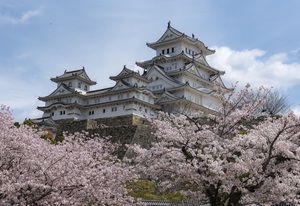
The Japanese city of Kobe needs no introduction. The name is synonymous with its home grown superstar. We are not talking of its stunning shrines, cherry trees laden with blossom during sakura or effervescent city, buzzing with life 24/7. We are of course talking of a much more grass roots hero – its eponymous beef. The delicacy might have put the city on the map, but there is far more to Kobe than its meat. Naturally, Kobe wears its cuisine as a badge of honour. Its port history has given it a gastronomy that is quite different from its neighbours. Seafood and sushi is naturally some of the freshest and most diverse you can find, but Kobe’s multi-cultural nature (the city is home to 98 different nationalities) means that it has one of the most diverse gastronomic cultures in Japan. Bread and bakeries are also an (unexpected) delicacy. Additionally, Sake is taken very seriously – Kobe even has its own museum dedicated to the national spirit. Historically, Kobe has always been a key city for Japan. Renamed in 1889, it was known as Owada no Tomari during the Nara Period (710-784 C.E.). Kobe’s location on the calm Inland Sea between Osaka and Kyoto has proven to be pivotal in Japanese history; it is mentioned in famous literary works such as The Tale of Genji (from approximately late 9th century) and the Taiheiki (14th century). The city and region are home to many attractions including the Himeji Castle (widely considered to be Japan's most beautiful feudal castle), a short ride away.
Room Type & Prices
All prices per person based on double occupancy. Solo traveller prices — single occupancy. Contact our cruise experts for the latest availability and best fares.
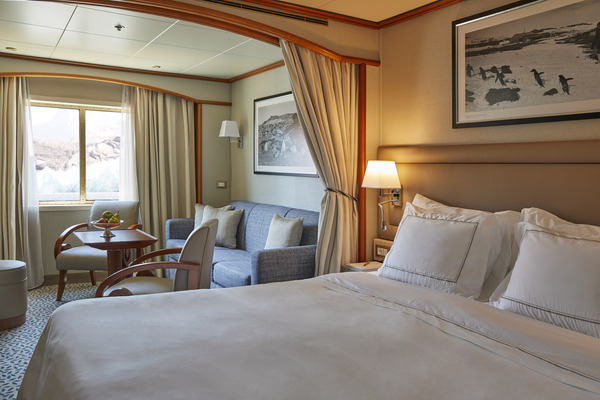
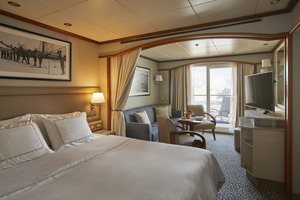
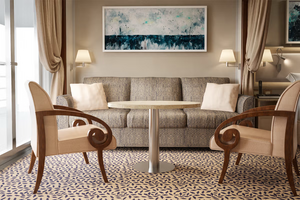
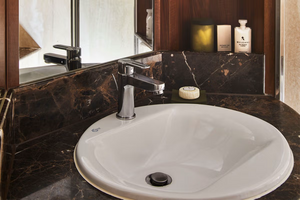
Vista Suite
237 sqft · Up to 2 guests
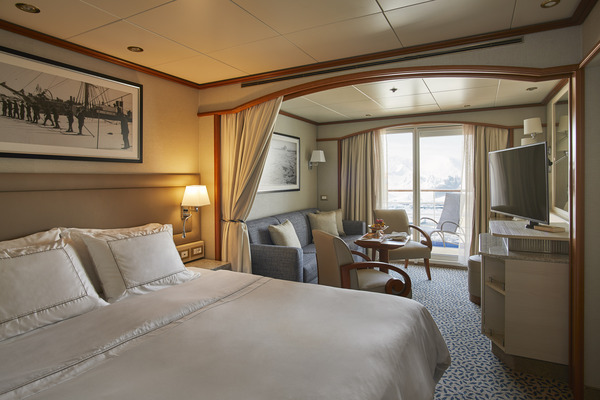
Veranda Suite
291 sqft · Up to 4 guests
Deluxe Veranda Suite
291 sqft · Up to 2 guests
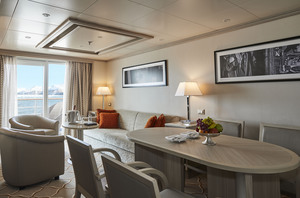
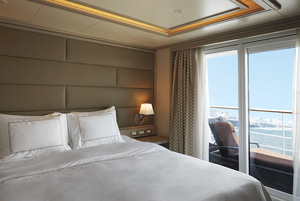
Medallion Suite
517 sqft · Up to 3 guests
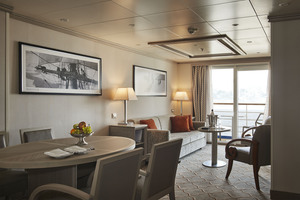
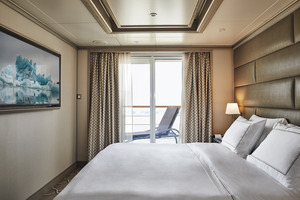
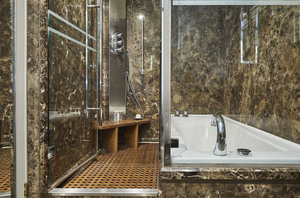
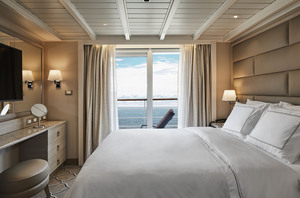
Silver Suite
581 sqft · Up to 3 guests
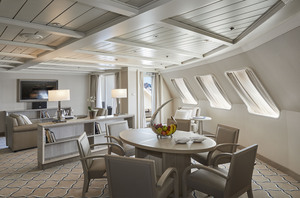
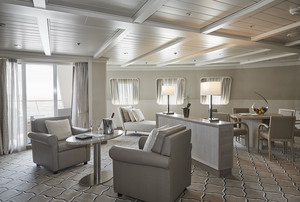
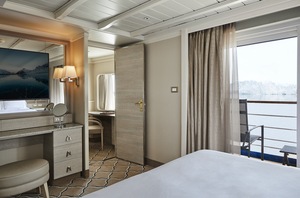
Grand Suite
1023–1313 sqft · Up to 5 guests
Suite
| Cabin | Grade | Per Person | Avail. | |
|---|---|---|---|---|
| Vista Suite · 237 sqft | VI | Enquire → | ||
| Veranda Suite · 291 sqft | VR | Enquire → | ||
| Deluxe Veranda Suite · 291 sqft | DV Midship Veranda Suite | Enquire → | ||
| Medallion Suite · 517 sqft | ME | Enquire → | ||
| Silver Suite · 581 sqft | SL | Enquire → | ||
| Grand Suite · 1023–1313 sqft | G1 Grand Suite (1 Bedroom) | Enquire → |
More Departures
14 nights
Tokyo to Tokyo
17/10/2026
Solo From
£18,500
From
£10,900
11 nights
Civitavecchia to Barcelona
18/10/2026
Solo From
£14,000
From
£6,500
7 nights
Papeete to Papeete
18/10/2026
Solo From
£8,500
From
£4,350
7 nights
Athens to Athens
19/10/2026
Solo From
£10,200
From
£4,600
6 nights
King George Island to King George Island
20/10/2026
Solo From
£12,500
From
£10,000
9 nights
Puerto Williams to King George Island
20/10/2026
Solo From
£8,625
From
£7,900
Your Ship
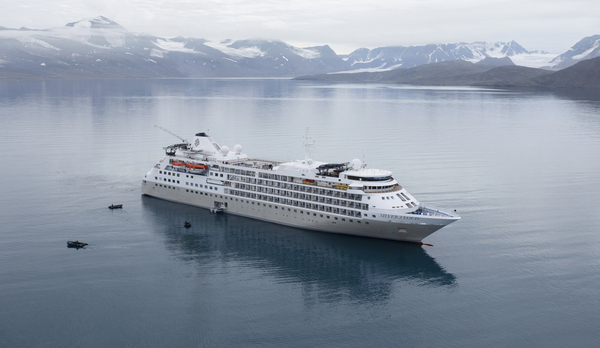
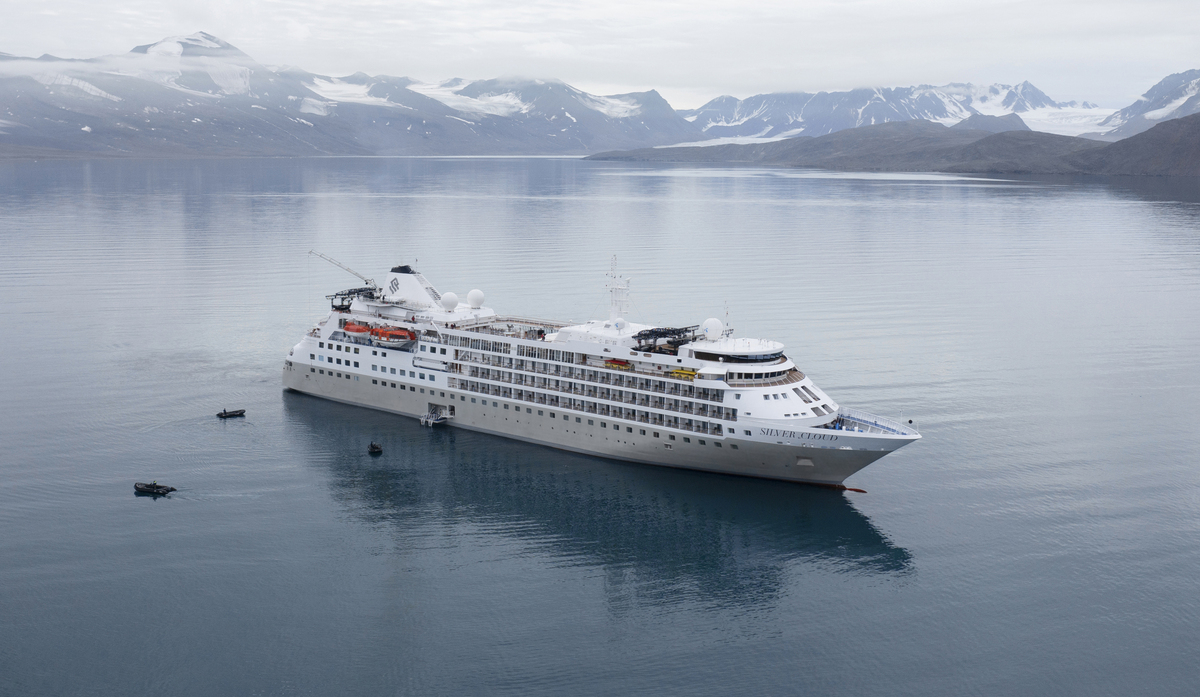
Silver Cloud
Silver Cloud offers one of the most personalised experiences in expedition voyages, with a high ratio of experts and Zodiacs unlocking access to the rare and remarkable.