Civitavecchia to Barcelona
Cruise only — prices from Solo cruise only — from

Ports of Call & Itinerary
12-night voyage departing Civitavecchia, arriving Barcelona.
Printable Itinerary (PDF)Route Map
Civitavecchia to Barcelona
12 ports plotted · click a marker for details
Day 1
Civitavecchia , Italy
Sunday, 29/10/2028
All roads lead to Rome, and with good reason - this city is one of the world’s most thrilling, offering unmatched history along every street. An evocative, inspiring and utterly artistic capital of unrivalled cultural impact, Rome is a city of back-to-back landmarks, which will take you on an exhilarating journey through the ages. This may be one of the world’s oldest cities, but it’s well and truly lived in. The ruins are punctuated with murmuring cafes, and the outdoor seating of restaurants sprawls out across piazzas, enticing you to sample tangles of creamy pasta and crispy pizzas. Rome’s incredible Roman Forum is littered with the ruins of its ancient administrations, which have stood firm for 2,000 years, since the times when the area was the centre of the Western world. Few sites are more simultaneously beautiful and haunting than that of the storied Colosseum, which looms deep into Rome’s rich blue sky. Take a tour to learn details of the grisly goings-on within. The best way to experience Rome is to wander its streets, gelato in hand. There is a lot to see here - whether it’s the domed spectacle of the Pantheon, or the elaborate flowing waters and artistry of the Trevi Fountain. Vatican City is an astonishing, colossal display of Catholic grandeur, while the Spanish Steps – crowned by the Trinità dei Monti church – offer a beautiful spot to gather and soak up the lively atmosphere of this humming city. With so much on the to-do list, you’ll relish the breaks you take, enjoying simple pleasures like a strong espresso, or fresh pasta with tomato sauce and ripped basil.

Day 2
Naples , Italy
Monday, 30/10/2028
Raw, unvarnished and refreshingly authentic, Naples is Italy’s third-largest city and a place like nowhere else. They say ‘see Naples and die,’ and you’ll soon discover the unique energy and exuberance of this sprawling city, which balances urban grit and timeless wonder like no other. Set on the breathtaking Bay of Naples, with the looming cone of Mount Vesuvius puncturing the blue sky close by, it can take a little time for Naples to work its way under your skin - but once you attune to its rhythms, you’ll be hopelessly under its spell. Naples’ densely packed, towering streets lend a claustrophobic, canyon-like feel to the UNESCO World Heritage Site city centre. Here, overflowing market stalls sell handcrafted goods along tight alleyways, and hidden courtyards serve up glasses of glowing Aperol Spritz. The smell of freshly-baked focaccias and drying washing hang over the thoroughly lived-in streets, while stunning baroque churches rise out of nowhere. Wherever you wander, this is a city sprinkled with immense cultural treasures and artistry - from palaces to fortresses and ruins from antiquity. Unpretentious food, made from simple, flavourful ingredients is a feature of Naples' revered cuisine, and the birthplace of pizza is the perfect city to taste fire-baked, shockingly under-priced, margherita. Wash it down with a bottle of wine perfected by the fertile slopes of Vesuvius. A sharp espresso is always welcome to punctuate your time exploring. Mount Vesuvius’s destructive impulses destroyed and conserved the ancient city of Pompeii in the blink of an eye, and the town is one of the best-preserved Roman ruins in the world. Naples' National Archaeological Museum displays many magnificent finds should you wish to stay in the city. The Amalfi coast’s immeasurable beauty also stretches out close by, while Capri’s glorious island glamorously luxuriates just offshore.
Day 3
Porto Santo Stefano , Italy
Tuesday, 31/10/2028
A summer escape for Rome’s historic elite the stacked waterfront of Porto Santo Stefano is a secluded taste of idyllic southern Tuscany. Physically closer to Rome than Florence the city is strung to Italy’s western coast by two sandy harnesses and sits on the unqiue peninsula of Monte Argentario - which was once an island. Flamboyant pink flamingos and herons stroll through the encased lagoon while Porto Santo Stefano’s waterfront hums with clinking cafes and strolling visitors. The luxury yachts in the harbour show that Porto Santo Stefano has lost none of its luxury appeals and with beaches wild hikes and waterfront beauty it continues to lure visitors to this secluded escape. Known for its fishing and cuisine - which is based around heavy use of the Tyrrhenian Sea’s juicy bounty. Stroll to Piazza dei Rioni for a dripping lemon gelato or wander the streets noticing the lingering World War II damage – the city was heavily bombed during the conflict. Fortunately the historic star-shaped Spanish fort was spared and it still watches out resolutely over the waters. Rugged coastline falls to secluded beaches with a wilder unkempt charm. Sail the coves - seeing cascading olive groves - or island-hop to Giglio and Giannuti which lie 12 miles from shore and can be seen from the monastery topped Argentario mountain. On the other side of the promontory you’ll find Porto Ercole - where the lifeless body of the Old Master Caravaggio was discovered.
Day 4
Bastia , France
Wednesday, 01/11/2028
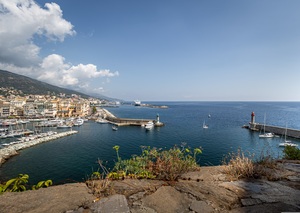
Corsica's northern capital, Bastia, is the centre of commerce and industry and a thriving freight and passenger port. Commerce, more than tourism, is its main focus, providing employment for many Corsicans. Bastia's industrial sprawl, however, is offset by its aged charm. The presence of an overwhelming Italian atmosphere adds to the city's attraction. Two distinct areas comprise the city: Terra Vecchia, the old quarter, consisting of haphazard streets, flamboyant Baroque churches and lofty tenements, with their crumbling golden-grey walls set against a backdrop of fire-darkened hills; and the more orderly Terra Nova, the historic district favoured by prominent doctors, lawyers and architects. The city dates from Roman times, when a base was set up at Biguglia to the south. Under the Genoese, Bastia was the island's capital for four centuries and of major importance for the export of wine to the Italian mainland. They built a fortress (bastiglia), which gave the town its name. The Genoese also were responsible for laying the foundation for the area's prosperity by planting vines, olives, chestnut trees and other experimental crops. This resulted in an energetic and enterprising region, still a characteristic of today's northern Corsica. Although Napoleon had appointed Ajaccio the capital of the island in 1811- initiating a rivalry that still exists - Bastia established a stronger trading position with mainland France. As a result, the Nouveau Port was created in 1862 to cope with the increasing traffic with France and Italy. Bastia's economic prominence and a German division based here during World War II accounted for severe bombing attacks. Many buildings were destroyed, including much of the old governor's palace. Of the two largest towns on the island, Ajaccio and Bastia, the latter boasts a more genuine Corsican character. Visitors can experience an authentic feel of island life by wandering through the maze of narrow streets of Bastia's old quarter and by exploring its fortifications. Don't miss the vast Place Saint-Nicolas just north of the old quarter; it is the focal point of the city. Open to the sea and lined with shady trees and sidewalk cafes, it is a perfect place for people watching and for taking in the local ambiance. Pier Information The ship is scheduled to dock at the port of Bastia. The city's focal point, Place Saint-Nicolas, is a distance of 650 feet (200 metres) to walk. Taxis are generally available at the pier but it is highly recommended to book in advance if you want to be sure to get one. It is recommended to establish the fare before leaving the port. Shopping The main shopping streets, Boulevard Paoli and Rue Cesar Campinchi, are less than one half miles (500 metres) from the port terminal. Handicrafts and the area's specialties such as honey, wine and liqueurs may be of interest. Most shops are open from 9:00 a.m. to 12:00 p.m. and 2:30 p.m. to 7:00 p.m. Shops are closed for the day on Sundays and some shops may also close Monday mornings (some souvenirs shops may open Sundays during the high season of July-August). The local currency is the euro. Cuisine A variety of restaurants offer a good choice of eating possibilities. Some of the best restaurants are found around the Vieux Port and on the Quai des Martyrs. French cuisine and seafood feature prominently on menus as well as such Corsican specialties as wild boar, charcuterie and aziminu, a local version of bouillabaisse. Evidence of Bastia's strong Italian influence is apparent in the numerous pizza and pasta places in the Nouveau Port area. For outdoor dining and people watching, cafes around lively Place Saint-Nicolas are a perfect place. Other Sites Oratoire de Saint-Roch Located in the Terra Vecchia quarter, the chapel is a Genoese Baroque extravaganza built in 1604. The walls are covered with finely carved wooden panelling and the organ is magnificent with its decoration of gilt and wooden sculpture. Oratoire de L'Immaculee Conception Although its exterior is rather austere, the flamboyant interior of this 17th-century church with gilt and marble ceiling, frescoes and crystal chandeliers creates an ambiance of an opera house. Vieux Port Site of the original Porto Prado, the area around the Vieux Port is the most appealing part of town. Its soaring houses seem to bend inwards towards the water. Once busy with Genoese traders, the building of the ferry terminal and commercial docks have reduced much of the action at Vieux Port. Terra Nova As the administrative core of old Bastia, Terra Nova displays a distinct air of affluence. Its most impressive building is the 14th-century Governor's Palace. During the Genoese heyday the governor and the bishop lived here, entertaining foreign dignitaries and hosting massive parties. Private arrangements for independent sightseeing may be requested through the Tour Office on board, subject to the availability of English-speaking guides.
Day 5
Livorno , Italy
Thursday, 02/11/2028
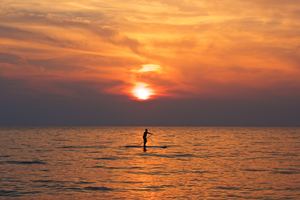
There are few more elegant places to salute the sunset than Terrazza Mascagni, Livorno’s refined chessboard piazza. A historic port, and a beachy gateway to Tuscany, Livorno welcomes you ashore to explore this enchanted Italian region's sun-soaked beauty, rich flavours and world-renowned fine art. Stay in Livorno to explore 'Piccolo Venezia', or ‘Little Venice’ - a quarter of the town that's laced with canals, little marble bridges and plenty of tempting eateries. With its bustling market, fortresses and iconic waterfront, there’s plenty to keep you busy here, but most will be tempted to venture inland to explore more of Tuscany’s many charms and artistic wonders. Test your nose, as you breathe in the subtleties of Tuscany’s vineyard-draped scenery, and visit wineries showcasing the best of the renowned flavours of the Bolgheri wine-growing area. Or head out to Prato, where you’ll find tightly-woven textile history. Pisa’s showpiece tower is within reach, as is Florence’s city of immense and imaginative renaissance beauty. Admire the delicate carving of Michelangelo's masterpiece, the David statue, and note the provocative stance as he casts a dismissive glance towards Rome. Stand before the city’s majestic black and white cathedral - the Cathedral of Santa Maria del Fiore - with its colossal brick dome. The view down over Florence's river and grand dome from Piazzale Michelangelo, meanwhile, is one of Italy's finest. However you choose to spend your time in Tuscany, you’ll discover an artistic region, filled with beauty designed to appeal to every sense.
Day 6
Livorno , Italy
Friday, 03/11/2028
There are few more elegant places to salute the sunset than Terrazza Mascagni, Livorno’s refined chessboard piazza. A historic port, and a beachy gateway to Tuscany, Livorno welcomes you ashore to explore this enchanted Italian region's sun-soaked beauty, rich flavours and world-renowned fine art. Stay in Livorno to explore 'Piccolo Venezia', or ‘Little Venice’ - a quarter of the town that's laced with canals, little marble bridges and plenty of tempting eateries. With its bustling market, fortresses and iconic waterfront, there’s plenty to keep you busy here, but most will be tempted to venture inland to explore more of Tuscany’s many charms and artistic wonders. Test your nose, as you breathe in the subtleties of Tuscany’s vineyard-draped scenery, and visit wineries showcasing the best of the renowned flavours of the Bolgheri wine-growing area. Or head out to Prato, where you’ll find tightly-woven textile history. Pisa’s showpiece tower is within reach, as is Florence’s city of immense and imaginative renaissance beauty. Admire the delicate carving of Michelangelo's masterpiece, the David statue, and note the provocative stance as he casts a dismissive glance towards Rome. Stand before the city’s majestic black and white cathedral - the Cathedral of Santa Maria del Fiore - with its colossal brick dome. The view down over Florence's river and grand dome from Piazzale Michelangelo, meanwhile, is one of Italy's finest. However you choose to spend your time in Tuscany, you’ll discover an artistic region, filled with beauty designed to appeal to every sense.
Day 7
Genoa , Italy
Saturday, 04/11/2028
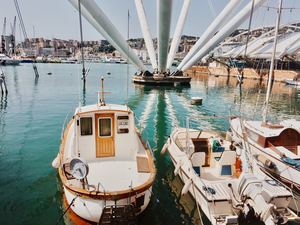
Most famous for being the birthplace of Christopher Columbus, Genoa is one of Italy’s true unsung heroes. Stretched out along the Mediterranean coast just over 100 miles from France, the city is the capital of Liguria, or the Italian Riviera, and has the history to prove it. Once the main trading centre for Italy, Genoa has a fine legacy of wealth behind it. The area once had complete control over the Tyrrhenian Sea, and its vast reach stretched as far as Nice to the west, Sardinia in the south and into the Piedmont mountains in the north. Exports were many, but perhaps the most lucrative of these was the rough denim cloth that sailors would wear, today more popularly known under the moniker blue jean. This affluence has left its mark on the city, think ornate gates, large, leafy palazzos, lavishly decorate churches and a Centro Storico – or Old Town – that speaks volumes. Grab your best hiking boots and wander the narrow alleys and steep hills and imbibe in the inherent Italianism of the city. No could talk about Genoa’s history without mentioning its food. Home of both Pesto and Focaccia, Genoa is considered by many to be one of the cornerstones of Italian gastronomy. The city’s cuisine is very much a product of its terrain: The Mediterranean yields freshly caught fish and seafood found on almost every menu, while the mountains supply the meat, cheese and above all herbs that flavour the dishes. It may not be fancy, but if you like good, simple Italian food, you have come to the right place.
Day 8
Menton , France
Sunday, 05/11/2028
Happily preserved from much redevelopment, mountains frame belle epoque villas, painted in sun-faded pastel shades, an azur sea shimmers. It’s picturesque and lush with exotic botanical delights. Just a quick skip from Monaco and the last stop on the Cote de d’Azur before Italy, Menton isn’t the celebrity haunt like some of the flashier resorts of the coast, but it’s not exactly undiscovered either. It was already a fashionable winter retreat for the travelling nobility in the 19th century, even gaining a royal seal of approval from Queen Victoria. Inspired by the subtropical microclimate, well heeled 19th century aristocrats planted lavish gardens now open to the public, bursting with rare, tropical plants from their travels and the largest collection of citrus trees in Europe, with over a hundred different varieties. Menton has a legendary love affair with lemons culminated in the creation of a lemon festival in the 1930’s that’s still held today at Mardi Gras. It’s quite a sight to see, themed floats and sculptures made of lemons and oranges. The charms of Menton did not escaped prominent artists and writers. Picasso, Duffy, Monet, Zola and Flaubert amongst many others have all found inspiration here. Perhaps none so much as Jean Cocteau - artist and director. The admiration was mutual, there’s a fantastic museum dedicated to his work as well as visits possible to buildings he was given free rein to decorate. There’s a lot to look at as you sip your citron pressé!

Day 9
Marseille , France
Monday, 06/11/2028
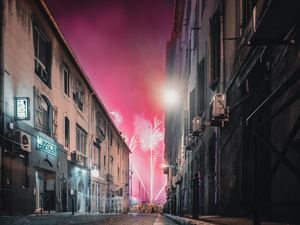
France’s sunniest and oldest city may not have the glamour of some of its Cote D’Azur neighbours, but what it lacks in glitz, it certainly makes up for in authenticity and cultural depth. France's second-biggest city, Marseille served as European Capital of Culture in 2013 and is a fantastic hub of museums, creativity and colour. The Le Panier district is a vivid illustration of this - with its faded streets revitalised by overflowing flowerpots and pretty naturally-distressed doorways. Look down to the yacht-crammed port - where fishermen still unload fresh catches - from the viewpoint at the spectacular Notre-Dame de la Garde - a true crowning glory. Standing over walled fortifications - and capped by an elegant dome - the soaring golden statue of Madonna and Child rises high into the air and is visible all over the city. The huge Marseille Cathedral is equally impressive, with its stunning zebra-striped exterior. Palais Longchamp, built-in 1862, twinkles with flowing water, and its saturated gardens and splashing fountains were built to celebrate the engineering feat of successfully redirecting water to the city. You can’t leave Marseille without tucking into its famous fish stew – bouillabaisse. Flavoured with thyme, garlic and hunks of Mediterranean fish and plump prawns, it’s a bold and delicious taste of Provence. Wash your hands clean after, with some of Marseille’s traditional soap, created using a fragrant recipe of rich olive oil. Escape the hubbub of the city, to soak in the natural glory of Calanques National Park. Hike, kayak and sail your way through a treasure trove of limestone cliffs, dropping off to hidden beaches.
Day 10
Sète , France
Tuesday, 07/11/2028
Set on a lagoon beside the Mediterranean's waves Sete's streets are interspersed with canals and the historic Canal du Midi terminates here. Canal boats joust on the river during August’s festival in this working city of breezy nautical charm. Known as the Venice of Languedoc house facades front up against canal banks while leisurely cruises offer romantic trips through this colourful maritime city. The ascent of Mount St-Clair is perhaps the best spot to appreciate this wonderful watery setting and you can also take in the bright frescoes of Chapel of Notre Dame de la Salette while you're there. Or absorb the town’s deep fishing heritage with a harbour walk among the bobbing little boats or within the preserved La Pointe Courte fisherman’s village. Sit down to sample the incredible sea life at fine restaurants which plate up mounds of juicy oysters and shellfish hauled ashore from the waters. Swing golf clubs on rollercoaster coastal courses or relax on mile after mile of golden beach which stretch out along the spit nearby. Inland discover rich medieval history beautifully preserved at the walled city of Aigues-Mortes. Mighty Carcassonne UNESCO World Heritage Site also stands within reach inviting you to enter a majestic fairy-tale citadel of fantasy turrets and imposing battlements. Step across the drawbridge and brush shoulders with armed soldiers and artisans inside this living timewarp's immense ramparts.

Day 11
Roses , Spain
Wednesday, 08/11/2028
Located at the tip of Northern Spain - close to the French border - Roses is a city known for its magnificent beaches, and extraordinary history. Blessed with beaches painted with a broad brush, the long, wide stretches of golden sand here make it one of the Costa Brava's most desirable locations. Roses sits on the outward curve of the Bay of Roses - facing west - so it’s one of the few places on the coast where you can sit back to watch the sunset lighting up the waves with roaring oranges and pinks, as the night draws in.
Day 13
Barcelona , Spain
Friday, 10/11/2028
Having attracted over 82 million visitors in 2017, Spain is gaining popularity as a travel destination. The country lures travellers from across the world with its promise of authenticity, charisma, and memorable moments. Spain’s culture is a celebration of the finer things in life, an expression of spirit, heritage and fun: colourful fiestas, delectable cuisine, age-defining art, music, dance, sport and so much more. Each region of the country has evolved a character of its own, meaning the country is unified by a sense of cultural multiplicity. Barcelona, the capital of Catalonia, is a masterpiece that embellishes the Spanish canvas. The fact that the Barcelona’s iconic cathedral, La Sagrada Familia, is still under construction over 141 years after construction commenced pays testament to the city’s artistic perfectionism, which pervades all aspects of life here. Apparent in the city’s architecture, layout, and cultural practices, aestheticism retains its value here. Antoni Gaudí, whose iconic style of modernist architecture is among Barcelona’s leading attractions, could perhaps be credited with designing the face of this magnificent city. Enjoy getting to know the vivacious personality behind Barcelona’s beauty.

Room Type & Prices
All prices per person based on double occupancy. Solo traveller prices — single occupancy. Contact our cruise experts for the latest availability and best fares.
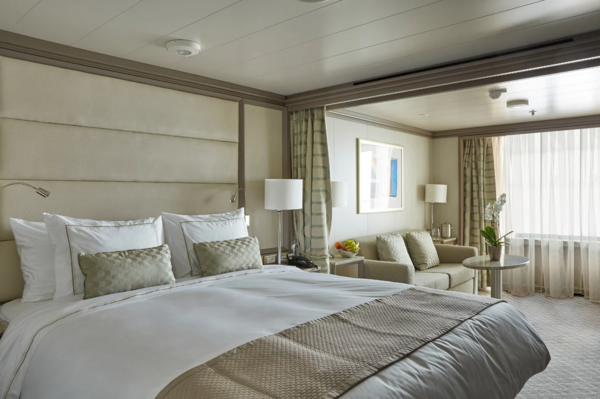
Vista Suite
344 sqft · Up to 2 guests
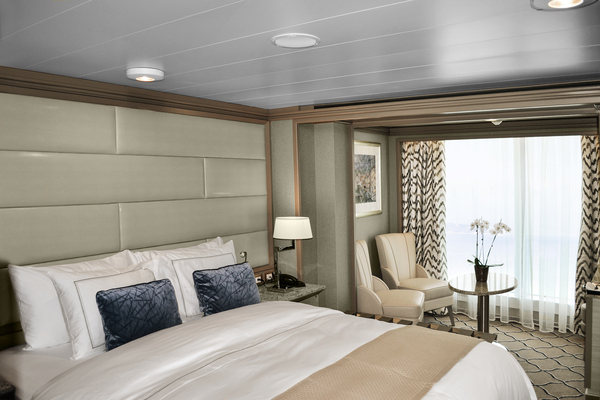
Panorama Suite
334 sqft · Up to 2 guests
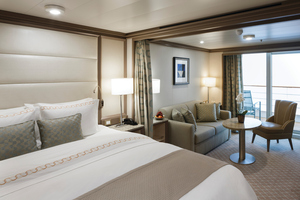
Classic Veranda Suite
387 sqft · Up to 2 guests
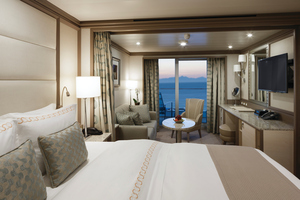
Superior Veranda Suite
387 sqft · Up to 3 guests
Deluxe Veranda Suite
387 sqft · Up to 3 guests
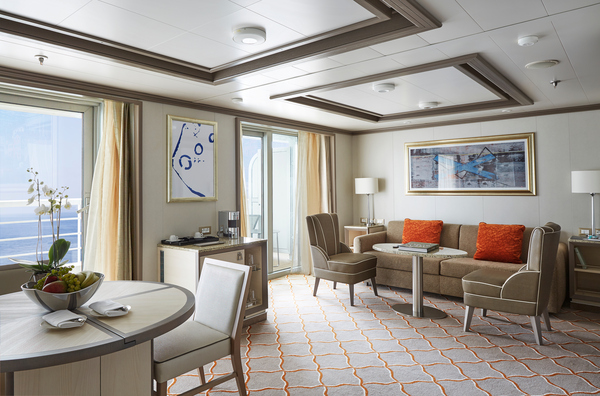
Silver Suite
786–1119 sqft · Up to 5 guests
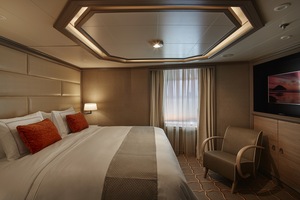
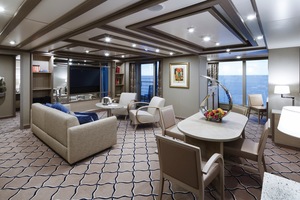
Royal Suite
1130–1528 sqft · Up to 5 guests
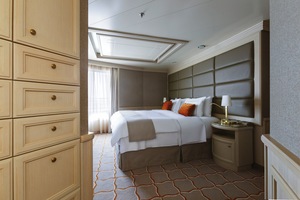
Grand Suite
1475–1970 sqft · Up to 5 guests
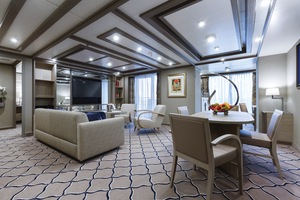
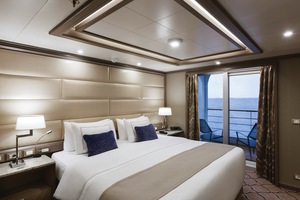
Owner's Suite
1055–1389 sqft · Up to 5 guests
Suite
| Cabin | Grade | Per Person | Avail. | |
|---|---|---|---|---|
| Vista Suite · 344 sqft | VI Vista Suite | Enquire → | ||
| Panorama Suite · 334 sqft | PA | Enquire → | ||
| Classic Veranda Suite · 387 sqft | CV | Enquire → | ||
| Superior Veranda Suite · 387 sqft | SV Superior Veranda Suite | Enquire → | ||
| Deluxe Veranda Suite · 387 sqft | DX | Enquire → | ||
| Silver Suite · 786–1119 sqft | SL | Enquire → | ||
| Royal Suite · 1130–1528 sqft | R1 Royal Suite (1 Bedroom) | Enquire → | ||
| Grand Suite · 1475–1970 sqft | G1 Grand Suite (1 Bedroom) | Enquire → | ||
| Owner's Suite · 1055–1389 sqft | O1 Owner's Suite (1 Bedroom) | Enquire → |
Vista Suite · 344 sqft
VI Vista Suite
Panorama Suite · 334 sqft
PA
Classic Veranda Suite · 387 sqft
CV
Superior Veranda Suite · 387 sqft
SV Superior Veranda Suite
Deluxe Veranda Suite · 387 sqft
DX
Silver Suite · 786–1119 sqft
SL
Royal Suite · 1130–1528 sqft
R1 Royal Suite (1 Bedroom)
Grand Suite · 1475–1970 sqft
G1 Grand Suite (1 Bedroom)
Owner's Suite · 1055–1389 sqft
O1 Owner's Suite (1 Bedroom)
More Departures
14 nights
Tokyo to Tokyo
17/10/2026
Solo From
£18,500
From
£10,900
11 nights
Civitavecchia to Barcelona
18/10/2026
Solo From
£14,000
From
£6,500
7 nights
Papeete to Papeete
18/10/2026
Solo From
£8,500
From
£4,350
7 nights
Athens to Athens
19/10/2026
Solo From
£10,200
From
£4,600
6 nights
King George Island to King George Island
20/10/2026
Solo From
£12,500
From
£10,000
9 nights
Puerto Williams to King George Island
20/10/2026
Solo From
£8,625
From
£7,900
Your Ship
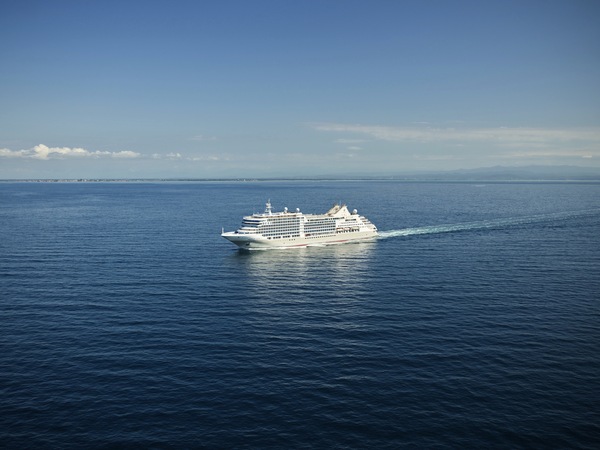
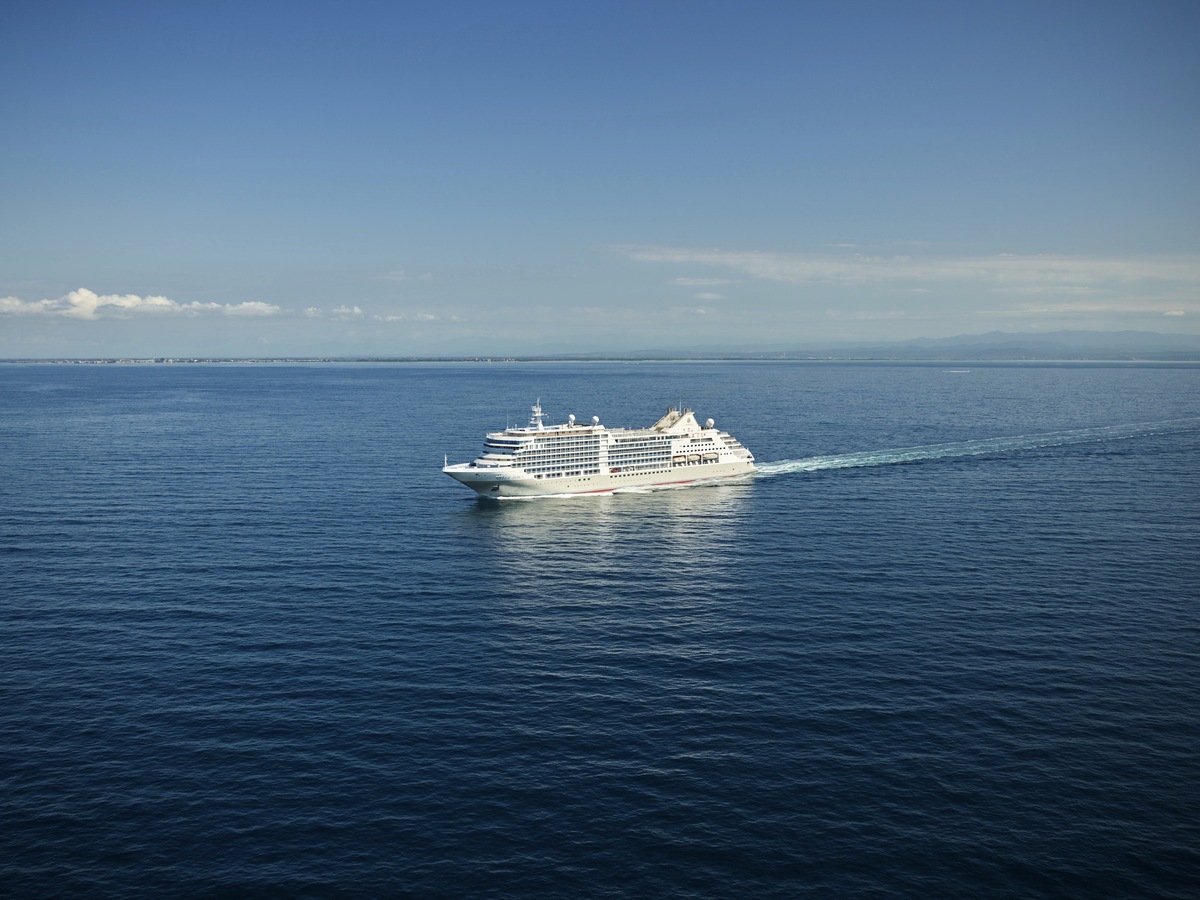
Silver Dawn
A new Dawn has arrived! Our tenth luxury ship joined our fleet in April 2022, sailing a worldwide itinerary that promises authentic, immersive experiences.