Lautoka to Apra
Cruise only — prices from Solo cruise only — from

Ports of Call & Itinerary
18-night voyage departing Lautoka, arriving Apra (Agana).
Printable Itinerary (PDF)Route Map
Lautoka to Apra
12 ports plotted · click a marker for details
Day 1
Lautoka , Fiji
Wednesday, 14/04/2027
It doesn’t get much sweeter than arriving on the sun-soaked shores of the Sugar City. Fiji’s second-biggest settlement opens up a world of blissful beaches and turquoise seascapes while its dense jungle lures the adventurous deep into its embrace. Experience rich Fijian life and see dramatic displays like warrior dances and remarkable local practices like firewalks which kick up burning embers into the night's sky. Legend says the city took its name after two chiefs faced each other in a duel. A spear pierced one of the chiefs leading to the shout of 'lau-toka!' or 'spear hit!' Sugar is Lautoka’s main trade but its botanical gardens are a sweet insight into the tropical plant life that thrives here - from pearl white lilies to tall fragrant orchids. Explore temples charming cafes and mills - or barter for some of the juiciest mangoes you’ll ever taste at the city’s lively market. You'll only be able to resist the beaches for so long and it doesn’t get much more stunning than the Blue Lagoon - a heavenly blend of woven together turquoise shades. Remote wild and unspoiled these are some of the best tropical beaches in the world. There's more rejuvenating relaxation at the mineral-rich mud pools and spas fuelled by the volcanic activity below. Savala Island is a teardrop of sand offshore and another beautiful place to wander with the soft powder between your toes - along sandy spits that peter out into the water. Or swim and snorkel among its envied reefs thronging with fish life.
Day 3
Ambrym , Vanuatu
Friday, 16/04/2027
Unlike Espiritu Santo with its raised coral reefs and white sand Ambrym is a volcanically active island with dark sand beaches. Ambrym is known as the island of magic and is the source of five local languages that all evolved on Ambrym. This handful of languages contributes to the well over 100 languages of Vanuatu. Some of Ambrym’s magic takes place in the lush greenery of the local community of Ranon. Here the people perform a very special and traditional ‘Rom’ dance. Participants prepare their masks and costumes in secrecy and the dance is reserved for special occasions.
Day 4
Pentecost Island , Vanuatu
Saturday, 17/04/2027
Pentecost Island is a lush mountainous tropical island stretching over 37 miles from north to south. It was named after the day on which the first European Louis Antoine de Bougainville sighted it on 22 May 1768. There are no towns on Pentecost - most of the islanders live in small villages and grow their own food in small gardens. Local traditions are strong including the age-old ritual of land diving. This unique ritual was first given international exposure by David Attenborough in 1960. Later in the 1980s New Zealander AJ Hackett used the idea to invent bungee jumping. Every harvest season from April to June the people of southern Pentecost construct the towers around a lopped tree using saplings and branches held together with forest vines. It can take up to five weeks to complete. Each young man who jumps must carefully select his own liana vine. Men and boys as young as seven jump from platforms at different heights (between30 and 90 feet) with only those vines attached to their ankles. The intention is to touch the ground with their heads or shoulders. This ceremony is believed to ensure a good yam harvest. It is also a fertility rite for men.
Day 6
Santa Ana Island , Solomon Islands
Monday, 19/04/2027
Port Mary is the name of the bay adjacent to Ghupuna the main village in Santa Ana. A bright white sand beach with huge shade-giving trees runs along the shoreline in front of the tidy village. The houses here are made with local materials and most are built on stilts. Islanders generally welcome visitors with traditional songs and dances performed by members of the three different villages on Santa Ana. Some local people will also set up stands offering souvenirs for purchase. The Solomons are best known for strings of traditional shell money and elegant carvings based on local stories and legends.
Day 7
Lumalihe Island, Marove Lagoon , Solomon Islands
Tuesday, 20/04/2027
Marovo Lagoon is one of the world’s largest saltwater lagoons. Described by American author James A. Michener as, “one of the seven natural wonders of the world,” Marovo is home to a double barrier reef system, and is one of two sites in the Solomon’s currently under consideration for UNESCO World Heritage Site status. Residents of Marovo Lagoon make elegant woodcarvings that are often for sale on the shoreline. Marovo is also renowned as one of the best diving and snorkeling spots on the planet.
Day 9
Rabaul, Bismarck Archipelago , Papua New Guinea
Thursday, 22/04/2027
If surreal and unique experiences are your thing, then the Papua New Guinean town of Rabaul should tick your travel boxes. Found on the north eastern tip of New Britain Island (the largest island off mainland PNG) Rabaul, the former provincial capital, has quite a remarkable location. The town is inside the flooded caldera of a giant volcano and several sub-vents are still quite active today! The lively city was almost entirely devastated by Mount Tavurvur in 1994, covering the city in ashfall, but thankfully costing no lives. Since then, thanks to Rabaul's deep-water port, commerce has been on the up, and a few shops and hotels have managed to find an audience. However, Rabaul's remote location together with the volcano still being one of the most active and dangerous in Papua New Guinea means tourism in not rife. Rabaul has an impressive WWII history which includes a 300-mile network of tunnels dug by Japanese POW designed to conceal munitions and stores. After the Pearl Harbour bombings, the Japanese used Rabaul as their South Pacific base for the last four years of WWII, and by 1943 there were about 110,000 Japanese troops based in Rabaul. Post war, the island was returned to Australia, before it was granted independence in 1975. It should be noted that patience is a virtue here. However, that is not all bad. The slow pace of transportation allows travellers to marvels at the quite astonishing landscape. Divers will also be richly rewarded – the marine life of the island is extraordinary.
Day 10
Garove Island , Papua New Guinea
Friday, 23/04/2027
The volcanic island of Garove is part of the Witu Islands and once had a 5-kilometer-wide (3.1 miles) caldera. The island was historically used to produce copra and cocoa and in fact still is today. Most of the villages are located around the exterior of the volcano. Steep cliffs explain why there is only one area settled on the inside. A promontory at the entrance’s southwestern corner is taken up by the school and the catholic church of the village of Widu the only village inside the caldera.
Day 12
Kapingamarangi Atoll , Micronesia
Sunday, 25/04/2027
Kapingamarangi is the most southerly atoll of the Caroline Islands and thereby also the most southerly of Pohnpei State. Closer to New Ireland, PNG than to Pohnpei, Kapingamarangi is one of the few Polynesian outliers in the western Pacific. The atoll and its lagoon cover an area of more than 70 square kilometers, but the combined land of the 33 islets on the lagoon’s eastern side is only 1.1 square kilometer. Three of these islets are home to the roughly 500 residents of Kapingamarangi. Touhou, the smallest of the three, has the largest population and is connected to larger Ueru (sometimes spelt Welua) by a zigzagging causeway. Just south of Touhou –and slightly bigger- is Taringa (Taarin) which has the smallest group of residents. In total there are some 500 people living on Kapingamarangi, but more live in the village of Porakiet on Pohnpei where they were given land by the former Japanese administration in 1919. The Greenwich Passage with its two narrow channels on the atoll’s southern side permits small ships to enter, and in the late 19th century trade with Rabaul (then German New Guinea) was started. Under the Japanese administration a few islets close to the channels were used to house a small radio tower, barracks and two temporary piers for seaplanes on the largest islet. The wreck of an American Liberator bomber, “WWII’s unluckiest plane”, is found in 20-30 feet depth in the lagoon. A few islets still feature under their Japanese names.
Day 13
Nukuoro Atoll , Micronesia
Monday, 26/04/2027
Nukuoro is Pohnpei’s second most southerly atoll some 480 kilometers southwest of the island of Pohnpei. The nearly circular atoll with a deep central lagoon has some 46 islets on the almost unbroken reef surrounding the 40 square kilometer lagoon. It is said that at low tide it was possible to walk from one islet to the other without getting wet. Some of these islets are not natural, but man-made by building up pieces of coral on the lagoon side of shallow reef areas as seawalls, having them filled with sand by the ocean and eventually bringing soil to use them for gardening. The combined landmass of all these islets is 1.7 square kilometers and the largest of these islets close to the channel into the lagoon, Nukuoro Island, is also the administrative center. This main islet has a village spread along the lagoon side with a population of roughly 400 residents, although several hundred Nukuorans live on Pohnpei, the main island of the state. While formerly Nukuoro’s inhabitants had to be self-sufficient subsistence farmers with taro patches and other gardens located at the center of their island, or were fishermen, for the last 20 years pearl farming has been tried on a small scale.
Day 15
Pohnpei (ex Ponape) , Micronesia
Wednesday, 28/04/2027
Pohnpei (also known as Ponape) is the largest island in the Eastern Caroline Archipelago and the national capital of the Federated States of Micronesia (FSM). The State of Pohnpei is one of four that comprise the FSM, along with the islands of Chuuk, Kosrae and Yap. Unlike other Micronesian islands, volcanic Pohnpei boasts tropical jungles, mist-covered mountains, mangrove swamps and exotic flora. Abundant rainfall feeds streams, rivers and tumbling waterfalls. Pohnpei’s most prominent landmarks include Sokeh’s Rock, a steep, 800-foot (244-metre) volcanic outcrop overlooking the harbour; the town of Kolonia; and Nan Madol, the mysterious, ancient stone city that is Micronesia’s best known archaeological site and often called the “Venice of the Pacific”. Built on 100 man-made islets by the legendary Saudeleur kings, the ruins can be visited by boat from Kolonia, but require a permit and a guide. The main town of Kolonia boasts such historical sites as the remnants of the Spanish Wall, built in 1889 as a boundary for Fort Alphonso XII; the Catholic Mission Bell Tower, part of the old German church torn down by the Japanese during World War II; the Lidorkini Museum, an occasional Japanese tank, and the Japanese Shrine. When exploring around the island, bird watchers may be able to spot the endemic Pohnpei fantail and Pohnpei flycatcher. Pier Information The ship is scheduled to dock at Dekehtik Port, Pier #4 in Kolonia. The town is within walking distance. Non-metered taxis are available upon call. We recommend establishing the fare before leaving the pier area. Shopping Handicrafts and souvenir items can be found in shops around Kolonia and Kapinga Village. Most shops are open from 9:00 a.m. to 6:00 p.m. The local currency is the U.S. dollar. Cuisine Polynesian and Micronesian dishes as well as the typical American fast food can be found in a variety of eateries and hotel restaurants around Kolonia. Other Sites Explore the island’s capital and see its major points of interest including the Cultural Center. The main attraction is the archaeological site of Nan Madol, reached via a boat trip. For independent sightseeing, it is best to use taxis.
Day 17
Chuuk (ex Truk) , Micronesia
Friday, 30/04/2027
Chuuk Lagoon, formerly known as Truk Lagoon, is the main island of Chuuk State –with more than 36,000 residents the largest of the four states making up the Federated States of Micronesia. Located at the center of the Caroline Islands, the reef protecting the lagoon has a length of more than 220 kilometers with 41 islets on it, while 57 islands and islets are found within the lagoon. The capital Weno is on Weno, one of the two larger of several other volcanic islands in the lagoon, hence the local name of Chuuk (mountain). Since none of the islands actually carries the name Chuuk, the lagoon and islands are commonly known as Chuuk Islands. Some 1600 years before the Spaniards first saw and then claimed Chuuk Lagoon, Micronesian had already established themselves on two of the islands. The Caroline Islands were sold to Germany in 1899 as a result of the Spanish-American War and later turned over to Japan as a mandated territory after WWI. The natural harbor created by the reef had been used by the Japanese navy during WWII as its largest forward naval base with submarine repair shops and a communication center. In addition to airstrips and seaplane bases, infrastructure for the more than 44,000 Japanese troops stationed there had been set up. To divers Chuuk Lagoon is one of the highlights in the Pacific because it contains a ghost fleet: during “Operation Hailstorm” 44 Japanese ships were sunk by American carrier-based planes.
Day 19
Apra (Agana) , Guam
Sunday, 02/05/2027
Guam is blessed with spectacular natural beauty and a rich cultural history. Apra Harbor is a deep-water port located on the western side of the island. The island is part of the Mariana Islands and near the Mariana Trench which is the deepest part of the earth’s oceans and the deepest location of the earth itself. The port serves both as a U.S. naval station and Guam’s main commercial port. The harbour formed by the Orote Peninsula to the south and Cabras Island in the north is considered to be one of the best natural ports in the Pacific. Guam’s unique culture traditions and heritage have remained intact despite European imperialism wars and changing foreign governments. Archaeological evidence suggests that the indigenous Chamorros of Indo-Malayan descent migrated from the Southeast Asian islands and settled throughout the Marianas archipelago. Being expert seamen and skilled craftsmen they flourished and built unique houses and canoes suited to the region. As a matriarchal society and through the prestige of the women much of the Chamorro culture and traditions were able to survive. Since the 16th century a wave of foreigners have arrived on Guam’s shores including Ferdinand Magellan in 1521 who remained on the island for three days to restock his small convoy. Americans Asians Europeans Micronesians and other visitors have since left their imprint on the island’s pastimes and tastes.
Room Type & Prices
All prices per person based on double occupancy. Solo traveller prices — single occupancy. Contact our cruise experts for the latest availability and best fares.
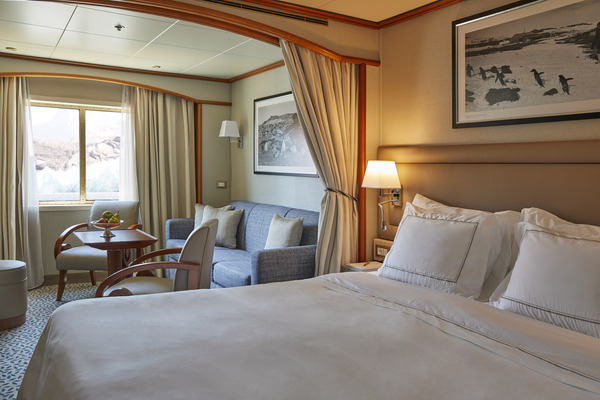
Vista Suite
237 sqft · Up to 2 guests
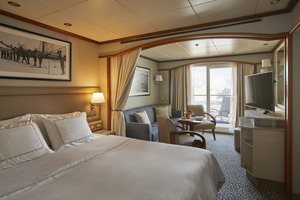
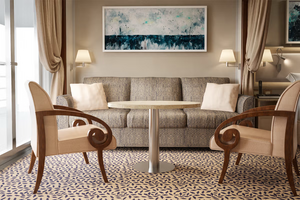
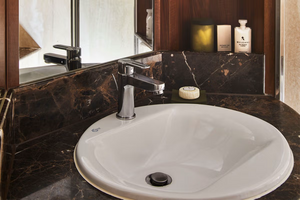
Veranda Suite
291 sqft · Up to 4 guests
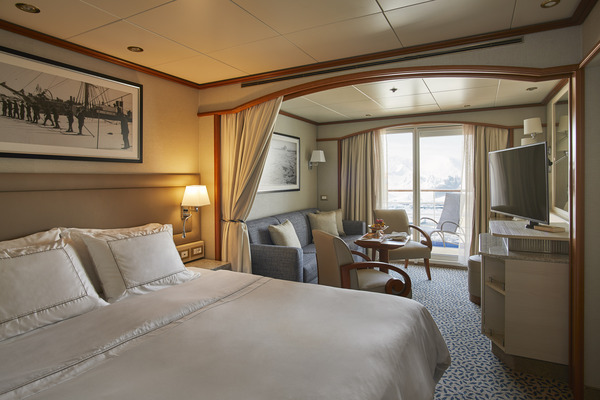
Deluxe Veranda Suite
291 sqft · Up to 2 guests
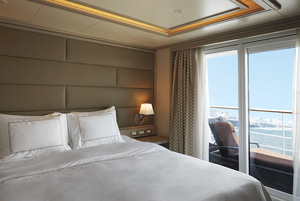
Medallion Suite
517 sqft · Up to 3 guests
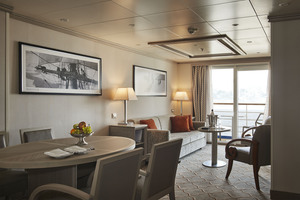
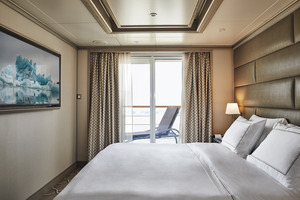
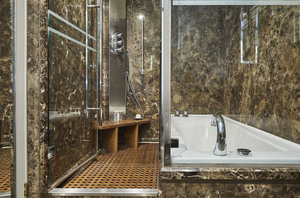
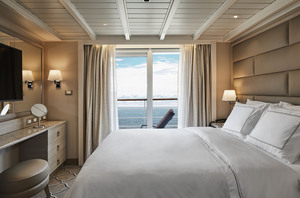
Silver Suite
581 sqft · Up to 3 guests
More Departures
14 nights
Tokyo to Tokyo
17/10/2026
Solo From
£18,500
From
£10,900
11 nights
Civitavecchia to Barcelona
18/10/2026
Solo From
£14,000
From
£6,500
7 nights
Papeete to Papeete
18/10/2026
Solo From
£8,500
From
£4,350
7 nights
Athens to Athens
19/10/2026
Solo From
£10,200
From
£4,600
6 nights
King George Island to King George Island
20/10/2026
Solo From
£12,500
From
£10,000
9 nights
Puerto Williams to King George Island
20/10/2026
Solo From
£8,625
From
£7,900
Your Ship
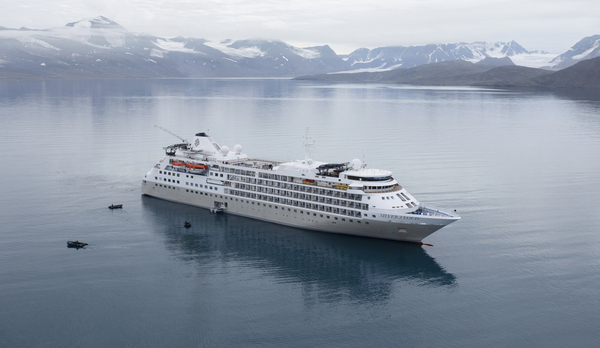
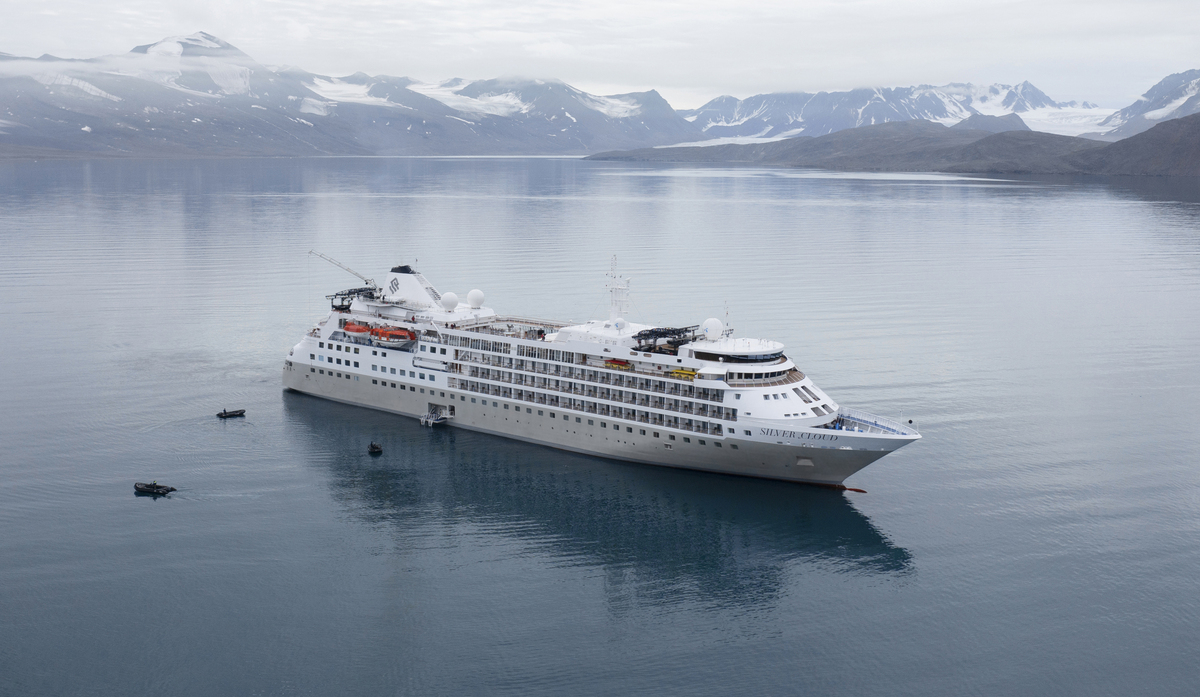
Silver Cloud
Silver Cloud offers one of the most personalised experiences in expedition voyages, with a high ratio of experts and Zodiacs unlocking access to the rare and remarkable.