Lautoka to Manila
Cruise only — prices from Solo cruise only — from

Ports of Call & Itinerary
22-night voyage departing Lautoka, arriving Manila.
Printable Itinerary (PDF)Route Map
Lautoka to Manila
17 ports plotted · click a marker for details
Day 1
Lautoka , Fiji
Saturday, 15/04/2028
It doesn’t get much sweeter than arriving on the sun-soaked shores of the Sugar City. Fiji’s second-biggest settlement opens up a world of blissful beaches and turquoise seascapes while its dense jungle lures the adventurous deep into its embrace. Experience rich Fijian life and see dramatic displays like warrior dances and remarkable local practices like firewalks which kick up burning embers into the night's sky. Legend says the city took its name after two chiefs faced each other in a duel. A spear pierced one of the chiefs leading to the shout of 'lau-toka!' or 'spear hit!' Sugar is Lautoka’s main trade but its botanical gardens are a sweet insight into the tropical plant life that thrives here - from pearl white lilies to tall fragrant orchids. Explore temples charming cafes and mills - or barter for some of the juiciest mangoes you’ll ever taste at the city’s lively market. You'll only be able to resist the beaches for so long and it doesn’t get much more stunning than the Blue Lagoon - a heavenly blend of woven together turquoise shades. Remote wild and unspoiled these are some of the best tropical beaches in the world. There's more rejuvenating relaxation at the mineral-rich mud pools and spas fuelled by the volcanic activity below. Savala Island is a teardrop of sand offshore and another beautiful place to wander with the soft powder between your toes - along sandy spits that peter out into the water. Or swim and snorkel among its envied reefs thronging with fish life.
Day 3
Ambrym , Vanuatu
Monday, 17/04/2028
Unlike Espiritu Santo with its raised coral reefs and white sand Ambrym is a volcanically active island with dark sand beaches. Ambrym is known as the island of magic and is the source of five local languages that all evolved on Ambrym. This handful of languages contributes to the well over 100 languages of Vanuatu. Some of Ambrym’s magic takes place in the lush greenery of the local community of Ranon. Here the people perform a very special and traditional ‘Rom’ dance. Participants prepare their masks and costumes in secrecy and the dance is reserved for special occasions.
Day 4
Pentecost Island , Vanuatu
Tuesday, 18/04/2028
Pentecost Island is a lush mountainous tropical island stretching over 37 miles from north to south. It was named after the day on which the first European Louis Antoine de Bougainville sighted it on 22 May 1768. There are no towns on Pentecost - most of the islanders live in small villages and grow their own food in small gardens. Local traditions are strong including the age-old ritual of land diving. This unique ritual was first given international exposure by David Attenborough in 1960. Later in the 1980s New Zealander AJ Hackett used the idea to invent bungee jumping. Every harvest season from April to June the people of southern Pentecost construct the towers around a lopped tree using saplings and branches held together with forest vines. It can take up to five weeks to complete. Each young man who jumps must carefully select his own liana vine. Men and boys as young as seven jump from platforms at different heights (between30 and 90 feet) with only those vines attached to their ankles. The intention is to touch the ground with their heads or shoulders. This ceremony is believed to ensure a good yam harvest. It is also a fertility rite for men.
Day 6
Santa Ana Island , Solomon Islands
Thursday, 20/04/2028
Port Mary is the name of the bay adjacent to Ghupuna the main village in Santa Ana. A bright white sand beach with huge shade-giving trees runs along the shoreline in front of the tidy village. The houses here are made with local materials and most are built on stilts. Islanders generally welcome visitors with traditional songs and dances performed by members of the three different villages on Santa Ana. Some local people will also set up stands offering souvenirs for purchase. The Solomons are best known for strings of traditional shell money and elegant carvings based on local stories and legends.
Day 7
Solomon Islands , Solomon Islands
Friday, 21/04/2028
Day 8
Kasolo Island , Solomon Islands
Saturday, 22/04/2028
Wild, uninhabited and historical, Kennedy Island is a tiny piece of land in the middle of the Pacific Ocean. Part of the remote Solomon Islands, the island is situated 15 min away by boat from Gizo, which is capital of the Western Province. Kennedy Island was formerly known as Plum Pudding Island, after an incident dating back to World War II. Incident involving one of the most famous figures of history. John F. Kennedy, a lieutenant at the time, was a castaway on the island with his crew when their torpedo ship, PT 109, was shot sunk by the Japanese troops in August 1943. It is said that the future president swam dragging an injured crewmate by holding the strap of his life jacket in his teeth until reaching the island. He and his crew fed themselves with coconuts during two days before being found by Solomon Islanders. JFK even kept a coconut shell from the island on his desk in the Oval Office throughout his presidency. For our history buffs, some artefacts dating from the crew’s passage can still be found on site. An island marked by history in short, but not only. Discovering Kennedy Island is an experience not to be missed for diving and nature lovers. The waters that surround the island are a submerged world of great richness and variety of colourful fishes and corals.
Day 10
Rabaul, Bismarck Archipelago , Papua New Guinea
Monday, 24/04/2028
If surreal and unique experiences are your thing, then the Papua New Guinean town of Rabaul should tick your travel boxes. Found on the north eastern tip of New Britain Island (the largest island off mainland PNG) Rabaul, the former provincial capital, has quite a remarkable location. The town is inside the flooded caldera of a giant volcano and several sub-vents are still quite active today! The lively city was almost entirely devastated by Mount Tavurvur in 1994, covering the city in ashfall, but thankfully costing no lives. Since then, thanks to Rabaul's deep-water port, commerce has been on the up, and a few shops and hotels have managed to find an audience. However, Rabaul's remote location together with the volcano still being one of the most active and dangerous in Papua New Guinea means tourism in not rife. Rabaul has an impressive WWII history which includes a 300-mile network of tunnels dug by Japanese POW designed to conceal munitions and stores. After the Pearl Harbour bombings, the Japanese used Rabaul as their South Pacific base for the last four years of WWII, and by 1943 there were about 110,000 Japanese troops based in Rabaul. Post war, the island was returned to Australia, before it was granted independence in 1975. It should be noted that patience is a virtue here. However, that is not all bad. The slow pace of transportation allows travellers to marvels at the quite astonishing landscape. Divers will also be richly rewarded – the marine life of the island is extraordinary.
Day 11
Garove Island , Papua New Guinea
Tuesday, 25/04/2028
The volcanic island of Garove is part of the Witu Islands and once had a 5-kilometer-wide (3.1 miles) caldera. The island was historically used to produce copra and cocoa and in fact still is today. Most of the villages are located around the exterior of the volcano. Steep cliffs explain why there is only one area settled on the inside. A promontory at the entrance’s southwestern corner is taken up by the school and the catholic church of the village of Widu the only village inside the caldera.
Day 12
Madang , Papua New Guinea
Wednesday, 26/04/2028
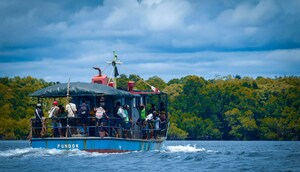
The very first houses of Madang were located on a small peninsula jutting into the Bismarck Sea –the land between today’s port and the Forum Park. The site had been chosen for its deep harbor and the fresh sea breeze. Found some 40 kilometers south of Cape Croisilles, the northern point of Astrolabe Bay, the port and station were originally called “Friedrich Wilhelms-Hafen” after the Prussian Crown Prince. The station had been built in 1891 to be the provincial headquarters of German New Guinea from 1892 onwards. After WWI and the eviction of the Germans, the town’s name was changed to Madang. Madang was occupied by the Japanese during WWII and to honor the coastwatchers working behind enemy lines, the Coastwatchers Memorial Lighthouse was inaugurated at the entrance to Madang Harbor at Kalibobo in 1959. Not only is this a shining light for shipping, it has also become an iconic feature of Madang. Today the town has a population of some 36,000 inhabitants and is connected by road to Hansa Bay in the north and Lae and the highlands to the south. Cattle, cocoa and copra are important produces from Madang Province. With more than 170 languages spoken in the province, the small museum holds interesting pieces relating to the history and cultures of Madang and surrounding areas. Several of the trees along Modilon Road show hundreds of resting fruit bats waiting for the evening’s flights, some of them find their way to the Main Market.
Day 13
Ali Island , Papua New Guinea
Thursday, 27/04/2028
Ali Island is one of the four islands located close to Aitape, off the northern coast of Papua New Guinea. The eastern shore of Ali Island has a beautiful white sandy beach and offers swimming and snorkeling. The five villages on the island connect via well-maintained trails that lead to the school and Catholic church closer to the northern end of the island. The indigenous populations of this island are welcoming to guests and yet maintain their unique way of living and dressing, with colorful ceremonial headdresses, arm bands and grass skirts. A village walk will take visitors past the clean local homes and gardens, to the Catholic church with its interesting paintings of the via crucis. Chat with the islanders or relax on the beach.
Day 16
Koror , Palau
Sunday, 30/04/2028
Palau's early history is still largely veiled in mystery. Why, how or when people arrived on these beautiful islands is unknown, but studies indicate that today's Palauans are distant relatives of the Malays of Indonesia, Melanesians of New Guinea and Polynesians. As for the date of their arrivals, carbon dating of artefacts from the oldest known village sites on the Rock Islands and the spectacular terraces on Babeldaob place civilization here as early as 1,000 BC. The most noteworthy first foreign contact took place in 1783 when the vessel Antelope, under the command of English Captain Henry Wilson, was shipwrecked on a reef near Ulong, a Rock Island located between Koror and Peleliu. With the assistance of Koror's High Chief Ibedul, Wilson and his men stayed for three months to rebuild his ship. From that time onward, many foreign explorers called on Palau, and the islands were exposed to further European contact. Foreign governance of our islands officially began when Pope Leo XIII asserted Spain's rights over the Caroline Islands in 1885. Two churches were established and maintained by two Capuchin priests and two brothers, resulting in the introduction of the Roman alphabet and the elimination of inter-village wars. In 1899, Spain sold the Carolines to Germany, which established an organized program to exploit the islands' natural resources. Following Germany's defeat in WWI, the islands were formally passed to the Japanese under the 1919 Treaty of Versailles. The Japanese influence on the Palauan culture was immense as it shifted the economy from a level of subsistence to a market economy and property ownership from the clan to individuals. In 1922, Koror became the administrative centre for all Japanese possessions in the South Pacific. The town of Koror was a stylish metropolis with factories, shops, public baths, restaurants and pharmacies. Following Japan's defeat in WWII, the Carolines, Marianas and Marshall Islands became United Nations Trust Territories under U.S. administration, with Palau being named as one of six island districts. As part of its mandate, the U.S. was to improve Palau's infrastructure and educational system in order for it to become a self-sufficient nation. This finally came about on October 1, 1994, when Palau gained its independence upon the signing of the Compact of Free Association with the United States.
Day 17
Koror , Palau
Monday, 01/05/2028
Palau's early history is still largely veiled in mystery. Why, how or when people arrived on these beautiful islands is unknown, but studies indicate that today's Palauans are distant relatives of the Malays of Indonesia, Melanesians of New Guinea and Polynesians. As for the date of their arrivals, carbon dating of artefacts from the oldest known village sites on the Rock Islands and the spectacular terraces on Babeldaob place civilization here as early as 1,000 BC. The most noteworthy first foreign contact took place in 1783 when the vessel Antelope, under the command of English Captain Henry Wilson, was shipwrecked on a reef near Ulong, a Rock Island located between Koror and Peleliu. With the assistance of Koror's High Chief Ibedul, Wilson and his men stayed for three months to rebuild his ship. From that time onward, many foreign explorers called on Palau, and the islands were exposed to further European contact. Foreign governance of our islands officially began when Pope Leo XIII asserted Spain's rights over the Caroline Islands in 1885. Two churches were established and maintained by two Capuchin priests and two brothers, resulting in the introduction of the Roman alphabet and the elimination of inter-village wars. In 1899, Spain sold the Carolines to Germany, which established an organized program to exploit the islands' natural resources. Following Germany's defeat in WWI, the islands were formally passed to the Japanese under the 1919 Treaty of Versailles. The Japanese influence on the Palauan culture was immense as it shifted the economy from a level of subsistence to a market economy and property ownership from the clan to individuals. In 1922, Koror became the administrative centre for all Japanese possessions in the South Pacific. The town of Koror was a stylish metropolis with factories, shops, public baths, restaurants and pharmacies. Following Japan's defeat in WWII, the Carolines, Marianas and Marshall Islands became United Nations Trust Territories under U.S. administration, with Palau being named as one of six island districts. As part of its mandate, the U.S. was to improve Palau's infrastructure and educational system in order for it to become a self-sufficient nation. This finally came about on October 1, 1994, when Palau gained its independence upon the signing of the Compact of Free Association with the United States.
Day 19
Sohoton Bay , Philippines
Wednesday, 03/05/2028
Sohoton Bay has many special sites, but the Sohoton Cove National Park just slightly to the east on Bucas Grande’s southwestern side is enchanting. It is almost impossible to find if you come at the wrong time of the day. The half-submerged entrance is the only way in and out and can only be used at low tide. Sohoton Cove National Park is filled with gorgeous, muffin-shaped, forest-covered islets. Most of them are untouched by human hands and the natural arrangement acts like a gigantic, natural maze. The blue lagoon is also home to several caves and caverns and a fantastic variety of flora and fauna. Situated in the middle of an islet, Hagukan sea-cave has a half-submerged, small entrance adorned with rock-oysters and a ceiling decorated with awe-inspiring stalactites. Magkukuob cavern is another cave in one of the 7 islets inside Sohoton Cove. Its walls have natural colours from yellow to aqua to turquoise which makes it surreal. Climbing an enthralling passage whose adjoining walls offers a stunning display of mineral-encrusted stalactites and stalagmites you will reach a 5-meter jump off point to the clear, blue sea right below your feet. Another attraction in Sohoton Cove is the jellyfish sanctuary at Tojoman Lagoon where one can swim with thousands of non – stinging spotted jellyfishes only found between March and June.
Day 20
Bohol , Philippines
Thursday, 04/05/2028
Bohol is an island province consisting of Bohol Island and 75 minor surrounding islands. Its capital is Tagbilaran City. With a land area of 1,589.7 sq mi and a coastline 162 mi, Bohol is the tenth largest island of the Philippines. In the 1600’s, the Jesuits introduced Christianity to the region. They built huge churches, which were declared heritage sites in the early 2000’s. Unfortunately most of these churches were heavily damaged by the 7.2 magnitude earthquake of 2013. Today, some of these churches are being restored. The province is a popular tourist destination for its beaches, historical sites, natural beauty & geological features, such as the Chocolate Hills that consist of over 1600 hills of limestone formation. The island of Panglao, located just southwest of Tagbilaran City, is famous for its diving and routinely listed as one of the top ten diving locations in the world. The Philippine Tarsier, considered the second-smallest primate in the world, is indigenous to the island.
Day 21
Capul Island , Philippines
Friday, 05/05/2028
San Luis, CAPUL is a living museum, or rather, a place where history is alive. The Island got its name from Acapulco, Mexico when it served an important role in the Manila-Acapulco Galleon Trade during the Spanish era. The well preserved 15th century church complex of Capul, built during the Spanish Colonial Period, is dedicated to St. Ignatius of Loyola and is surrounded by a square fort with bulwarks of dissimilar designs At the northern tip of the island lies Faro de Capul, the Island’s Lighthouse. During World War II, Japanese forces fortified the lighthouse with big gun batteries to secure its strategic naval position. Beyond the historical monuments, locals rely on a booming coconut farming industry for their primary source of income.
Day 22
Apo Reef , Philippines
Saturday, 06/05/2028
An underwater paradise teeming with biodiversity, Apo Reef Natural Park is a tentative UNESCO World Heritage site made up of a reef and three islands. Apo Island is the largest island and harbours mangroves and beach vegetation on its 22 hectares. Apo Reef, the important and main geographical features of the park, lies to the east of Apo Island. Snorkelers will enjoy the crystal blue waters and be looking for some of the 400 varieties of soft and hard corals registered, cushion stars, damsel fishes, butterfly fishes, angel fishes, parrot fishes, cardinal fishes, trigger fishes, and wrasses. Relax on the beach on Apo Island, which features a shallow lagoon surrounded by a verdant mangrove forest. Close to 50 species of birds have been recorded for the park and there are records of the rare Nicobar Pigeon for Apo Island.
Day 23
Manila , Philippines
Sunday, 07/05/2028
Known as the Pearl of the Orient, Manila is the Philippine's sprawling capital city and a chaotic scramble of intoxicating urban energy. A megacity of culture and creativity, there's a lot to discover amid these chockablock streets. The delicious food wins many fans, but it’s the friendly Filipinos - always eager to help - who ensure that Manila takes a special place in the hearts of many visitors. The Baywalk is one of the city's best places for catching a legendarily intense sunset - or wandering among joggers and leisurely strollers. The city's Intramuros area is its cobbled historic core - and was the centre of power when the Spanish ruled these lands. Decorated with colonial architecture and citadels, the district is known for its rumbling horsedrawn carriages and storied history. Head to Fort Santiago, which aims canons out across the water from its chunky stone walls. The UNESCO World Heritage Site stands against the odds, despite World War II bombardments, fires and earthquakes - a true testament to Manila's incredible resilience. As one of the most densely populated places in the world, Manilla can be manically busy at times, but you can always escape to Rizal Park. With Chinese and Japanese gardens and plenty of room for open-air events, it's a beautiful oasis within the city. It's also an incredibly important national symbol, as the location where the hero of independence, Jose Rizal, was executed. A large statue now memorialises him here, and the park was renamed in his honour.

Room Type & Prices
All prices per person based on double occupancy. Solo traveller prices — single occupancy. Contact our cruise experts for the latest availability and best fares.
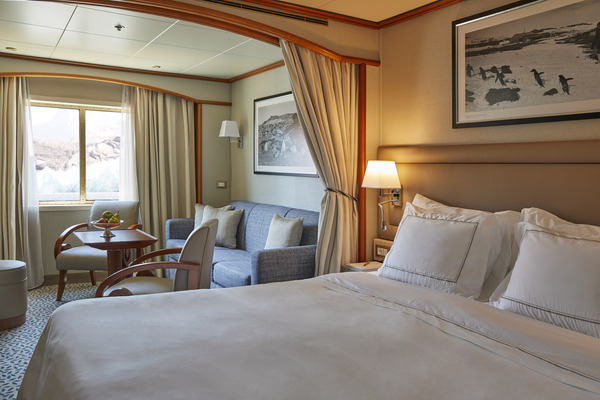
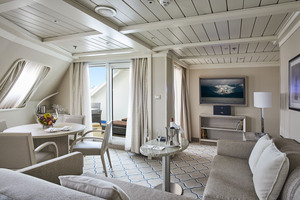
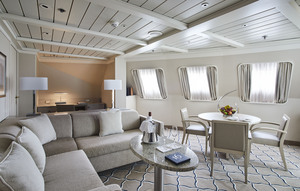
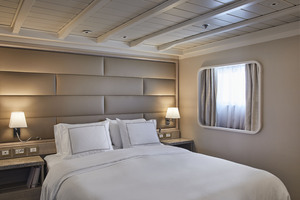
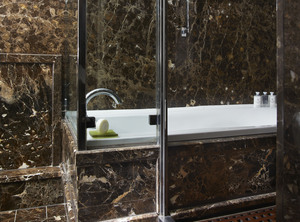
Vista Suite
237 sqft · Up to 2 guests
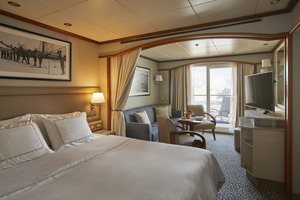
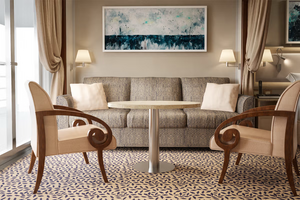
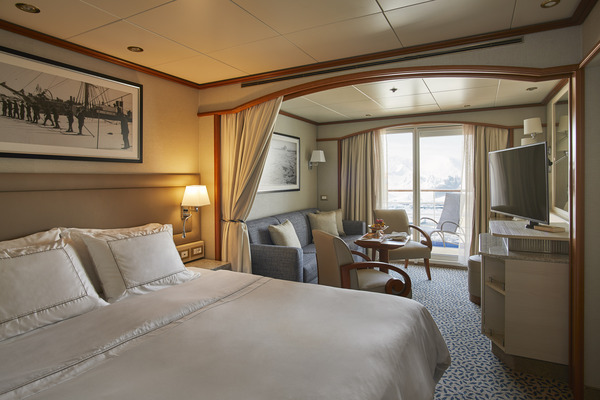
Veranda Suite
291 sqft · Up to 4 guests
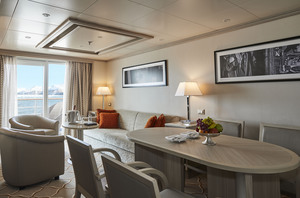
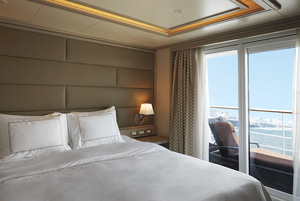
Deluxe Veranda Suite
291 sqft · Up to 2 guests
Medallion Suite
517 sqft · Up to 3 guests
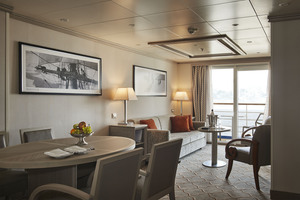
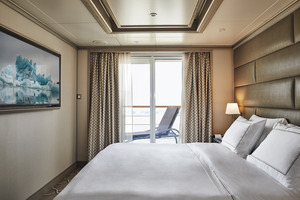
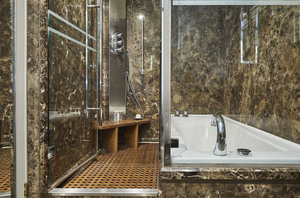
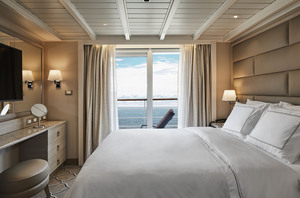
Silver Suite
581 sqft · Up to 3 guests
Royal Suites
743–1033 sqft · Up to 5 guests
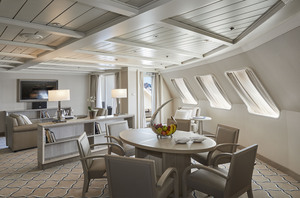
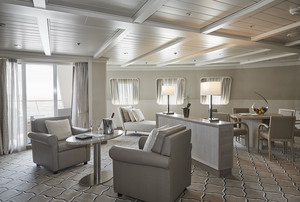
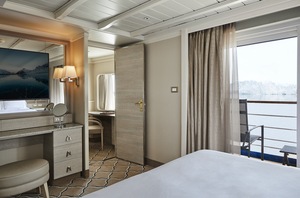
Grand Suite
1023–1313 sqft · Up to 5 guests
Suite
| Cabin | Grade | Per Person | Avail. | |
|---|---|---|---|---|
| Vista Suite · 237 sqft | VI | Enquire → | ||
| Veranda Suite · 291 sqft | VR | Enquire → | ||
| Deluxe Veranda Suite · 291 sqft | DV Midship Veranda Suite | Enquire → | ||
| Medallion Suite · 517 sqft | ME | Enquire → | ||
| Silver Suite · 581 sqft | SL | Enquire → | ||
| Royal Suites · 743–1033 sqft | R1 Royal Suite (1 Bedroom) | Enquire → | ||
| Grand Suite · 1023–1313 sqft | G1 Grand Suite (1 Bedroom) | Enquire → |
Vista Suite · 237 sqft
VI
Veranda Suite · 291 sqft
VR
Deluxe Veranda Suite · 291 sqft
DV Midship Veranda Suite
Medallion Suite · 517 sqft
ME
Silver Suite · 581 sqft
SL
Royal Suites · 743–1033 sqft
R1 Royal Suite (1 Bedroom)
Grand Suite · 1023–1313 sqft
G1 Grand Suite (1 Bedroom)
More Departures
14 nights
Tokyo to Tokyo
17/10/2026
Solo From
£18,500
From
£10,900
11 nights
Civitavecchia to Barcelona
18/10/2026
Solo From
£14,000
From
£6,500
7 nights
Papeete to Papeete
18/10/2026
Solo From
£8,500
From
£4,350
7 nights
Athens to Athens
19/10/2026
Solo From
£10,200
From
£4,600
6 nights
King George Island to King George Island
20/10/2026
Solo From
£12,500
From
£10,000
9 nights
Puerto Williams to King George Island
20/10/2026
Solo From
£8,625
From
£7,900
Your Ship
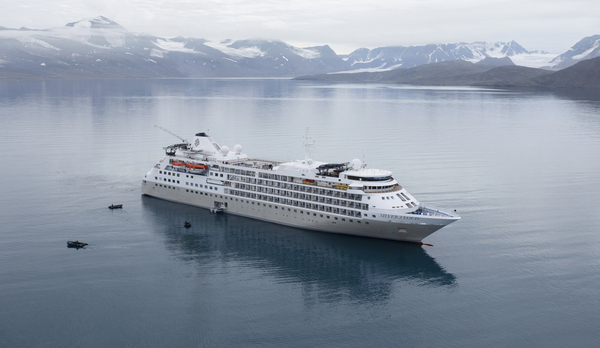
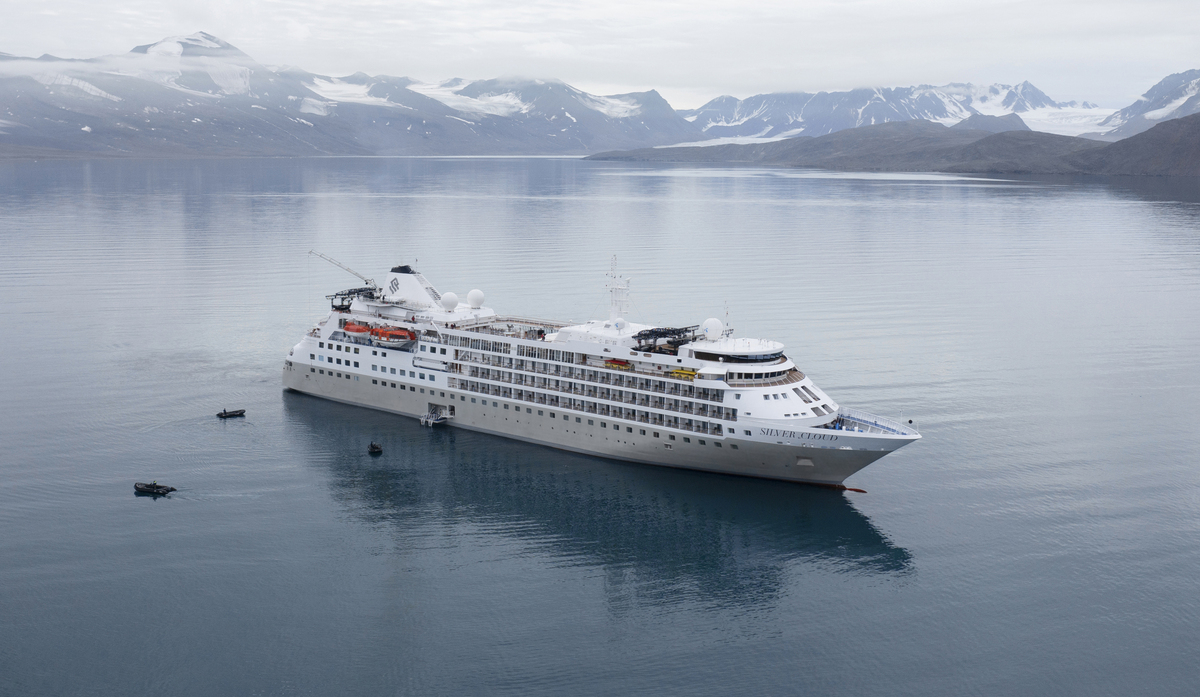
Silver Cloud
Silver Cloud offers one of the most personalised experiences in expedition voyages, with a high ratio of experts and Zodiacs unlocking access to the rare and remarkable.