Reykjavik to Montreal
Cruise only — prices from Solo cruise only — from

Ports of Call & Itinerary
18-night voyage departing Reykjavík, arriving Montréal, Québec.
Printable Itinerary (PDF)Route Map
Reykjavik to Montreal
15 ports plotted · click a marker for details
Day 1
Reykjavík , Iceland
Wednesday, 30/08/2028
The capital of Iceland’s land of ice, fire and natural wonder, Reykjavik is a city like no other - blossoming among some of the world’s most vibrant and violent scenery. Home to two-thirds of Iceland’s population, Reykjavik is the island’s only real city, and a welcoming and walkable place - full of bicycles gliding along boulevards or battling the wind when it rears up. Fresh licks of paint brighten the streets, and an artistic and creative atmosphere embraces studios and galleries - as well as the kitchens where an exciting culinary scene is burgeoning. Plot your adventures in the city's hip bars and cosy cafes, or waste no time in venturing out to Iceland’s outdoor adventures. Reykjavik’s buildings stand together - below the whip of winter’s winds - together with the magnificent Hallgrímskirkja church, with its bell tower rising resolutely over the city. Iceland’s largest church's design echoes the lava flows that have shaped this remote land and boasts a clean and elegant interior. The Harpa Concert Hall’s sheer glass facade helps it to assimilate into the landscape, mirroring back the city and harbour. Its LED lights shimmer in honour of Iceland’s greatest illuminated performance – the northern lights. Walk in the crusts between continents, feel the spray from bursts of geysers and witness the enduring power of Iceland’s massive waterfalls. Whether you want to sizzle away in the earth-heated geothermal pools, or hike to your heart’s content, you can do it all from Reykjavik - the colourful capital of this astonishing outdoor country.
Day 3
Prince Christian Sound , Greenland
Friday, 01/09/2028
The transit through the Sound is one of this voyage’s highlights. Connecting the Labrador Sea with the Irminger Seat, Prince Christian Sound or “Prins Christian Sund” in Danish is named after Prince (later King) Christian VII (1749-1808). 100 km (60 miles ), long and at times just 500 m (1500 ft) wide, this majestic and spectacular fiord throws you back into a Viking era – flanked by soaring snow-topped mountains, rock-strewn cliffs and rolling hills, it is as if time has stood still and one easily forgets that this is the 21st century. As you marvel at the sheer size of the mountains that surround you, with the Arctic waters lapping deceptively at the hull, revel in the silence enveloping you. Icebergs float serenely by, carrying with them the ages of time. Be sure to wear warm clothing as this is one spectacle that you do not want to miss.

Day 5
Torngat Mountains National Park, Newfoundland and Labrador , Canada
Sunday, 03/09/2028
Lying in the heart of the Amazon, hundreds of miles upriver from the Atlantic, Manaus is a busy port city surrounded by the richest rainforest habitat on Earth. Placed strategically at the confluence of two rivers, the town was founded as a fortress by the Portuguese Navy, but quickly became a trade hub for the surrounding area. By the late 19th Century, Manaus was the centre of Brazil's booming rubber industry, and grew rapidly into one of the largest cities in Brazil. During this period, many of Manaus' grandest buildings were constructed by the city's 'Rubber Barons', including the Public Market, and the Amazon Theatre, a vast decadent opera house. Today, Manaus is a cultural melting pot, with a diverse population. A complex system of free trade rules has turned Manaus into one of the wealthiest cities in the Brazil, with heavy industry developing alongside traditional livelihoods such as river fishing, and gathering the bounty of fruit, nuts and medicinal plants which the rainforest bestows. However, it is the surroundings which give Manaus its unique character. The famous Meeting of Waters, where tannin-rich water from the Rio Negro combines with milky water from the Rio Solimões to form the Amazon, can be seen just outside town, and the jungle beckons visitors to explore and discover. Excluding Manaus, the state of Amazonas is extremely sparsely populated, and in the largest rainforest on Earth, it is easy to forget the hustle and bustle of the city and simply enjoy the wonders of nature.
Day 6
Torngat Mountains National Park, Newfoundland and Labrador , Canada
Monday, 04/09/2028
Lying in the heart of the Amazon, hundreds of miles upriver from the Atlantic, Manaus is a busy port city surrounded by the richest rainforest habitat on Earth. Placed strategically at the confluence of two rivers, the town was founded as a fortress by the Portuguese Navy, but quickly became a trade hub for the surrounding area. By the late 19th Century, Manaus was the centre of Brazil's booming rubber industry, and grew rapidly into one of the largest cities in Brazil. During this period, many of Manaus' grandest buildings were constructed by the city's 'Rubber Barons', including the Public Market, and the Amazon Theatre, a vast decadent opera house. Today, Manaus is a cultural melting pot, with a diverse population. A complex system of free trade rules has turned Manaus into one of the wealthiest cities in the Brazil, with heavy industry developing alongside traditional livelihoods such as river fishing, and gathering the bounty of fruit, nuts and medicinal plants which the rainforest bestows. However, it is the surroundings which give Manaus its unique character. The famous Meeting of Waters, where tannin-rich water from the Rio Negro combines with milky water from the Rio Solimões to form the Amazon, can be seen just outside town, and the jungle beckons visitors to explore and discover. Excluding Manaus, the state of Amazonas is extremely sparsely populated, and in the largest rainforest on Earth, it is easy to forget the hustle and bustle of the city and simply enjoy the wonders of nature.
Day 7
Torngat Mountains National Park, Newfoundland and Labrador , Canada
Tuesday, 05/09/2028
Lying in the heart of the Amazon, hundreds of miles upriver from the Atlantic, Manaus is a busy port city surrounded by the richest rainforest habitat on Earth. Placed strategically at the confluence of two rivers, the town was founded as a fortress by the Portuguese Navy, but quickly became a trade hub for the surrounding area. By the late 19th Century, Manaus was the centre of Brazil's booming rubber industry, and grew rapidly into one of the largest cities in Brazil. During this period, many of Manaus' grandest buildings were constructed by the city's 'Rubber Barons', including the Public Market, and the Amazon Theatre, a vast decadent opera house. Today, Manaus is a cultural melting pot, with a diverse population. A complex system of free trade rules has turned Manaus into one of the wealthiest cities in the Brazil, with heavy industry developing alongside traditional livelihoods such as river fishing, and gathering the bounty of fruit, nuts and medicinal plants which the rainforest bestows. However, it is the surroundings which give Manaus its unique character. The famous Meeting of Waters, where tannin-rich water from the Rio Negro combines with milky water from the Rio Solimões to form the Amazon, can be seen just outside town, and the jungle beckons visitors to explore and discover. Excluding Manaus, the state of Amazonas is extremely sparsely populated, and in the largest rainforest on Earth, it is easy to forget the hustle and bustle of the city and simply enjoy the wonders of nature.
Day 8
Hebron, Newfoundland and Labrador , Canada
Wednesday, 06/09/2028
Day 10
Indian Harbour, Newfoundland and Labrador , Canada
Friday, 08/09/2028
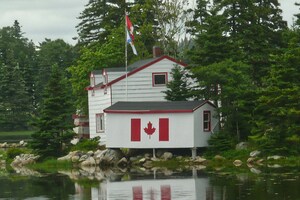
Day 11
Red Bay, Newfoundland and Labrador , Canada
Saturday, 09/09/2028
Red Bay gets its name from the red granite cliffs of Labrador’s south coast. Red Bay is a fishing village and home to an important Basque whaling station dating back to the mid-16th to early 18th century. Considered home of the first large-scale whale oil production in the world, Red Bay was declared a UNESCO World Heritage Site in 2013. It is also an important underwater archaeological site with the discovery of three Basque whaling galleons, four small chalupas (sloops) used in the capture of whales, and a small boat once used to harpoon whales.
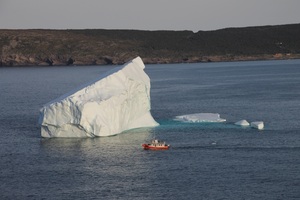
Day 12
Harrington Harbour, Quebec , Canada
Sunday, 10/09/2028
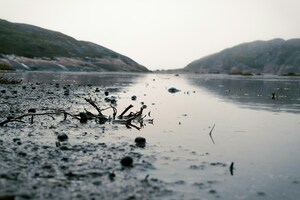
Day 13
Anticosti , Canada
Monday, 11/09/2028
Day 14
Anticosti , Canada
Tuesday, 12/09/2028
Day 15
Havre-Saint-Pierre, Québec , Canada
Wednesday, 13/09/2028
The otherworldly limestone structures of the Mingan Archipelago await at Havre St. Pierre Quebec's most northerly call. Perched on the northern shore of the mighty St Lawrence River's gaping jaws - and looking out across the vast stretch of water to the distant Anticosti Island - where white-tailed deer stalk dense forests - Havre St. Pierre is a feast of staggering scenery and diverse wildlife. The Mingan Archipelago's monolith treasures have been carefully painstakingly sculpted by Mother Nature's hand - using ocean wind and ice erosion to create towering rock outcrops which stand improbably counterweighted and precariously balanced over the waters. Sail between the scattered array of islands and formations and keep your eyes peeled - you may be joined by pods of friendly minke whales as you weave between skerries and rocky isles. Look out for eagles soaring overhead too and the colourful puffins which nest on the sheer cliffs. Back at Havre St. Pierre stroll isolated river beaches and wander the wooden boardwalk to soak in panoramas of the world's largest estuary - which lures the world's mightiest animal the blue whale to feast in its krill-rich depths. A walk out to the quaint lighthouse which crowns the shore is a pleasant way to spend an afternoon or you can take some time to learn a little more about the culture and traditions of the region's Inuit people.
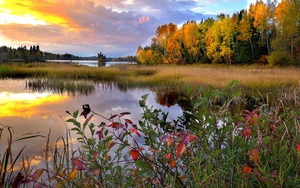
Day 16
Baie Comeau, Québec , Canada
Thursday, 14/09/2028
Located in the Côte-Nord region of the province of Quebec, Canada, the city of Baie-Comeau is nestled on the shores of the Saint Lawrence River near the mouth of the Manicouagan River, and is the seat of Manicouagan Regional County Municipality. The city is comprised of two urban centres, Baie-Comeau proper and Hauterive. The landscape of the Baie-Comeau region has been shaped by glacial retreats and other natural phenomena. Important geological features include the Manicouagan and St. Lawrence rivers in the Manicouagan-Uapishka World Biosphere Reserve, and the immense Manicouagan crater, which was formed by a meteorite. The oldest part of Baie-Comeau is the Old Post, or Vieux-Poste, an area near the mouth of the Amédée River. In 1889, the Saint-Eugène-de-Manicouagan Mission was founded by Eudists, and the first sawmill in the Côte-Nord region was built in 1898. In 1916, Route 138 was extended to Saint-Eugène-de-Manicouagan and in 1929, its post office opened with the English name of Comeau Bay. Eastern Baie-Comeau was founded in 1936 with the construction of a paper mill. The region's burgeoning timber, pulp and paper industries prompted remarkable growth, and the town of Baie-Comeau was incorporated the following year. In 1950, the village of Saint-Eugène-de-Manicouagan was incorporated as the Municipality of Hauterive. In 1982, Hauterive was merged into Baie-Comeau. As a result of its deep-water seaport and access to forestry, energy and mining in northeast Canada, Baie-Comeau combines sustainable industrial development with a thriving natural ecosystem. In fact, few others cities around the world possess a major industrial complex at the heart of a global reserve like the World Reserve Biosphere of Manicouagan-Uapishka. The Baie-Comeau region also boasts engineering masterpieces in the realm of hydroelectricity, including the Jean-Lesage Generating Station, Manic 2Central Dam, Manic 5 Generating Station and Daniel Johnson Dam. The development of the Baie-Comeau region was bolstered by the industrialization of modern Québec by means of its natural resources. The presence of the Saint Lawrence River, forestry, the creation of saw and paper mills, and the emergence of a world-class aluminum smelter all led to the expansion of the territory. Baie-Comeau and its environs are ideally-suited for a variety of popular inland and coastal excursions. Its proximity to the confluence of the Manicouagan and St. Lawrence rivers in the Manicouagan-Uapishka World Biosphere Reserve offers easy access to a vast natural paradise replete with exceptional geological phenomena, incredibly rich wildlife and forest habitats. Explore the exquisite coast and crystal-clear waters teeming with marine mammals and undersea treasures whilst boating, kayaking, scuba diving, fishing, and hunting. In the summer, an abundance of activities include golf, cycling and hiking trails, beaches, parks, flight-seeing, and more. Winter is no less exciting; the region's abundant snowfall is ideal for downhill skiing at the Centre de ski du Mont-Tibasse, and cross-country skiing and ski-skating at Sentier Norfond and Les Sentiers de la Rivière Amédée. Due to its compact size, Baie-Comeau can be easily explored in just a single day.
Day 17
Cruising the Saguenay River, Canada, Quebec
Friday, 15/09/2028
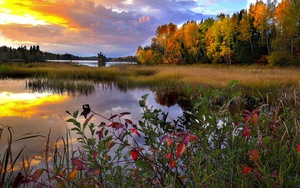
As Mother Nature combines all her efforts into producing a spectacle that could only exist in nature, enjoy the palate of autumnal colours against a late summer sky. Quiet and unspoilt, the Saguenay River (some might say fjord) was formed during the last Ice Age, and is the most southerly such terrain in the northern hemisphere. As the river gushes out into the massive St. Lawrence, its slightly warmer water mixes with the saltier, more frigid water of the mother river, creating massive volumes of krill, the basic food for whales. Hence whale sighting is reported to be excellent, so be on the lookout with your cameras, binoculars and notebooks at the ready. Forested hillsides, blazing with autumnal foliage, pastoral scenes with cattle and sheep grazing in grassy meadows below towering mountains and steep cliffs with sheer rock faces all contribute to the gorgeous scenery of a region of unsurpassed natural beauty.
Day 18
Quebec City, Québec , Canada
Saturday, 16/09/2028
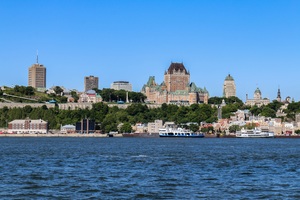
Established by the French settler Samuel de Champlain before the British landed on these shores Quebec City - initially known as New France - is one of North America's oldest cities. Towering over the banks of the Saint-Lawrence River Quebec City relishes in details and eccentricities and has reams of rich history and beautiful architecture - like the famous Château Frontenac. This chandelier-clad castle watches over the city and is said to be the world’s most photographed hotel. The wooden boardwalk of the canon-lined Dufferin Terrace offers stunning views of the city from its elevated standpoint. The French storybook feel has been delightfully protected and preserved in Quebec City's storied old quarter and a funicular links the upper and lower towns of this historic core. The 400-year-old fortified city is unique to North America and a celebrated UNESCO World Heritage Site. Mind your step as you wander through uneven cobbled streets to Place Royale - the charming spot where the city was founded - and between the bistros boulevards and boutiques of the dainty Quartier Petit Champlain area. There’s a wide variety of delicious international food to try and of course – greasy helpings of poutine. Taste local cheeses at the Marché du Vieux-Port indoor market where you’ll sink your teeth into buttery cakes pastries and encounter Canada’s fabled tree sap maple syrup - revered like wine in these parts.
Day 19
Montréal, Québec , Canada
Sunday, 17/09/2028
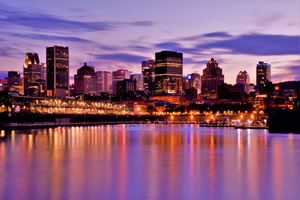
A festival and foodie heaven Montreal is a fascinating French flavoured destination of old-time European splendour and glittering urban charm. An elegant place of history pavement cafes and cobbled streets - Montreal wears its French heritage with a healthy dash of on-the-pulse Canadian cool. Set on the banks of the mighty St. Lawrence River you can head to beaches and elegant parks that open out onto the pretty waterfront. Mount Royal is a jewel of the city and on warm days locals spill out onto its sloping grasses to soak up the sun. Rise to the top to look down over the reaching skyscrapers of downtown. The city's massive botanical gardens are alive with the sounds of flowing water and surreal floral sculptures. The vivid colours of the impressive Notre-Dame Basilica's interior add more vibrancy while a diverse set of museums and galleries offer plenty of space for both traditional and contemporary art. The sounds of ivories tinkling and basslines wandering are ever-present in downtown – whether it’s street performers earning a living or jazz musicians riffing in dusty bars. The city’s musical swing ramps up a notch during the famous Montreal Jazz Festival which brings international talent to the city en-masse. It’s impossible to visit Montreal without sampling its ultimate comfort food poutine. French fries smothered in gravy cheese curd and your choice of topping. It’s as Québécois as ice hockey and bagels.
Room Type & Prices
All prices per person based on double occupancy. Solo traveller prices — single occupancy. Contact our cruise experts for the latest availability and best fares.
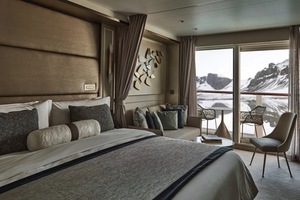
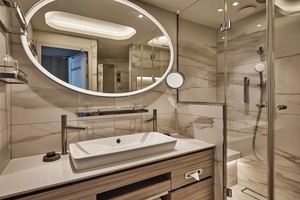
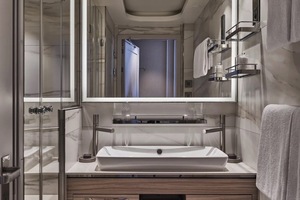
Classic Veranda Suite
356 sqft · Up to 3 guests
Superior Veranda Suite
356 sqft · Up to 3 guests
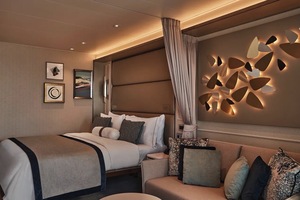
Deluxe Veranda Suite
356 sqft · Up to 3 guests
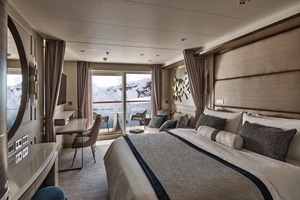
Premium Veranda Suite
356 sqft · Up to 3 guests
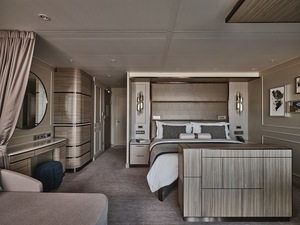
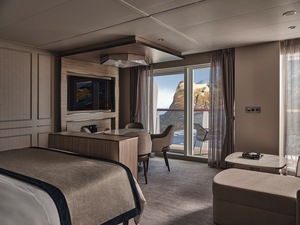
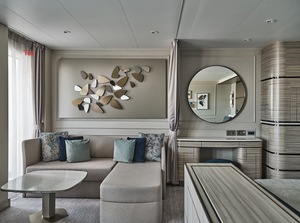
Silver Suite
535 sqft · Up to 3 guests
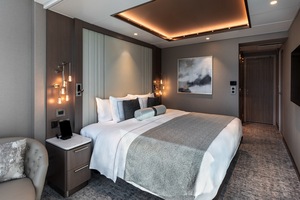
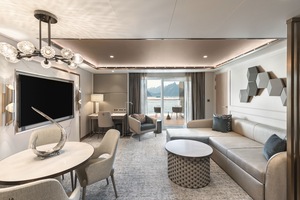
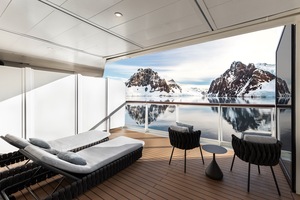
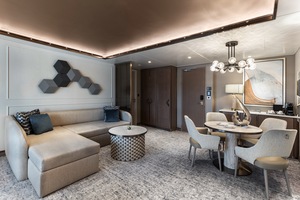
Signature Suite
721–840 sqft · Up to 2 guests
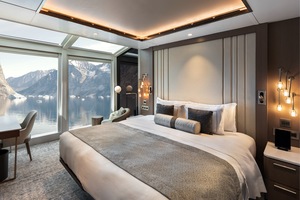
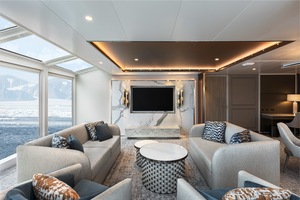
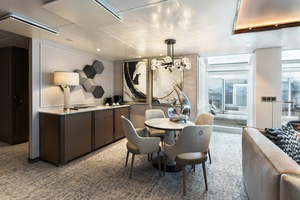
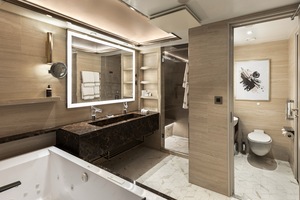
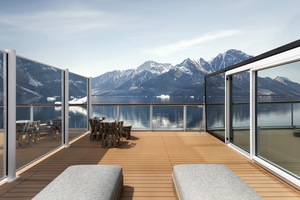
Master Suite
1163 sqft · Up to 2 guests
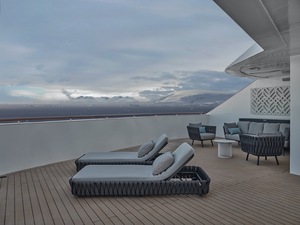
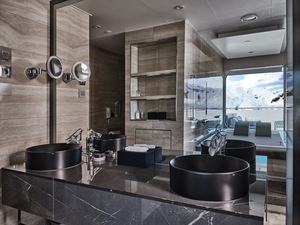
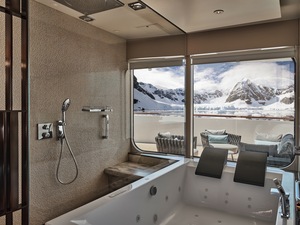
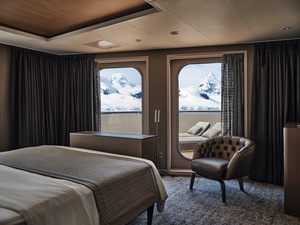
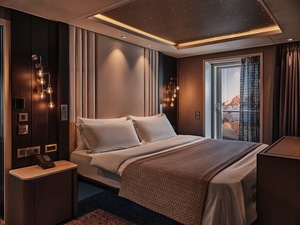
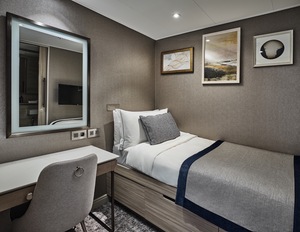
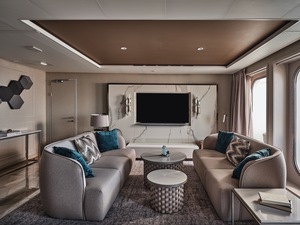
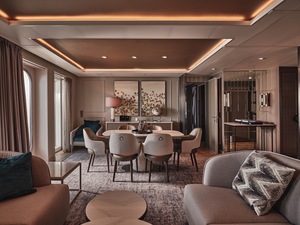
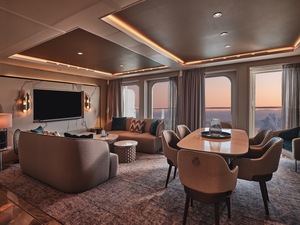
Grand Suite
1668–2025 sqft · Up to 4 guests
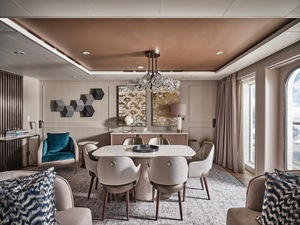
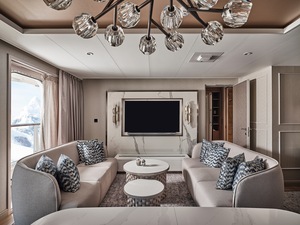
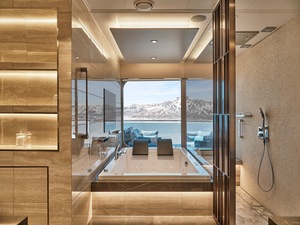
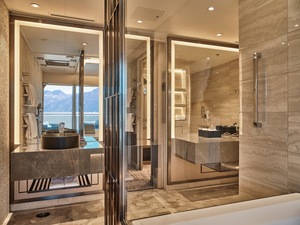
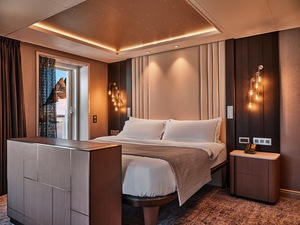
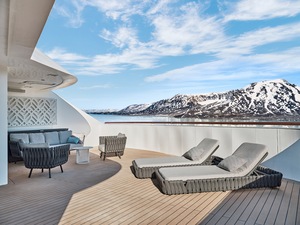
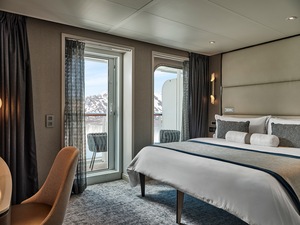
Owner’s Suite
1868 sqft · Up to 4 guests
Suite
| Cabin | Grade | Per Person | Avail. | |
|---|---|---|---|---|
| Classic Veranda Suite · 356 sqft | CV | Enquire → | ||
| Superior Veranda Suite · 356 sqft | SV | Enquire → | ||
| Deluxe Veranda Suite · 356 sqft | DX | Enquire → | ||
| Premium Veranda Suite · 356 sqft | PV | Enquire → | ||
| Silver Suite · 535 sqft | SL | Enquire → | ||
| Signature Suite · 721–840 sqft | SS | Enquire → | ||
| Master Suite · 1163 sqft | MS | Enquire → | ||
| Grand Suite · 1668–2025 sqft | G1 Grand Suite (1 Bedroom) | Enquire → | ||
| Owner’s Suite · 1868 sqft | O1 Owner's Suite (1 Bedroom) | Enquire → |
Classic Veranda Suite · 356 sqft
CV
Superior Veranda Suite · 356 sqft
SV
Deluxe Veranda Suite · 356 sqft
DX
Premium Veranda Suite · 356 sqft
PV
Silver Suite · 535 sqft
SL
Signature Suite · 721–840 sqft
SS
Master Suite · 1163 sqft
MS
Grand Suite · 1668–2025 sqft
G1 Grand Suite (1 Bedroom)
Owner’s Suite · 1868 sqft
O1 Owner's Suite (1 Bedroom)
More Departures
14 nights
Tokyo to Tokyo
17/10/2026
Solo From
£18,500
From
£10,900
11 nights
Civitavecchia to Barcelona
18/10/2026
Solo From
£14,000
From
£6,500
7 nights
Papeete to Papeete
18/10/2026
Solo From
£8,500
From
£4,350
7 nights
Athens to Athens
19/10/2026
Solo From
£10,200
From
£4,600
6 nights
King George Island to King George Island
20/10/2026
Solo From
£12,500
From
£10,000
9 nights
Puerto Williams to King George Island
20/10/2026
Solo From
£8,625
From
£7,900
Your Ship
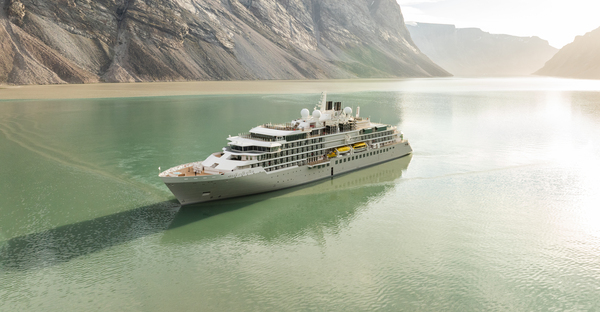
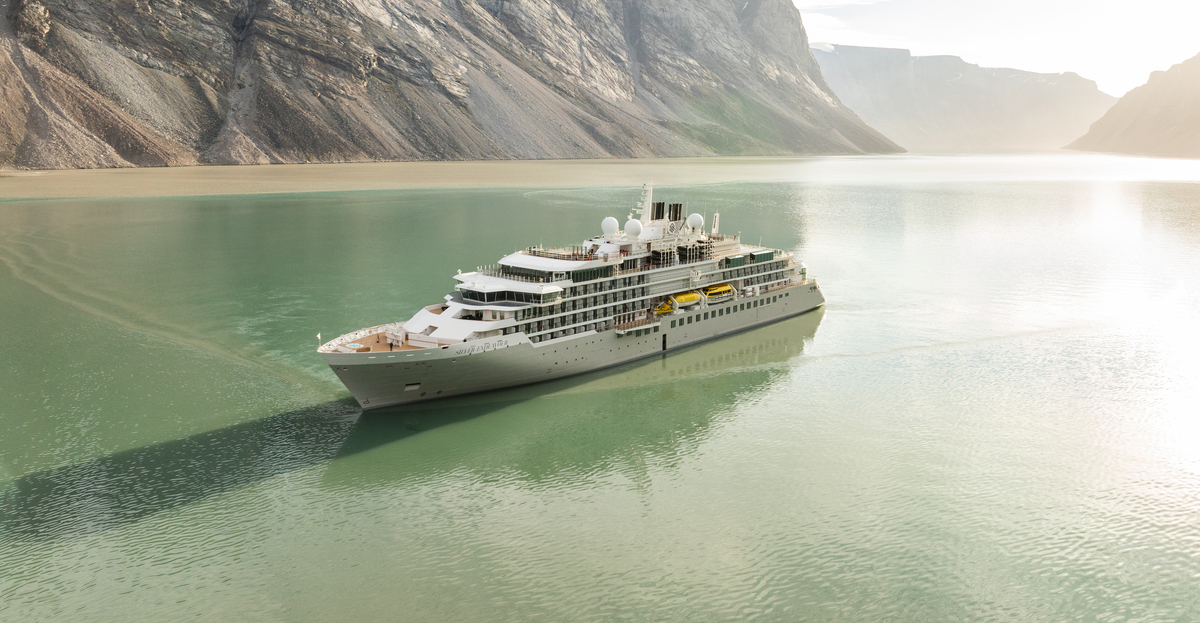
Silver Endeavour
Designed for polar exploration, Silver Endeavour is the new definition of luxury expedition travel.