San Diego to Papeete
Cruise only — prices from Solo cruise only — from

Ports of Call & Itinerary
18-night voyage departing San Diego, California, arriving Papeete, Tahiti.
Printable Itinerary (PDF)Route Map
San Diego to Papeete
8 ports plotted · click a marker for details
Day 1
San Diego, California , United States
Friday, 05/01/2029
Attention all sun, sea and surf lovers! Welcome to the place that considers those three words the only three little words worth saying. This is where the vibe is cool, the living is easy and weekends are spent worshiping the holy trinity, beachside. The southernmost city in California, San Diego borders Mexico which gives the place a slightly transient feel, although as America’s eighth largest city, it is anything but. Made up of little neighbourhoods, each has their own personality which gives a blended family feel. There’s Mission Beach, Little Italy, the Gaslamp Quarter, Downtown… all in all 17 neighbourhoods range from quirky to cool result in a city which is much more than a sum of its parts. European settlers arrived in the mid-18th century although Iberian explorer Juan Rodriguez Cabrillo claims to have discovered San Diego Bay in 1542, 200 years previously. Regardless of when the Europeans arrived, there is proof that Native Americans populated the land 12,000 years before, and a trip to the San Diego History Centre is both educational and inspirational. The town became part of the United States of America in 1848 (it had been under Mexican rule before that) and since then has carved out a niche for being “America’s finest city”, a moniker that you’ll see everywhere from t-shirts to bumper stickers. If it feels familiar, that’s because it is. Jack Lemmon, Tony Curtis and Marilyn Monroe filmed Some Like It Hot here and the city’s slightly worn around but ever so glamourous feel has remained.
Day 7
Honolulu, Hawaii , United States
Thursday, 11/01/2029
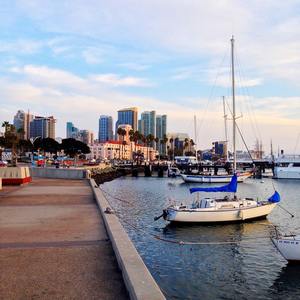
Here is Hawaii's only true metropolis, its seat of government, center of commerce and shipping, entertainment and recreation mecca, a historic site, and an evolving urban area—conflicting roles that engender endless debate and controversy. For the visitor, Honolulu is an everyman's delight: hipsters and scholars, sightseers and foodies, nature lovers and culture vultures all can find their bliss.Once there was the broad bay of Mamala and the narrow inlet of Kou, fronting a dusty plain occupied by a few thatched houses and the great Pakaka heiau (shrine). Nosing into the narrow passage in the early 1790s, British sea captain William Brown named the port Fair Haven. Later, Hawaiians would call it Honolulu, or "sheltered bay." As shipping traffic increased, the settlement grew into a Western-style town of streets and buildings, tightly clustered around the single freshwater source, Nuuanu Stream. Not until piped water became available in the early 1900s did Honolulu spread across the greening plain. Long before that, however, Honolulu gained importance when King Kamehameha I reluctantly abandoned his home on the Big Island to build a chiefly compound near the harbor in 1804 to better protect Hawaiian interests from the Western incursion.Two hundred years later, the entire island is, in a sense, Honolulu—the City and County of Honolulu. The city has no official boundaries, extending across the flatlands from Pearl Harbor to Waikiki and high into the hills behind.The main areas (Waikiki, Pearl Harbor, Downtown, Chinatown) have the lion's share of the sights, but greater Honolulu also has a lot to offer. One reason to venture farther afield is the chance to glimpse Honolulu's residential neighborhoods. Species of classic Hawaii homes include the tiny green-and-white plantation-era house with its corrugated tin roof, two windows flanking a central door and small porch; the breezy bungalow with its swooping Thai-style roofline and two wings flanking screened French doors through which breezes blow into the living room. Note the tangled "Grandma-style" gardens and many ohana houses—small homes in the backyard of a larger home or built as apartments perched over the garage, allowing extended families to live together. Carports, which rarely house cars, are the island's version of rec rooms, where parties are held and neighbors sit to "talk story." Sometimes you see gallon jars on the flat roofs of garages or carports: these are pickled lemons fermenting in the sun. Also in the neighborhoods, you find the folksy restaurants and takeout spots favored by the islanders.
Day 8
Honolulu, Hawaii , United States
Friday, 12/01/2029
Here is Hawaii's only true metropolis, its seat of government, center of commerce and shipping, entertainment and recreation mecca, a historic site, and an evolving urban area—conflicting roles that engender endless debate and controversy. For the visitor, Honolulu is an everyman's delight: hipsters and scholars, sightseers and foodies, nature lovers and culture vultures all can find their bliss.Once there was the broad bay of Mamala and the narrow inlet of Kou, fronting a dusty plain occupied by a few thatched houses and the great Pakaka heiau (shrine). Nosing into the narrow passage in the early 1790s, British sea captain William Brown named the port Fair Haven. Later, Hawaiians would call it Honolulu, or "sheltered bay." As shipping traffic increased, the settlement grew into a Western-style town of streets and buildings, tightly clustered around the single freshwater source, Nuuanu Stream. Not until piped water became available in the early 1900s did Honolulu spread across the greening plain. Long before that, however, Honolulu gained importance when King Kamehameha I reluctantly abandoned his home on the Big Island to build a chiefly compound near the harbor in 1804 to better protect Hawaiian interests from the Western incursion.Two hundred years later, the entire island is, in a sense, Honolulu—the City and County of Honolulu. The city has no official boundaries, extending across the flatlands from Pearl Harbor to Waikiki and high into the hills behind.The main areas (Waikiki, Pearl Harbor, Downtown, Chinatown) have the lion's share of the sights, but greater Honolulu also has a lot to offer. One reason to venture farther afield is the chance to glimpse Honolulu's residential neighborhoods. Species of classic Hawaii homes include the tiny green-and-white plantation-era house with its corrugated tin roof, two windows flanking a central door and small porch; the breezy bungalow with its swooping Thai-style roofline and two wings flanking screened French doors through which breezes blow into the living room. Note the tangled "Grandma-style" gardens and many ohana houses—small homes in the backyard of a larger home or built as apartments perched over the garage, allowing extended families to live together. Carports, which rarely house cars, are the island's version of rec rooms, where parties are held and neighbors sit to "talk story." Sometimes you see gallon jars on the flat roofs of garages or carports: these are pickled lemons fermenting in the sun. Also in the neighborhoods, you find the folksy restaurants and takeout spots favored by the islanders.
Day 9
Kailua-Kona, Hawaii , United States
Saturday, 13/01/2029
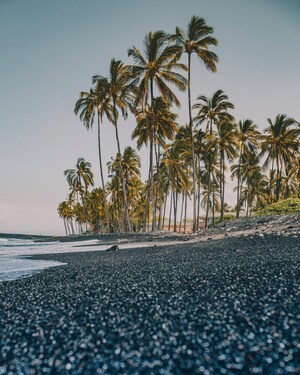
The Kona coast, on Hawaii’s western shore, divides into two distinct areas – the north with spectacular sandy beaches followed farther up by a long bleak slope of barren lava trails from dormant Mauna Kea all the way down to the sea. Southwards, the hillsides are more fertile and there is still a feel of the old Hawaii. The Big Island’s main resort is officially called Kailua, but mostly everyone simply refers to it as Kona, or Kailua-Kona. It is by far the island’s most developed area. Whilst the main road, Ali’i Drive, is lined with shops, hotels and condominiums, most of the shoreline vista remains intact thanks to low-rise buildings. To show just how fertile lava can be when tended, miles of multi-hued bougainvillea and poinsettias line Ali’i Drive like a colourful lei. East of town is the 8,271-foot (2,521-metre) Mount Hualalai, where local people still earn a living growing vegetables and taro on small farms spreading over the side of the mountain. In the centre of Kona stands the Hulihee Palace built as the governor’s residence in 1838. The relatively simple dwelling was heavily damaged during the last big storm and is now under restoration. The north end of downtown is home to Ahuena Heiau, where King Kamehameha spent the last years of his life. A dozen miles south of Kona at Kealakekua Bay is the site where Captain Cook was killed on his second voyage to Hawaii. South Kona is also the prime source of the famous Kona coffee.
Day 15
Nuku Hiva Island , French Polynesia
Friday, 19/01/2029
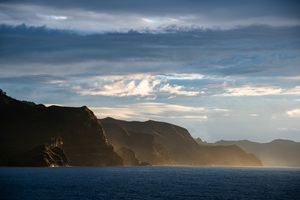
Think of French Polynesia and you are automatically transported to the white sands of Tahiti, the blue seas of Bora Bora or, at the very least, the iconic statues of Easter Island. Now, imagine a place that is home to that majestic trinity, but has no crowds and is full of island authenticity that is rare in these global times. You have just imagined Nuku Hiva. The island is the second largest after Tahiti in the archipelago, but is yet to be discovered by tourism. As part of the Marquesas Islands, Nuku Hiva is technically French, but don’t expect to find any blue and white striped shirts here! In fact, even though French is the “official” language of the island, a sing-song dialect of Tahitian mixed with Marquesan is more widely spoken. The younger generations also speak English. Undeniably, Nuku Hiva has been blessed by the Gods. With towering mountains, eight magnificent harbours, and one of the world's highest waterfalls, Nuku Hiva is rich with Mother Nature’s jewels. The island could lay claim to a great many claims to fame, such as its deep, unpolluted waters, its lush forests bursting with vitality or its fascinating assortment of archaeological interests including tikis (sacred statues) and pae pae (stone platforms that formed the foundations of houses). Yet for those in the know, the island’s primary claim to fame is that author Herman Mellville deserted his ship in order to live among the natives of the island and his books Typee and Omoo were inspired by his experiences on Nuku Hiva.
Day 17
Fakarava , French Polynesia
Sunday, 21/01/2029
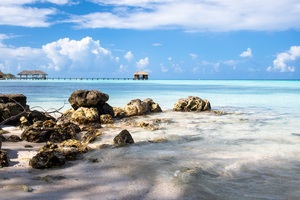
Fakarava is oblong shaped and has an almost continuous string of reef and motu stretching for 40 km (25 mi) on its eastern edge. It's the second largest of the Tuamotu atolls located 450 km (280 mi) northeast of Tahiti and 120 km (75 mi) southeast of Rangiroa. It's renowned for the drift diving in its two passes—Garuae (also spelled Ngarue) in the north near the main town of Rotoava (and the airport) and Tamakohua Pass 48 km (30 mi) across the lagoon in the south. The tiny village of Tetamanu situated by the southern pass was once the capital of the Tuamotus and houses the first church built in the archipelago in 1874. In 2006 the entire atoll was deemed an UNESCO biosphere reserve to preserve the lagoon no overwater bungalows have been built in it. Fakarava was "discovered" by Russian explorer Fabian Gottlieb Von Bellingshausen in 1820 some 20 years later missionaries arrived in the guise of fanatical Catholic priest Honore Laval and began building churches.
Day 18
Rangiroa , French Polynesia
Monday, 22/01/2029
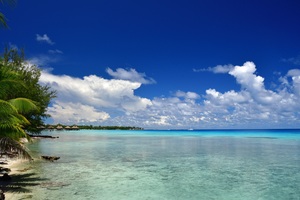
Rangiroa is French Polynesia’s largest atoll. More than 400 motu (islets) enclose the lagoon, which is so wide and long that one cannot see the southern row of motu from the two main islets in the north –hence the local name Rangiroa meaning wide or long sky, sometimes taken as “immense sky”. There are several passes from the ocean into the lagoon and the two main villages of Avatoru and Tiputa are located next to the passes of the same names. Drift diving and snorkeling the incoming tides looking for sharks and manta rays at these passes is one of Rangiroa’s main touristic draws. Government jobs, ecotourism and pearl farming are the main sources of income on the atoll. The lagoon’s calm turquoise waters, rich marine underwater world and relaxed atmosphere attract visitors year-round to the many local guesthouses and a few hotels. Both Avatoru and Tiputa also feature schools for the other Tuamotu Islands which have no higher education possibilities. One of Rangiroa’s most unusual attractions is the white and rose wine produced on the islet immediately west of Avatoru –the wine has won several awards.
Day 19
Papeete, Tahiti , French Polynesia
Tuesday, 23/01/2029
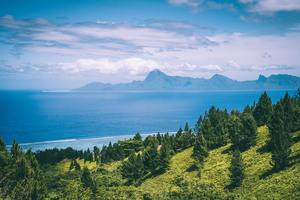
Papeete is the center of the tropical paradise of French Polynesia where islands fringed with gorgeous beaches and turquoise ocean await to soothe the soul. This spirited city is the capital of French Polynesia and serves as a superb base for onward exploration of Tahiti – an island of breathtaking landscapes and oceanic vistas. A wonderful lagoon of crisp clear water begs to be snorkelled stunning black beaches and blowholes pay tribute to the island's volcanic heritage and lush green mountains beckon you inland on adventures as you explore extraordinary Tahiti. Visit to relax and settle into the intoxicating rhythm of life in this Polynesian paradise.
Room Type & Prices
All prices per person based on double occupancy. Solo traveller prices — single occupancy. Contact our cruise experts for the latest availability and best fares.
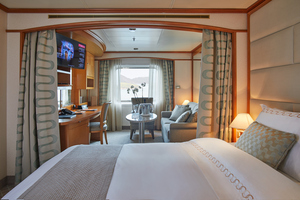
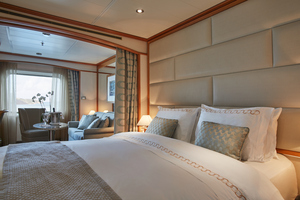
Vista Suite
291 sqft · Up to 2 guests
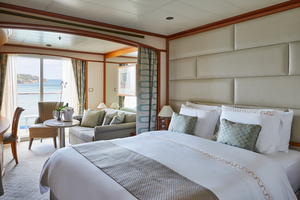
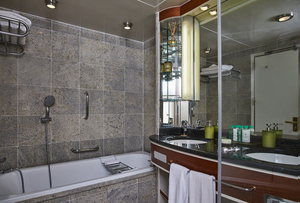
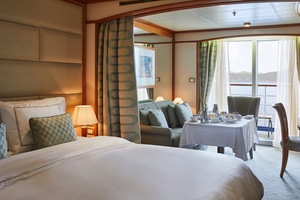
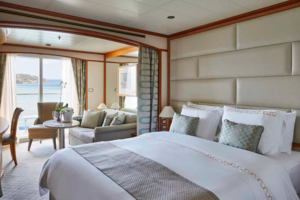
Classic Veranda Suite
409 sqft · Up to 3 guests
Superior Veranda Suite
409 sqft · Up to 3 guests
Deluxe Veranda Suite
409 sqft · Up to 3 guests
More Departures
14 nights
Tokyo to Tokyo
17/10/2026
Solo From
£18,500
From
£10,900
11 nights
Civitavecchia to Barcelona
18/10/2026
Solo From
£14,000
From
£6,500
7 nights
Papeete to Papeete
18/10/2026
Solo From
£8,500
From
£4,350
7 nights
Athens to Athens
19/10/2026
Solo From
£10,200
From
£4,600
6 nights
King George Island to King George Island
20/10/2026
Solo From
£12,500
From
£10,000
9 nights
Puerto Williams to King George Island
20/10/2026
Solo From
£8,625
From
£7,900
Your Ship
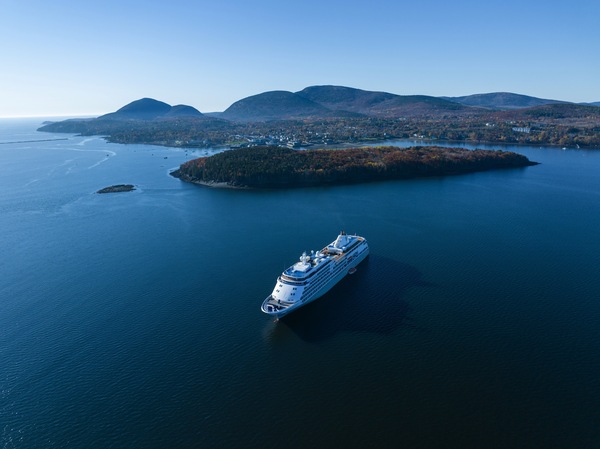
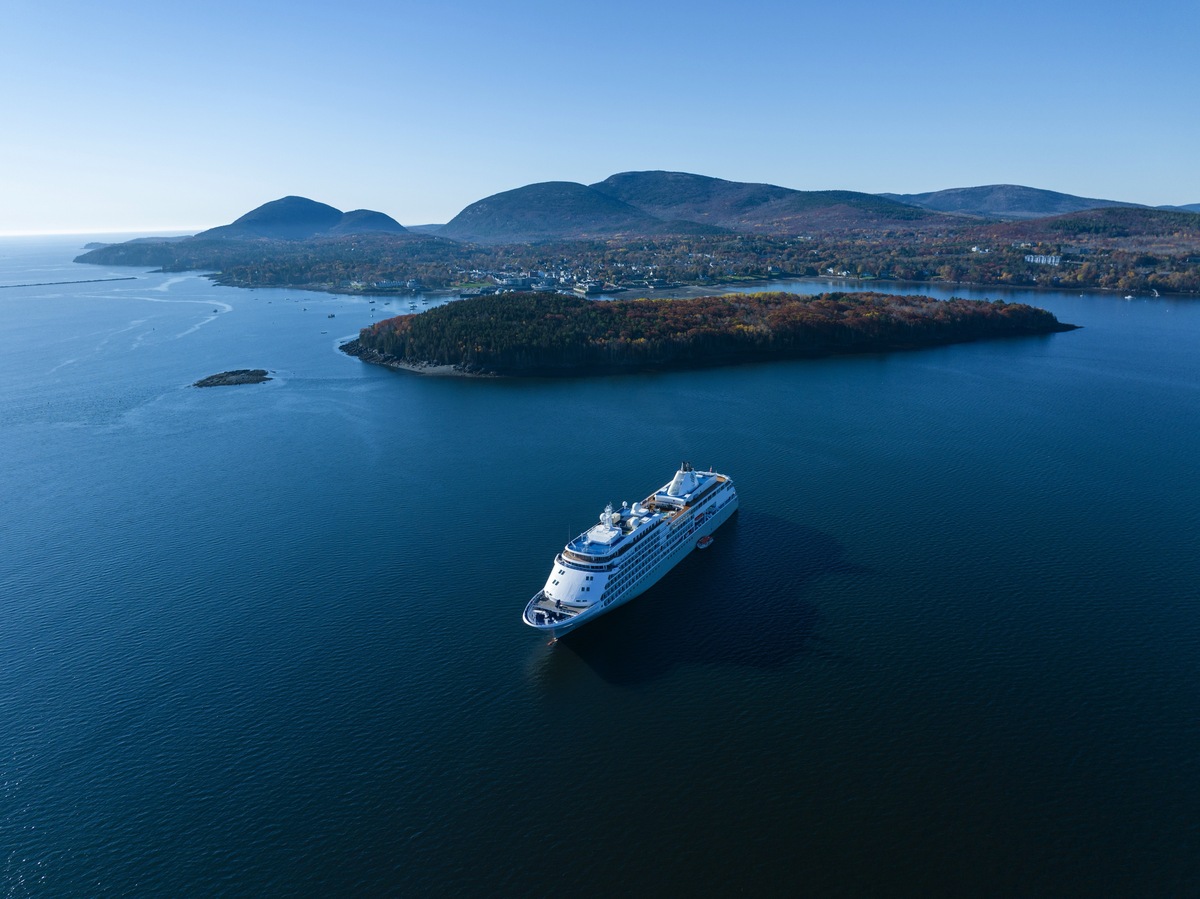
Silver Whisper
Silver Whisper exudes a relaxing, sophisticated, and genuinely elegant atmosphere.