Tokyo to Tokyo
Cruise only — prices from Solo cruise only — from

Ports of Call & Itinerary
14-night voyage departing Tokyo.
Printable Itinerary (PDF)Route Map
Tokyo to Tokyo
10 ports plotted · click a marker for details
Day 1
Tokyo , Japan
Saturday, 03/04/2027
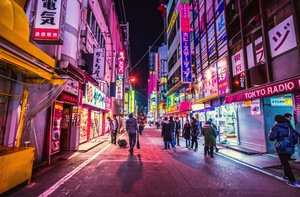
Dense and delightful, there’s nowhere else like Japan’s kinetic capital - a city where ancient traditions blend seamlessly with a relentless pursuit for the future’s sharpest edge. See the city from above, as elevators rocket you up to towering viewing platforms, from which you can survey a vast urban ocean, interspersed with sky-scraping needles. Look out as far as the distant loom of Mount Fuji’s cone on clear days. Futuristic – second-accurate - transport seamlessly links Tokyo’s 14 districts, while the glow of flashing advertisement boards, clanks of arcade machines, and waves of humanity flowing along its streets, adds to the sense of mesmerising, dizzying and glorious sensory overload. One of Tokyo’s most iconic sights, don’t miss the flood of people scrambling to cross Shibuya’s famous intersection. Join the choreographed dance, as crowds of briefcase-carrying commuters are given the green light to cross at the same time – bathed in the light of massive neon advertisements. The culture is immensely rich and deep, with 7th-century, lantern-decorated temples, stunning palaces and tranquil scarlet shrines waiting below cloaks of incense and nestling between soaring skyscrapers. Restaurants serve up precisely prepared sushi, and wafer-thin seafood slivers, offering a unique taste of the country’s refined cuisine. Settle into traditional teahouses, to witness intricate ceremonies, or join the locals as they fill out karaoke bars to sing the night away. In the spring, cherry blossom paints a delicate pink sheen over the city’s innumerable parks and gardens.
Day 3
Kobe , Japan
Monday, 05/04/2027
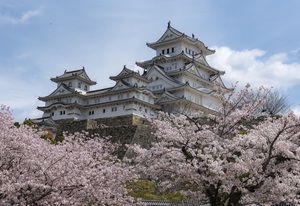
The Japanese city of Kobe needs no introduction. The name is synonymous with its home grown superstar. We are not talking of its stunning shrines, cherry trees laden with blossom during sakura or effervescent city, buzzing with life 24/7. We are of course talking of a much more grass roots hero – its eponymous beef. The delicacy might have put the city on the map, but there is far more to Kobe than its meat. Naturally, Kobe wears its cuisine as a badge of honour. Its port history has given it a gastronomy that is quite different from its neighbours. Seafood and sushi is naturally some of the freshest and most diverse you can find, but Kobe’s multi-cultural nature (the city is home to 98 different nationalities) means that it has one of the most diverse gastronomic cultures in Japan. Bread and bakeries are also an (unexpected) delicacy. Additionally, Sake is taken very seriously – Kobe even has its own museum dedicated to the national spirit. Historically, Kobe has always been a key city for Japan. Renamed in 1889, it was known as Owada no Tomari during the Nara Period (710-784 C.E.). Kobe’s location on the calm Inland Sea between Osaka and Kyoto has proven to be pivotal in Japanese history; it is mentioned in famous literary works such as The Tale of Genji (from approximately late 9th century) and the Taiheiki (14th century). The city and region are home to many attractions including the Himeji Castle (widely considered to be Japan's most beautiful feudal castle), a short ride away.
Day 4
Kobe , Japan
Tuesday, 06/04/2027
The Japanese city of Kobe needs no introduction. The name is synonymous with its home grown superstar. We are not talking of its stunning shrines, cherry trees laden with blossom during sakura or effervescent city, buzzing with life 24/7. We are of course talking of a much more grass roots hero – its eponymous beef. The delicacy might have put the city on the map, but there is far more to Kobe than its meat. Naturally, Kobe wears its cuisine as a badge of honour. Its port history has given it a gastronomy that is quite different from its neighbours. Seafood and sushi is naturally some of the freshest and most diverse you can find, but Kobe’s multi-cultural nature (the city is home to 98 different nationalities) means that it has one of the most diverse gastronomic cultures in Japan. Bread and bakeries are also an (unexpected) delicacy. Additionally, Sake is taken very seriously – Kobe even has its own museum dedicated to the national spirit. Historically, Kobe has always been a key city for Japan. Renamed in 1889, it was known as Owada no Tomari during the Nara Period (710-784 C.E.). Kobe’s location on the calm Inland Sea between Osaka and Kyoto has proven to be pivotal in Japanese history; it is mentioned in famous literary works such as The Tale of Genji (from approximately late 9th century) and the Taiheiki (14th century). The city and region are home to many attractions including the Himeji Castle (widely considered to be Japan's most beautiful feudal castle), a short ride away.
Day 5
Kochi , Japan
Wednesday, 07/04/2027
Small and friendly, this castle town dates back from the early 17th century, and has just one of the 12 Japanese castles to have survived the feudal age. Regrettably, a WWII bombing in 1945 destroyed half the city, although thankfully not the original castle, which serves as a shining example of the Edo Period. A buzzing food market next to the castle provides sustenance – both local and international cuisine and those who are feeling adventurous must try the sugar tomato and rice omelette, either separately or why not together. For those in search of a quintessentially Japanese experience, Kochi is blessed with a superb landscape and an enjoyable local pastime is bathing in the hot springs (onsens) that surround the city. They come in many different shapes, sizes and colours (the colour of the water indicates the dominant minerals present: red for iron, milky for sulphur, blue for bicarbonate and so on). Some are considered rare and each type is said to have a different therapeutic effect. However, some etiquette is expected and first-time visitors should perhaps be aware of the formalities surrounding this bathing ritual. Home as well to some stunning beaches, visitors are advised against swimming in the sea because of strong undercurrents, instead being encourages to enjoy the many beachside attractions of the area, such as the Sakamoto Ryoma Memorial Museum, the lovely walking paths or the sumptuous local speciality katsuo no tataki, served on one of the many surrounding restaurants. Although perhaps not the most picturesque of downtowns, downtown Kochi holds a legendary tale, which centers on the Harimayabashi, (the small red bridge on the west side of the main street). Legend has it that a young priest from Godaisan fell in love with and a girl from Kochi. Because the priest's temple forbade relationships, the couple hid their romance by meeting in secret and exchanging clandestine gifts. One day, the priest was seen buying a hair comb at Harimayabashi, and the couple's secret romance was discovered.
Day 6
Hiroshima , Japan
Thursday, 08/04/2027
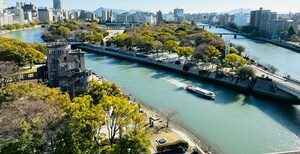
History buffs will want to write home Hiroshima. Despite being devastated in 1945, this Japanese city is known to all for its commitment peace – its ruin on the 6th August 1945 led to the end of the war and today, the Peace Memorial (a UNESCO World Heritage Site) , is a constant reminder of the destruction that war brings. A walk in the leafy boulevards of Peace Memorial Park brings quiet contemplation. The Flames of Peace – set in the park’s central feature pond – burn brightly and will continue to do so until all the nuclear bombs I the world have been destroyed. There are many other inspiring messages of hope around the city too; the Children’s’ Peace Monument just north of the park is a homage to little Sadako Sasaki, who was just two in 1945. When she developed leukemia in 1956, she believed that if she folded 1,000 paper cranes – a symbol of longevity and happiness in Japan – she would recover. Sadly she died before she finished her task but her classmates finished the rest. If you are lucky enough to visit during the unpredictable and short-lived Sakura (cherry blossom) season, then the extraordinary sight of the delicate pink blossom floating across the water to the red gate, means you can consider yourself one of the luckiest people on the planet.
Day 8
Busan , South Korea
Saturday, 10/04/2027
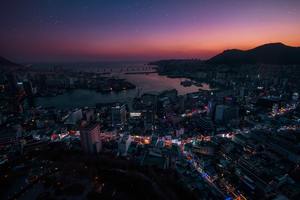
"A tapestry of kaleidoscopic colours, intense seafood flavours, and urban beach bliss, Busan rolls across a glorious natural setting on the Korean Peninsula's south-east. One of the largest and busiest ports in the world, 3.5 million people call South Korea's second city home, and the amiable locals help to lend the city its quirky, offbeat outlook. A spacious, playful and cosmopolitan place, Busan is a lively, liveable city, cradled by lush mountains and endless ocean scenery. Haedong Yonggung Temple nestles on a dramatic cliffside, just above the crumbling rocks and crashing waves of the East Sea. Dating back to 1376, the temple's multi-storey pagoda is adorned with lions - each representing a different emotion. Elsewhere, lanterns glitter in the night sky around Mount Geumjeongsan, freshly released from the beautiful Beomeosa Temple, which was established in AD 678. The hillside shantytown of Gamcheon Culture Village has completed an improbable transformation, blossoming from a sea of makeshift homes for Korean war refugees, into a colourful explosion of creativity and curiosity. Local artists have been let loose to create interactive installations, and the entire area is now an expansive canvas for expression. Lose yourself among vibrant alleyways of flamingo-pink, lemon-yellow and baby-blue painted facades in this unique area. Sample bibimbap, fiery-hot beef and rice, from street food vendors, before relaxing on one of South Korea's best beaches - Haeundae's banana bend of sand. Metallic skyscrapers offer an unusual backdrop to this pristine expanse of golden powder and are mirrored by elaborate sandcastles and sculptures during the annual sand festival - when spontaneous water fights and firework displays also take place. Gwangalli beach is another urban option, laying out spectacular views of the reaching Gwangan Bridge - the country's second largest bridge. At night, 16,000 bulbs bathe this engineering marvel in colour."
Day 10
Kanazawa , Japan
Monday, 12/04/2027
The capital of the Ishikawa Prefecture, Kanazawa once rivalled Kyoto and Edo (Tokyo) as a town rich in cultural achievements. Kanazawa escaped destruction during World War II and accordingly has been able to preserve many of the old districts in good shape. The city is famous because of Kenrokuen. Located next to Kanazawa Castle, Kenrokuen is classified as “One of the Three Gardens of Japan”. The garden has an artificial pond, and hills and houses are dotted within the 11.4 hectares. It has Japan’s oldest fountain using natural water pressure and a tea-house dating back to 1774. Close by is the Higashi Chaya Gai Geisha District, designated a National Cultural Asset and the biggest of the Geisha districts of Kanazawa. Some of the houses not only retain the original structure, but still are used as Geisha houses. Some of the streets have traditional shops creating a nostalgic atmosphere. Kanazawa is also known for its lacquer ware, Kutani-style pottery, gold-leaf workmanship and delicately painted silk kimonos.

Day 12
Hakodate , Japan
Wednesday, 14/04/2027
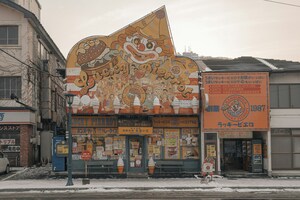
Gaze down over Hakodate, from the heights of its namesake peak - Mount Hakodate - to see the city stretching out spectacularly, with back-to-back twin bays splitting the ocean. Hakodate port was one of the first to open Japan up to the world, and to international trade in 1859 - a fact reflected in the architecture, with its influences from the West and beyond. The port area is a redbrick wash of warehouses turned shopping malls, all observed by the onion domes of the city's Russian Orthodox church. Elsewhere, the star-shaped Goryokaku fortress glows with natural colours and a beautiful haze of cherry blossom during the season. Goryokaku Tower, which rises up beside it, offers a sweeping bird's eye view of the green fortress and mountain backdrop. Buses trundle up the 335-metre incline to the top of Mount Hakodate, but the best way to reach the views is to jump on the ropeway, which swings high above downtown's buildings, over a carpet of pine trees. Head up to the mountain's heights as sunset approaches. With darkness sweeping in, and the lights flickering to life, the panorama is one of Japan's most spectacular. Soak it all in, and look out to the horizon, dotted with the shimmering lights of ships hauling in harvests of the city's renowned squid. The plankton-rich waters attract a delicious variety of feasting sea life to Hakodate's coast, which is then plated up in the city's numerous, skilled restaurants. For an eye-opening, whirring morning, see the freshest produce being doled out at Hakodate Morning Market – amid a cacophony of noise and activity.
Day 13
Miyako, Iwate , Japan
Thursday, 15/04/2027
Set on the eastern coast in Japan’s Iwate prefecture, Miyako promises stunning scenery and Jorman history in equimeasure. The coastal city of around 50,000 inhabitants is around 600 km from Tokyo, but boasts one of the finest beaches in Japan, as well as a treasure trove of succulently fresh seafood restaurants. While travellers to Miyako might arrive expecting the usual amalgam of cultural attractions and high tech wizardry, they will leave with memories of one of the greatest garden cities they have ever experienced. During the Edo period (1603-1868) the town was considered as Japan’s main seaport. Today this is no longer the case, perhaps due to Miyako’s precarious placement and underwater seismic activity; four tsunamis have engulfed the city since 1700, with waves reaching almost 40 metres in some cases. Thus, local attractions tend to be of the natural kind, as historical buildings have been all but wiped out. Luckily, Mother Nature really does come into her own in Miyako. The city is bordered by the Sanriku Fukkō National Park, one of the National Parks of Japan. Sanriku Fukkō stretches for 180 km along the coast and homes a wonderful variety of flora and fauna, including groves of Japanese red pine, rhododendrons and Rosa rugosa. Numerous bird species, including the black-tailed gull and shearwater call the park home. What’s more, bird lovers will undoubted love that the nearby Hidejima Island and Sanganjima Island are the only breeding grounds in Japan for the band-rumped storm-petrel.

Day 15
Tokyo , Japan
Saturday, 17/04/2027
Dense and delightful, there’s nowhere else like Japan’s kinetic capital - a city where ancient traditions blend seamlessly with a relentless pursuit for the future’s sharpest edge. See the city from above, as elevators rocket you up to towering viewing platforms, from which you can survey a vast urban ocean, interspersed with sky-scraping needles. Look out as far as the distant loom of Mount Fuji’s cone on clear days. Futuristic – second-accurate - transport seamlessly links Tokyo’s 14 districts, while the glow of flashing advertisement boards, clanks of arcade machines, and waves of humanity flowing along its streets, adds to the sense of mesmerising, dizzying and glorious sensory overload. One of Tokyo’s most iconic sights, don’t miss the flood of people scrambling to cross Shibuya’s famous intersection. Join the choreographed dance, as crowds of briefcase-carrying commuters are given the green light to cross at the same time – bathed in the light of massive neon advertisements. The culture is immensely rich and deep, with 7th-century, lantern-decorated temples, stunning palaces and tranquil scarlet shrines waiting below cloaks of incense and nestling between soaring skyscrapers. Restaurants serve up precisely prepared sushi, and wafer-thin seafood slivers, offering a unique taste of the country’s refined cuisine. Settle into traditional teahouses, to witness intricate ceremonies, or join the locals as they fill out karaoke bars to sing the night away. In the spring, cherry blossom paints a delicate pink sheen over the city’s innumerable parks and gardens.
Room Type & Prices
All prices per person based on double occupancy. Solo traveller prices — single occupancy. Contact our cruise experts for the latest availability and best fares.
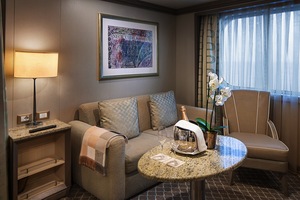
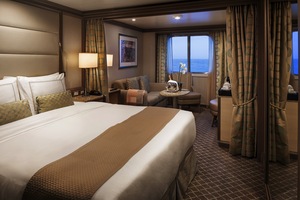
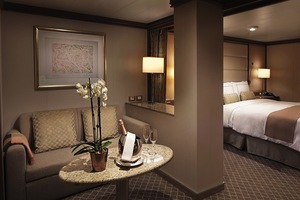
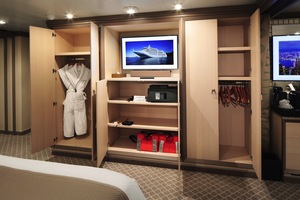
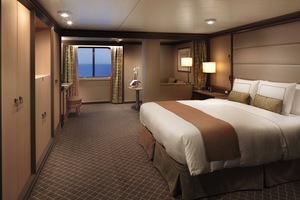
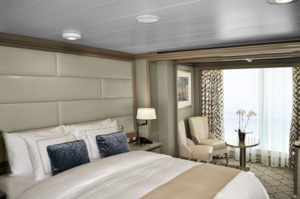
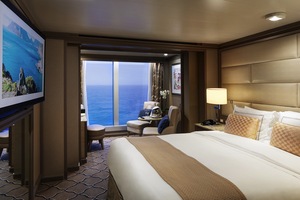
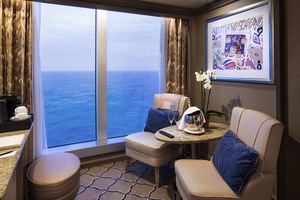
Vista Suite
344 sqft · Up to 2 guests
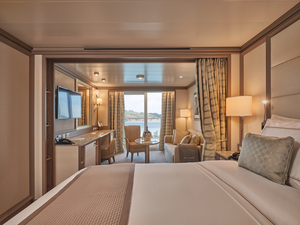
Panorama Suite
334 sqft · Up to 2 guests
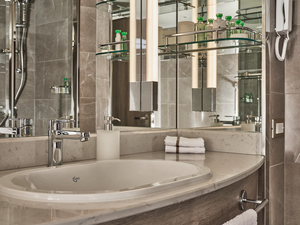
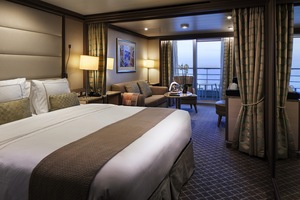
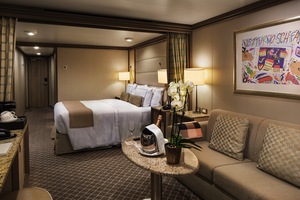
Classic Veranda Suite
387 sqft · Up to 2 guests
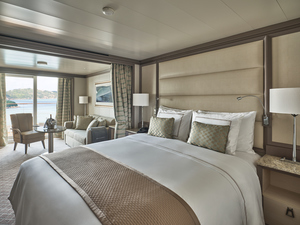
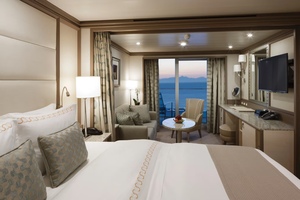
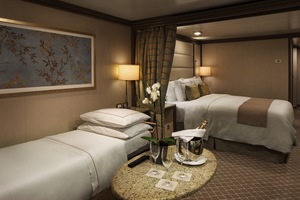
Superior Veranda Suite
387 sqft · Up to 3 guests
Deluxe Veranda Suite
387 sqft · Up to 3 guests
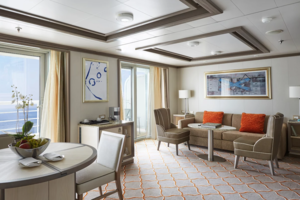
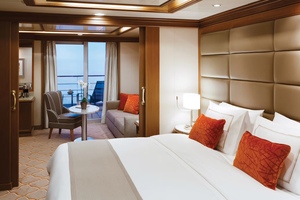
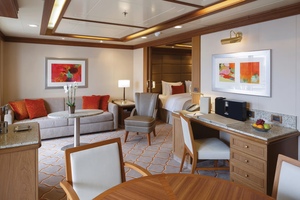
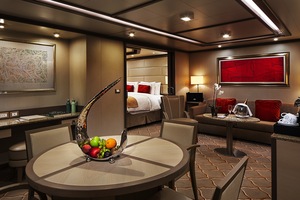
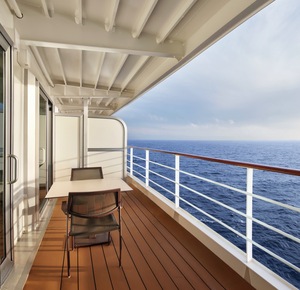
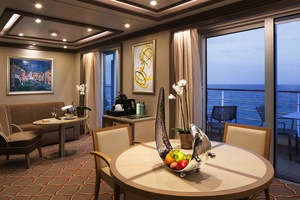
Silver Suite
786–1119 sqft · Up to 5 guests
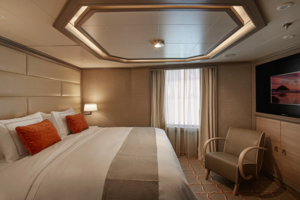
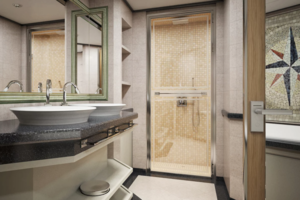
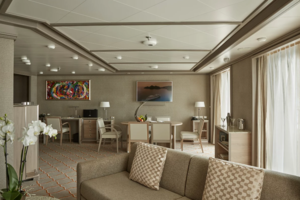
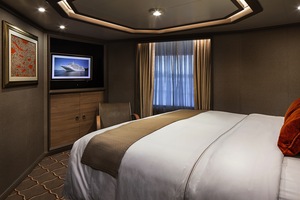
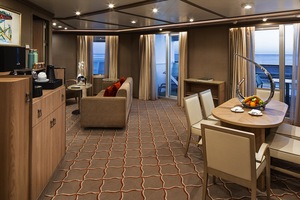
Royal Suite
1130–1528 sqft · Up to 4 guests
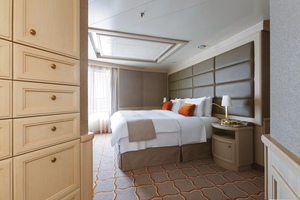
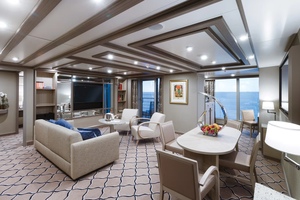
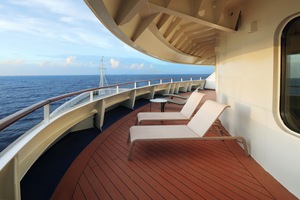
Grand Suite
1603–1969 sqft · Up to 5 guests
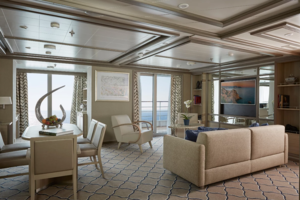
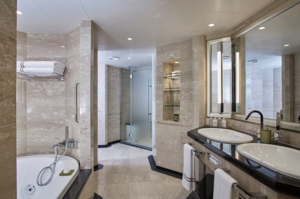

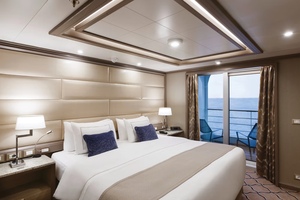
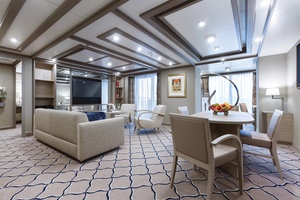
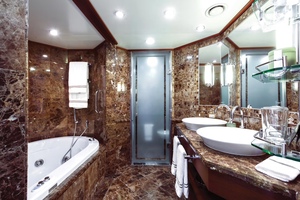
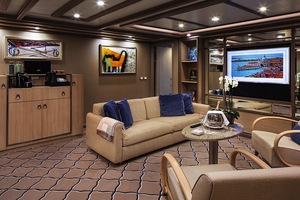
Owner's Suite
1054–1388 sqft · Up to 5 guests
Suite
| Cabin | Grade | Per Person | Avail. | |
|---|---|---|---|---|
| Vista Suite · 344 sqft | VI | Enquire → | ||
| Panorama Suite · 334 sqft | PA | Enquire → | ||
| Classic Veranda Suite · 387 sqft | CV | Enquire → | ||
| Superior Veranda Suite · 387 sqft | SV | Enquire → | ||
| Deluxe Veranda Suite · 387 sqft | DX | Enquire → | ||
| Silver Suite · 786–1119 sqft | SL | Enquire → | ||
| Royal Suite · 1130–1528 sqft | R1 Royal Suite (1 Bedroom) | Enquire → | ||
| Grand Suite · 1603–1969 sqft | G1 Grand Suite (1 Bedroom) | Enquire → | ||
| Owner's Suite · 1054–1388 sqft | O1 Owner's Suite (1 Bedroom) | Enquire → |
Vista Suite · 344 sqft
VI
Panorama Suite · 334 sqft
PA
Classic Veranda Suite · 387 sqft
CV
Superior Veranda Suite · 387 sqft
SV
Deluxe Veranda Suite · 387 sqft
DX
Silver Suite · 786–1119 sqft
SL
Royal Suite · 1130–1528 sqft
R1 Royal Suite (1 Bedroom)
Grand Suite · 1603–1969 sqft
G1 Grand Suite (1 Bedroom)
Owner's Suite · 1054–1388 sqft
O1 Owner's Suite (1 Bedroom)
More Departures
14 nights
Tokyo to Tokyo
17/10/2026
Solo From
£18,500
From
£10,900
11 nights
Civitavecchia to Barcelona
18/10/2026
Solo From
£14,000
From
£6,500
7 nights
Papeete to Papeete
18/10/2026
Solo From
£8,500
From
£4,350
7 nights
Athens to Athens
19/10/2026
Solo From
£10,200
From
£4,600
6 nights
King George Island to King George Island
20/10/2026
Solo From
£12,500
From
£10,000
9 nights
Puerto Williams to King George Island
20/10/2026
Solo From
£8,625
From
£7,900
Your Ship
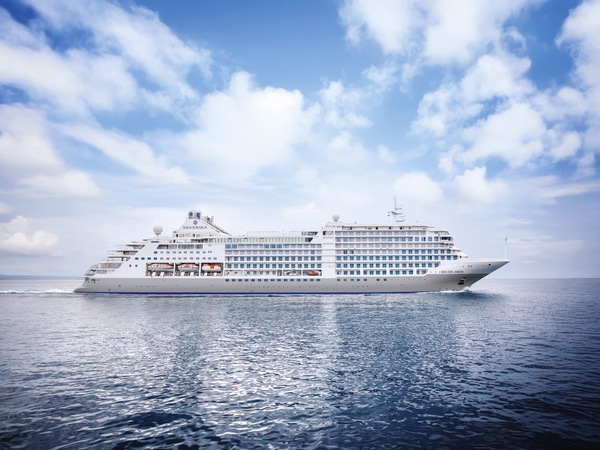
Silver Moon
Built by cruise lovers, for cruise lovers, Silver Moon is the epitome of 21st-century luxury travel.